A Wet Weekend in Porto
Granite lanes, wet blue tiles and the Douro under low cloud: two and a half rainy December days in Porto, and one bright Sunday morning.
Lisbon gave us a week of October light. Porto, a few weeks later, gave us a weekend of weather. The forecast for the first weekend of December was a single word repeated three times, and for once it was right.
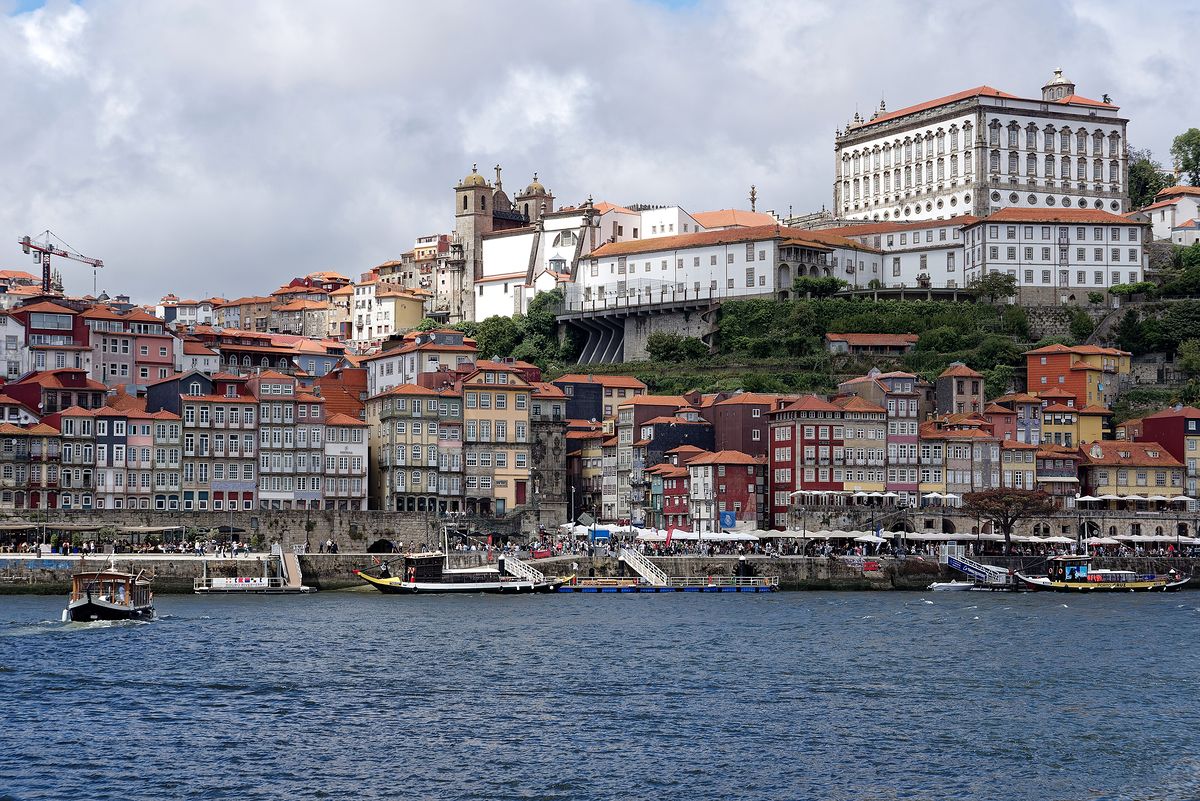
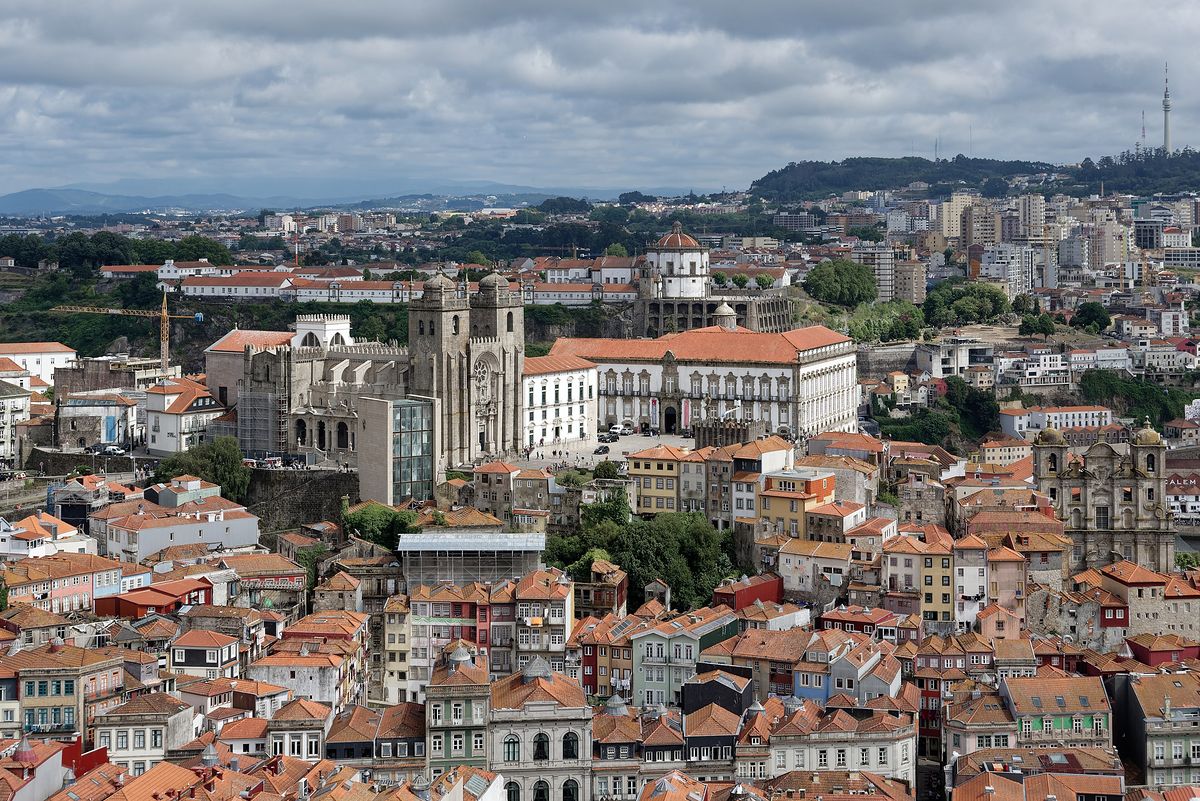
It hardly mattered. Porto is a city built of granite on a steep bank above the Douro, and granite looks its best wet. The old town climbs straight up from the river in a jumble of tall, narrow houses, with the Bishop’s Palace and the cathedral towers sitting on top like the lid on a box. You see it properly only from across the water in Gaia, which is where we went first, under a sky that couldn’t decide.
We arrived on Friday evening and walked down to the Cais da Ribeira in a fine drizzle. The cafés had pulled their tables in, the quay was almost empty, and the arcades along the waterfront were the only dry place for a hundred yards. We sheltered under one and watched the lights come on in Gaia.
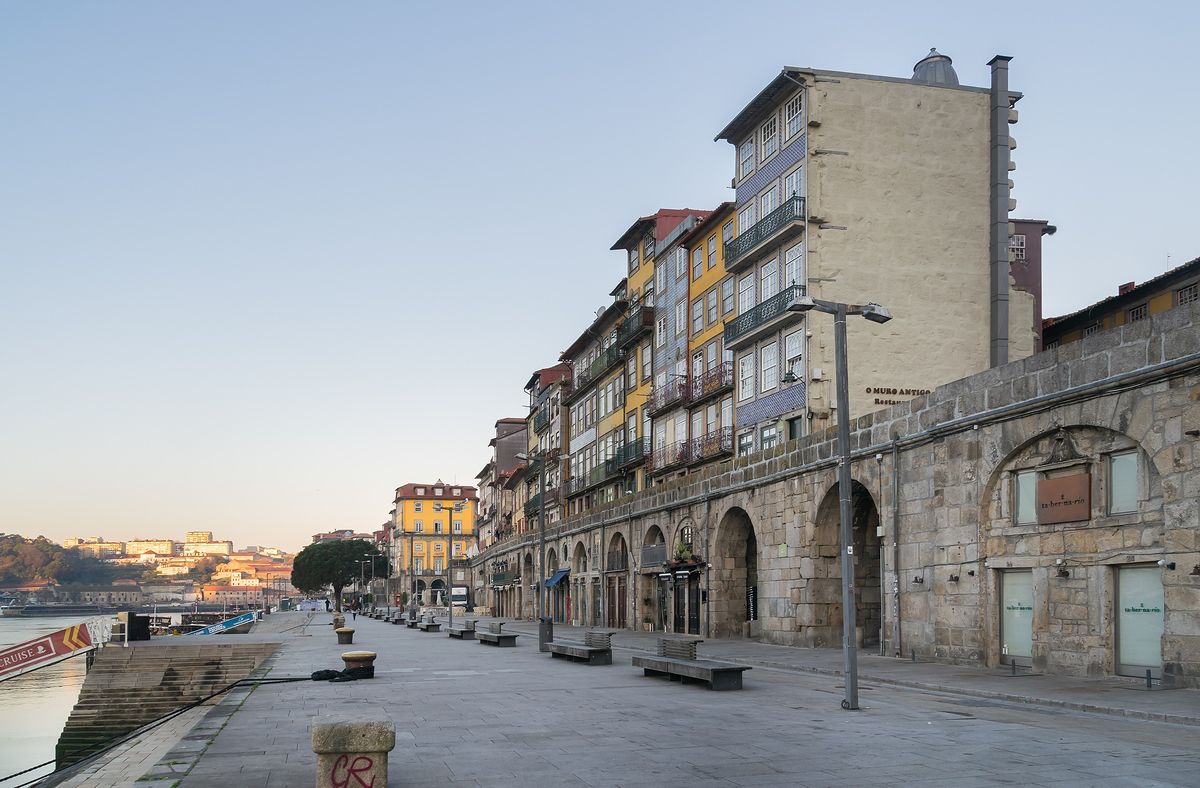
Saturday: granite and tiles
Saturday was the wettest day, so naturally we spent it going uphill. The lanes behind the Ribeira are steep, stepped and paved with big granite slabs polished by centuries of feet, and in the rain they are about as grippy as a bar of soap. Clara walked up Rua de Sant’Ana like a mountain goat. I held on to the walls.
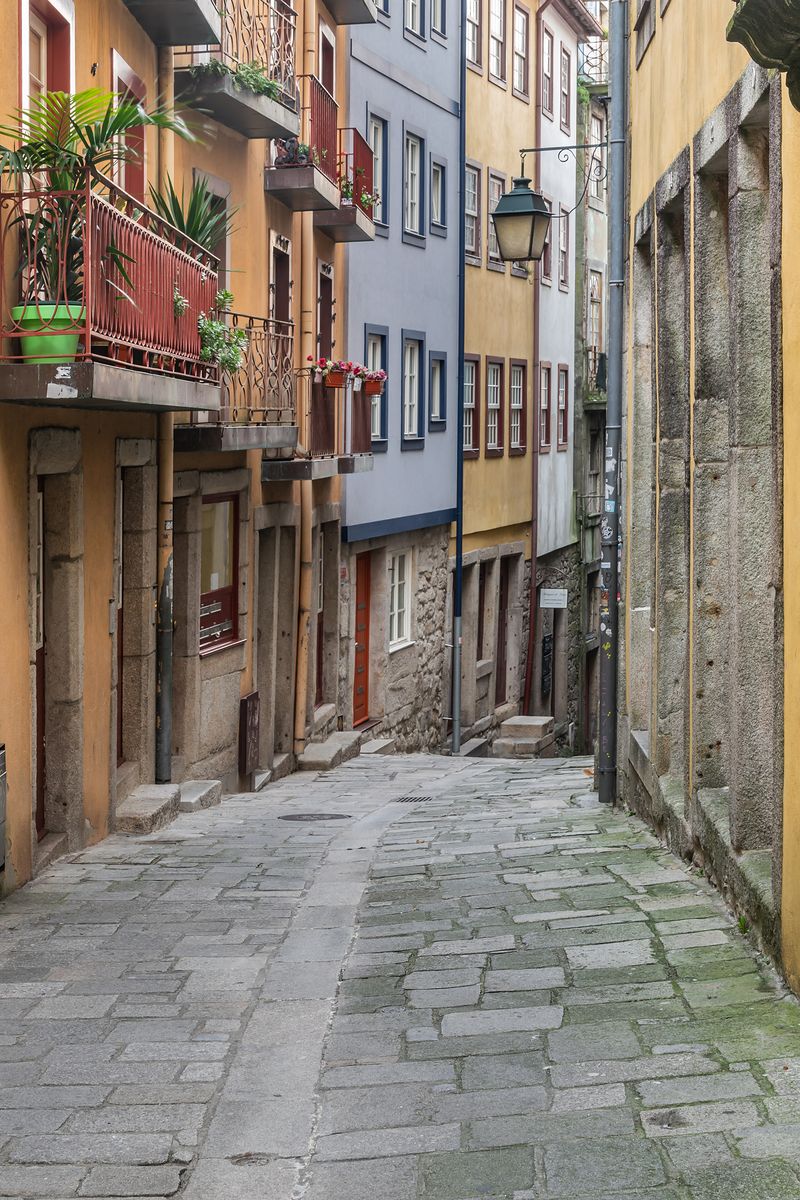
Between showers we climbed the Torre dos Clérigos, which was either brave or foolish. From the top the city was a carpet of wet orange roofs, the cathedral rising out of it on its hill and cloud sitting low beyond.
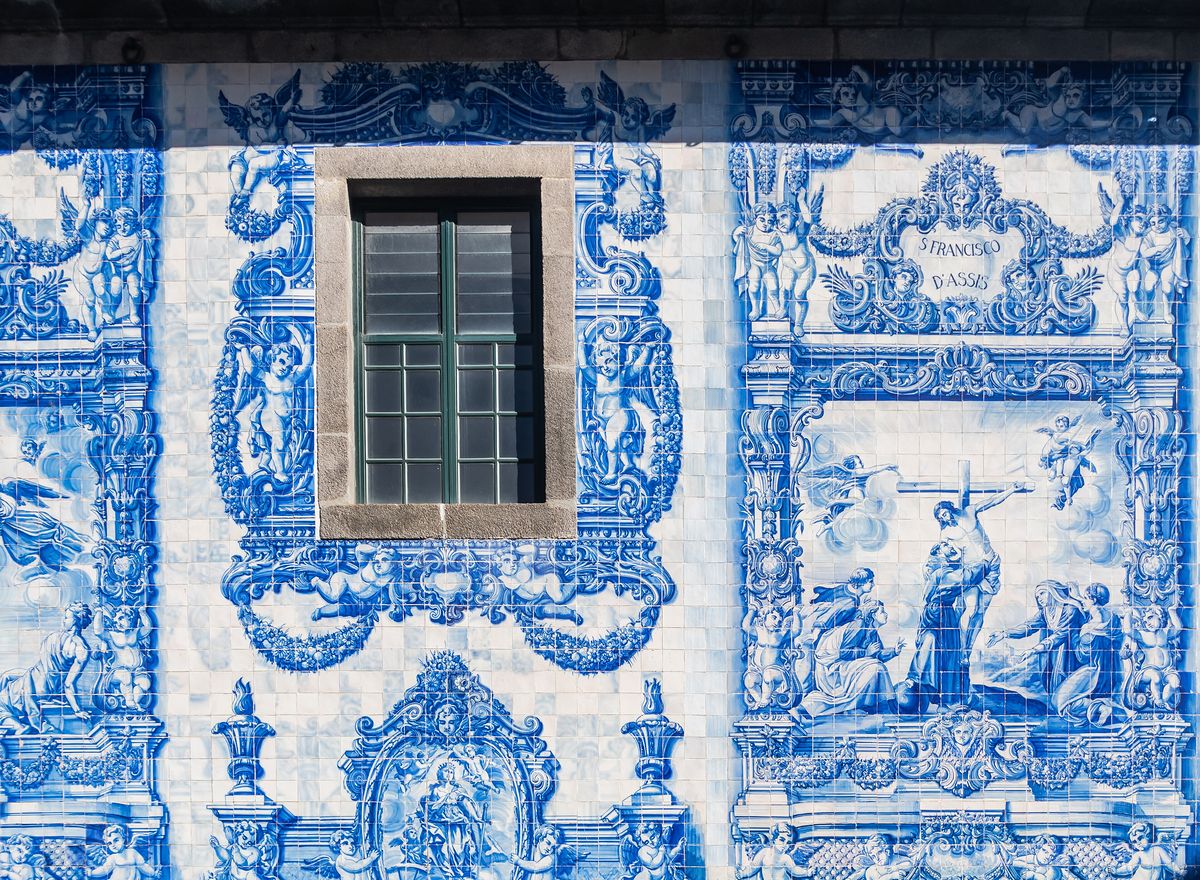
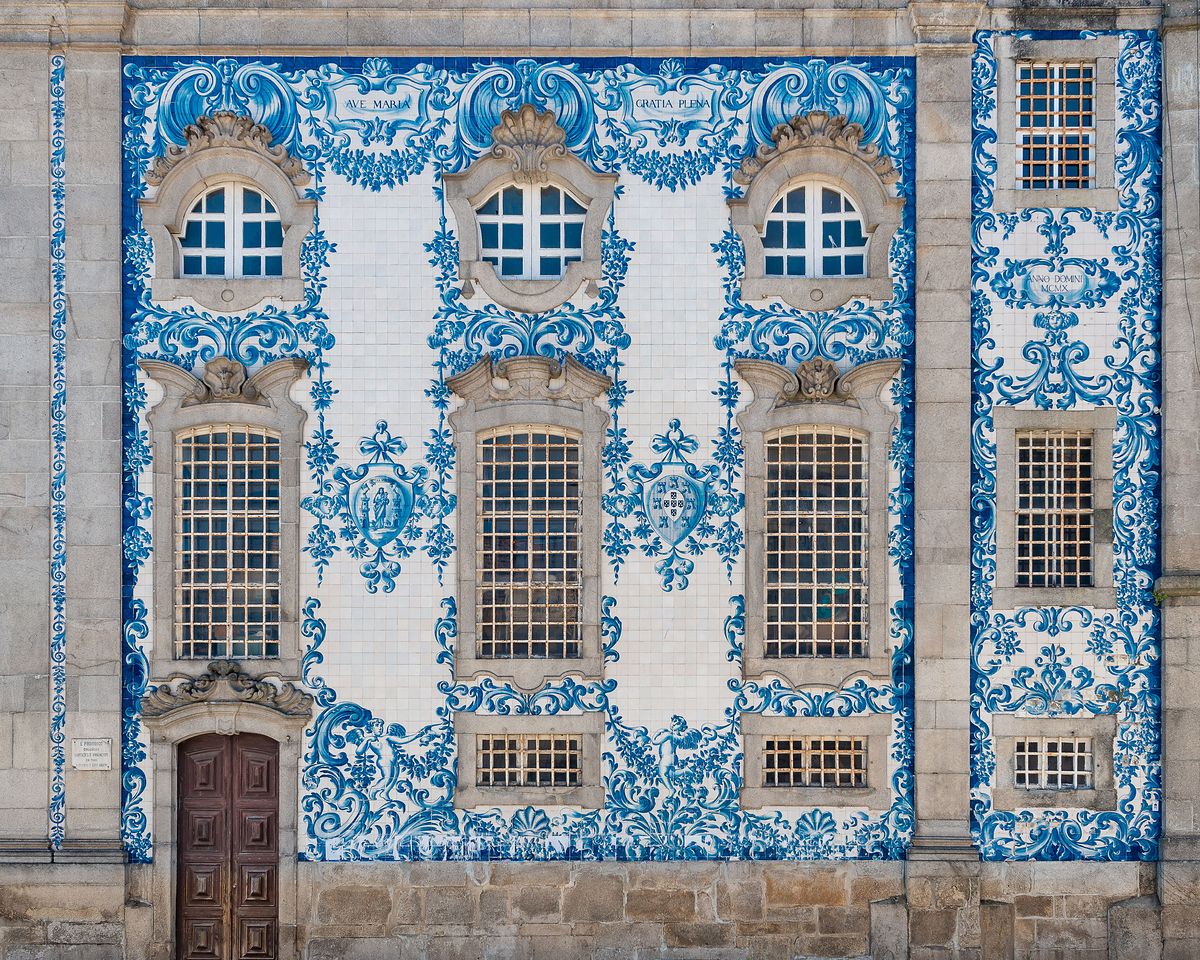
The tiles are what make Porto in the rain. Whole church walls are covered in blue-and-white azulejos, and when they are wet they shine like glazed china. The Capela das Almas on Rua de Santa Catarina is tiled from pavement to cornice; round the side of the Igreja do Carmo there is a whole wall of panels, which we read slowly from under an umbrella.
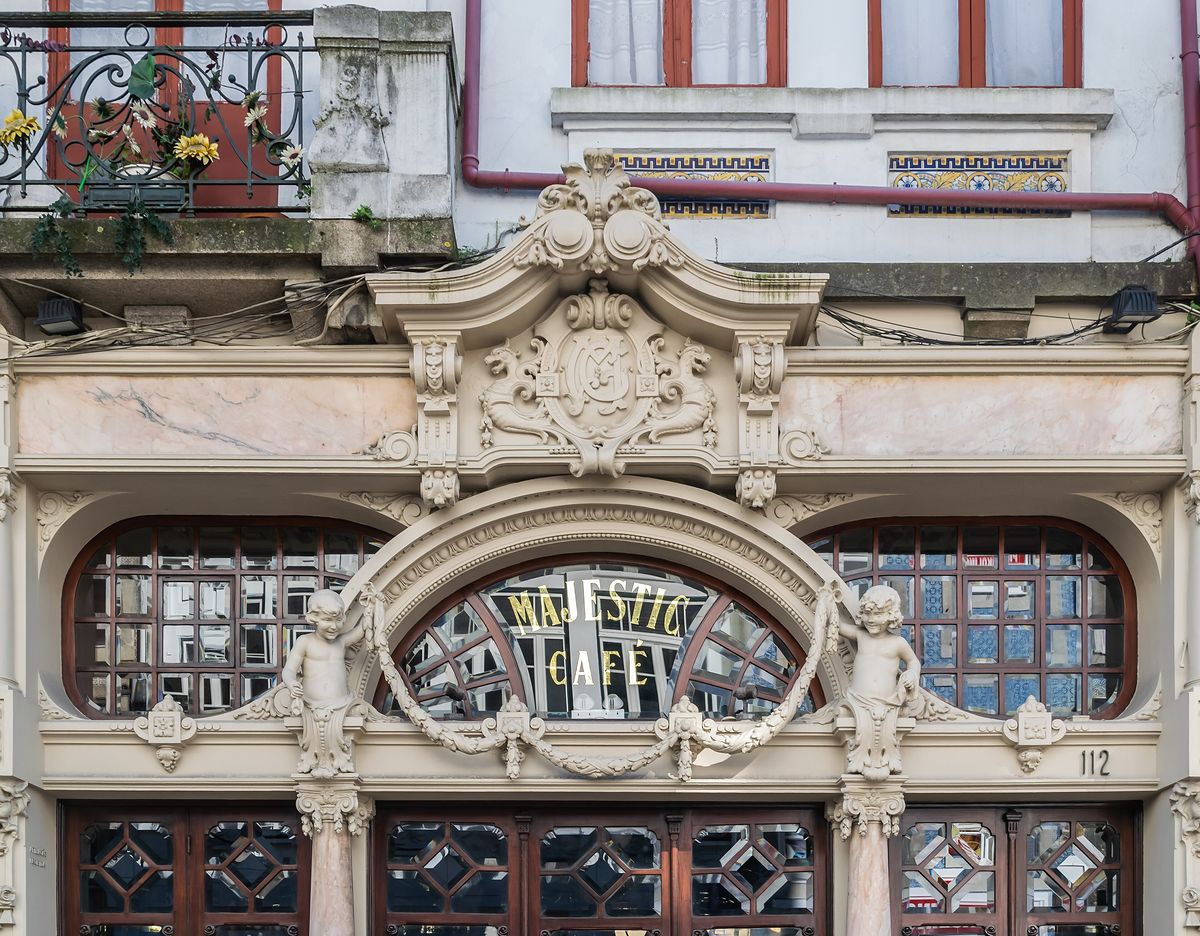
Further down Santa Catarina we did the thing I always tell people not to do and queued outside the Café Majestic. It was worth it: mirrors, carved wood, a decent coffee and, crucially, a roof.
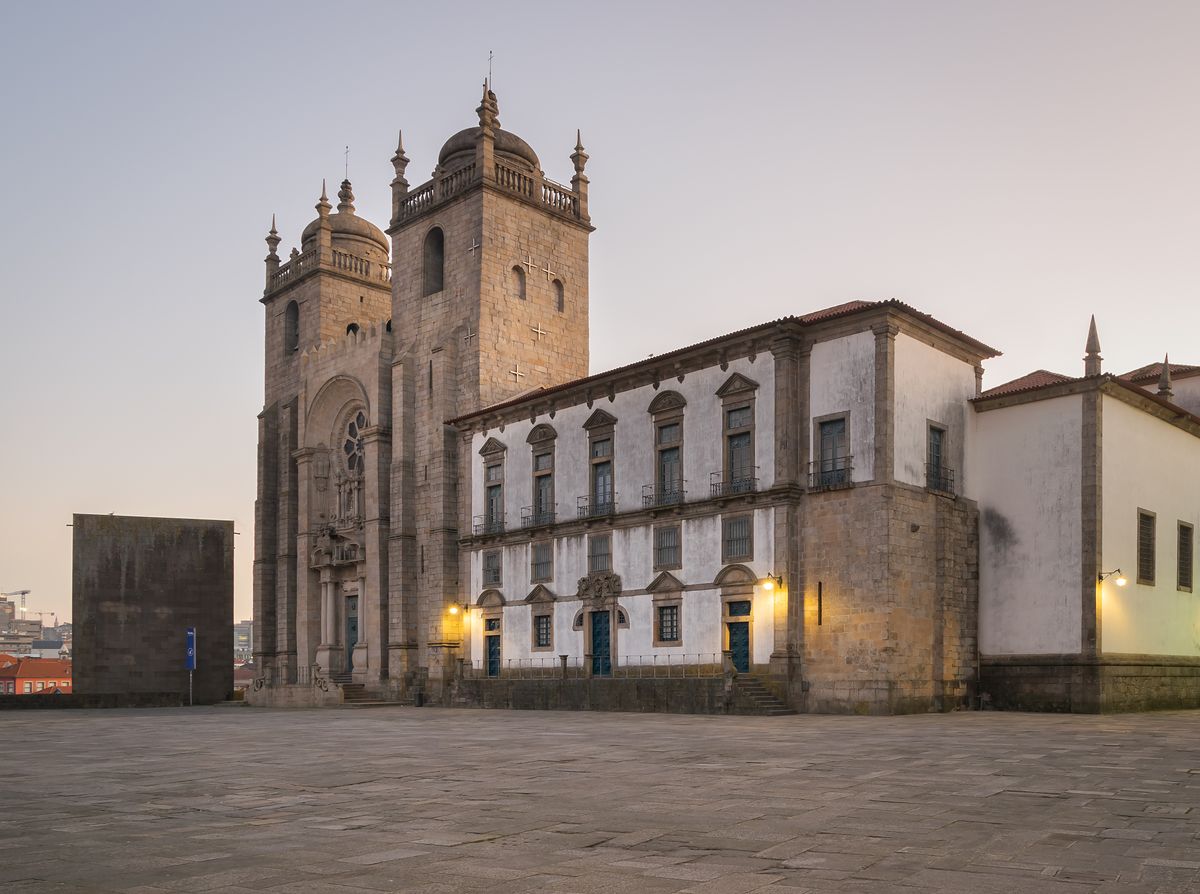
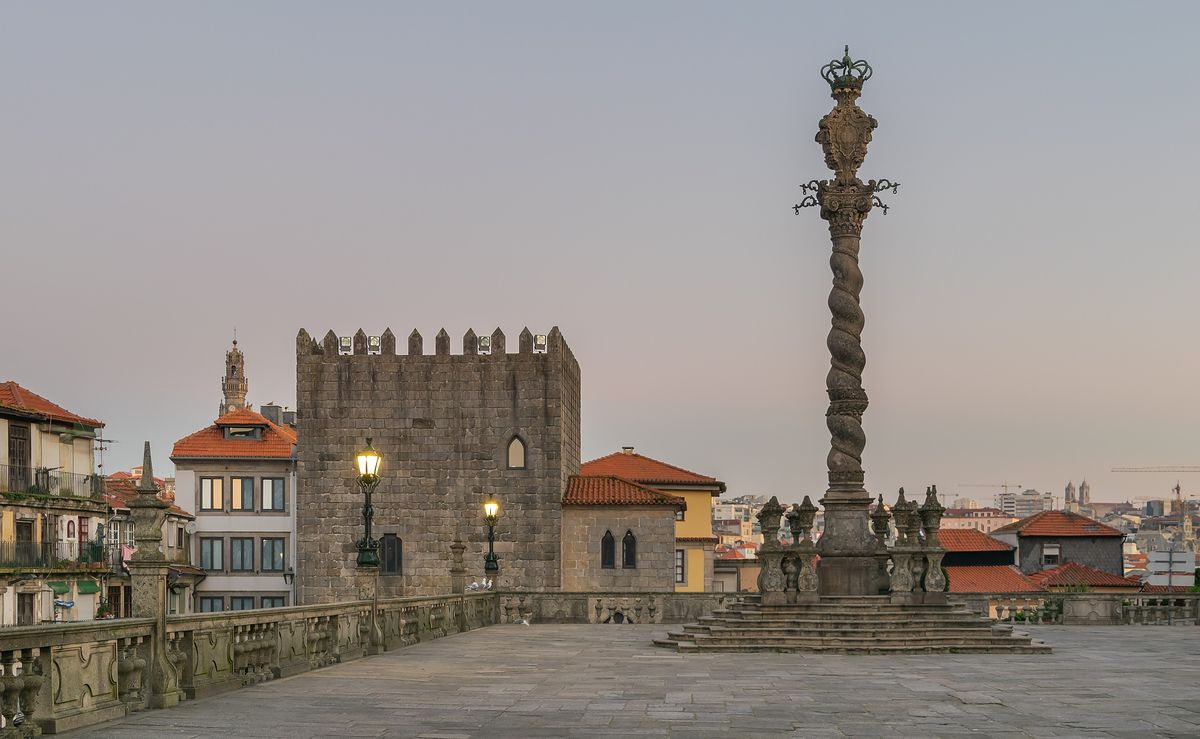
By the time we reached the cathedral the light was going. The Sé looks more like a fortress than a church, all battlements and blank stone, and the big square in front of it was empty apart from the pillory and a couple of lamps coming on.
Sunday: the river
On Sunday morning the rain stopped. We walked out along the Gaia side early, and the low sun came down the valley and lit the whole Ribeira gold. The rabelos were moored off the quay, the flat-bottomed boats that once brought barrels of port down the Douro and now advertise the wine lodges behind them.
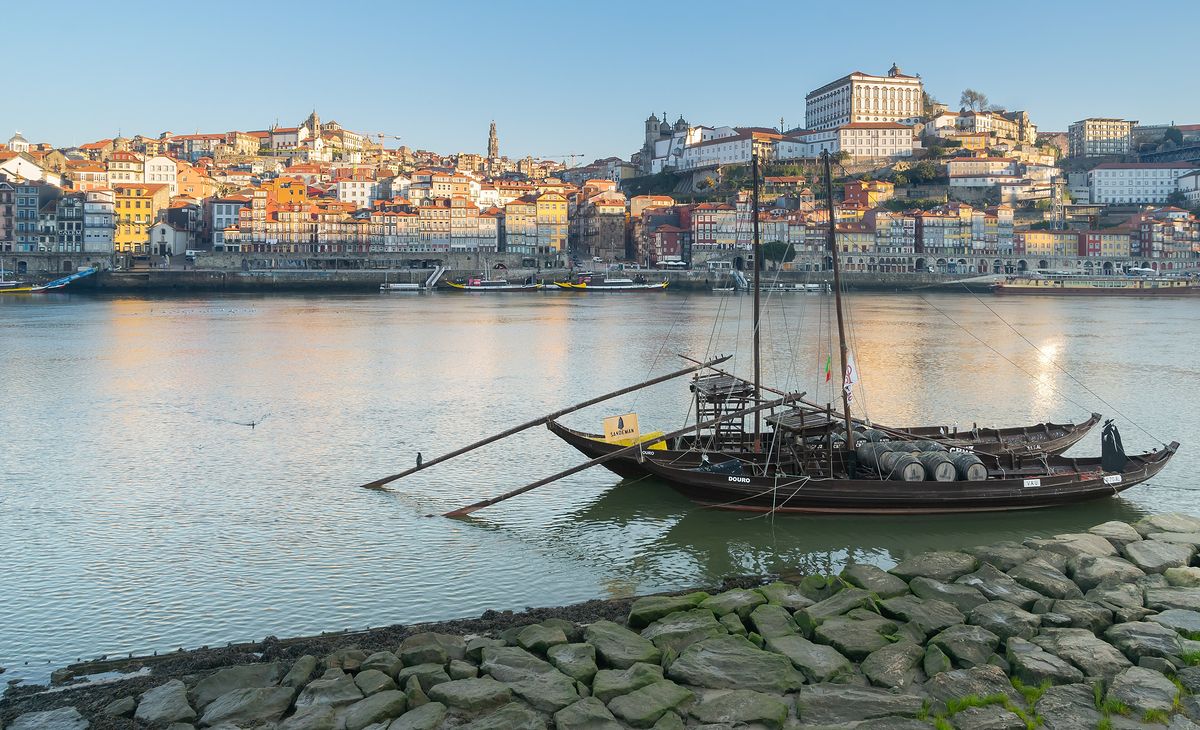
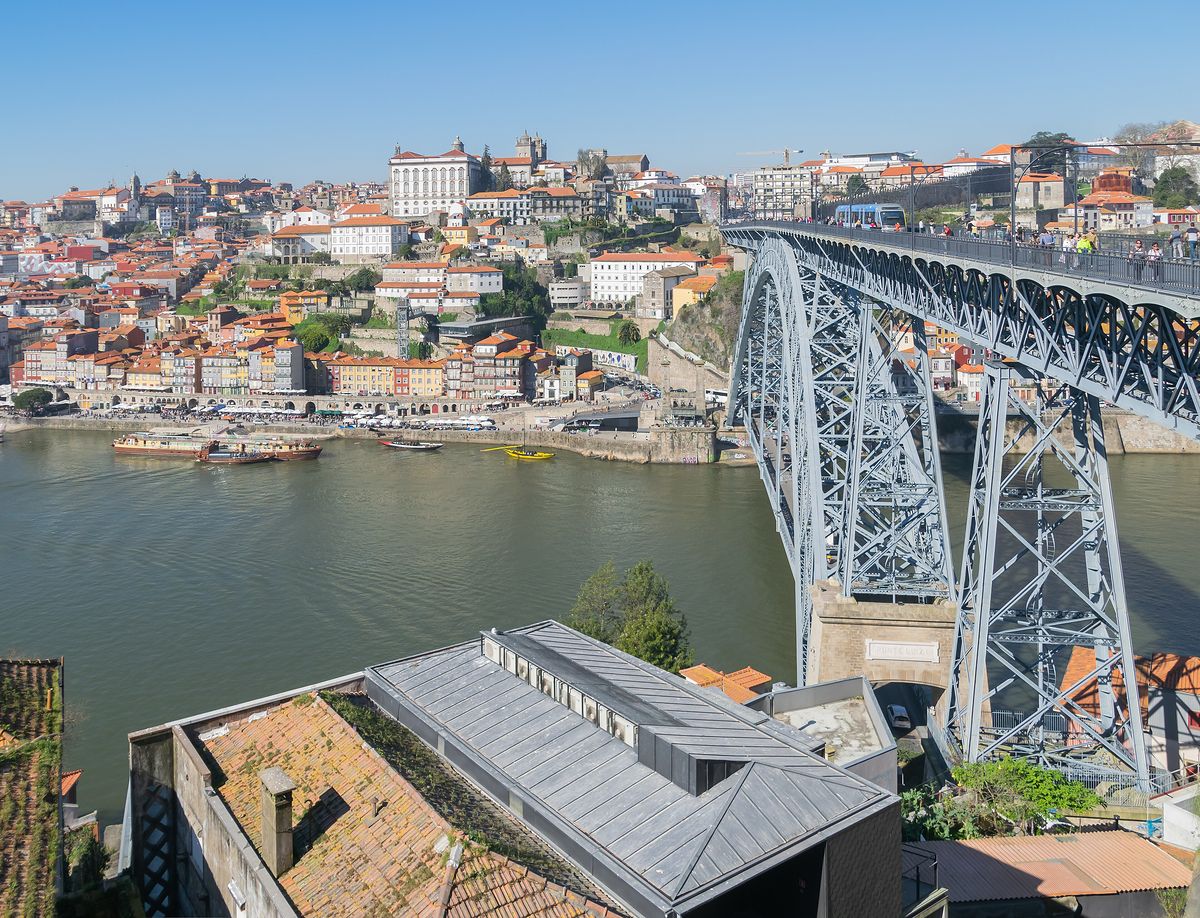
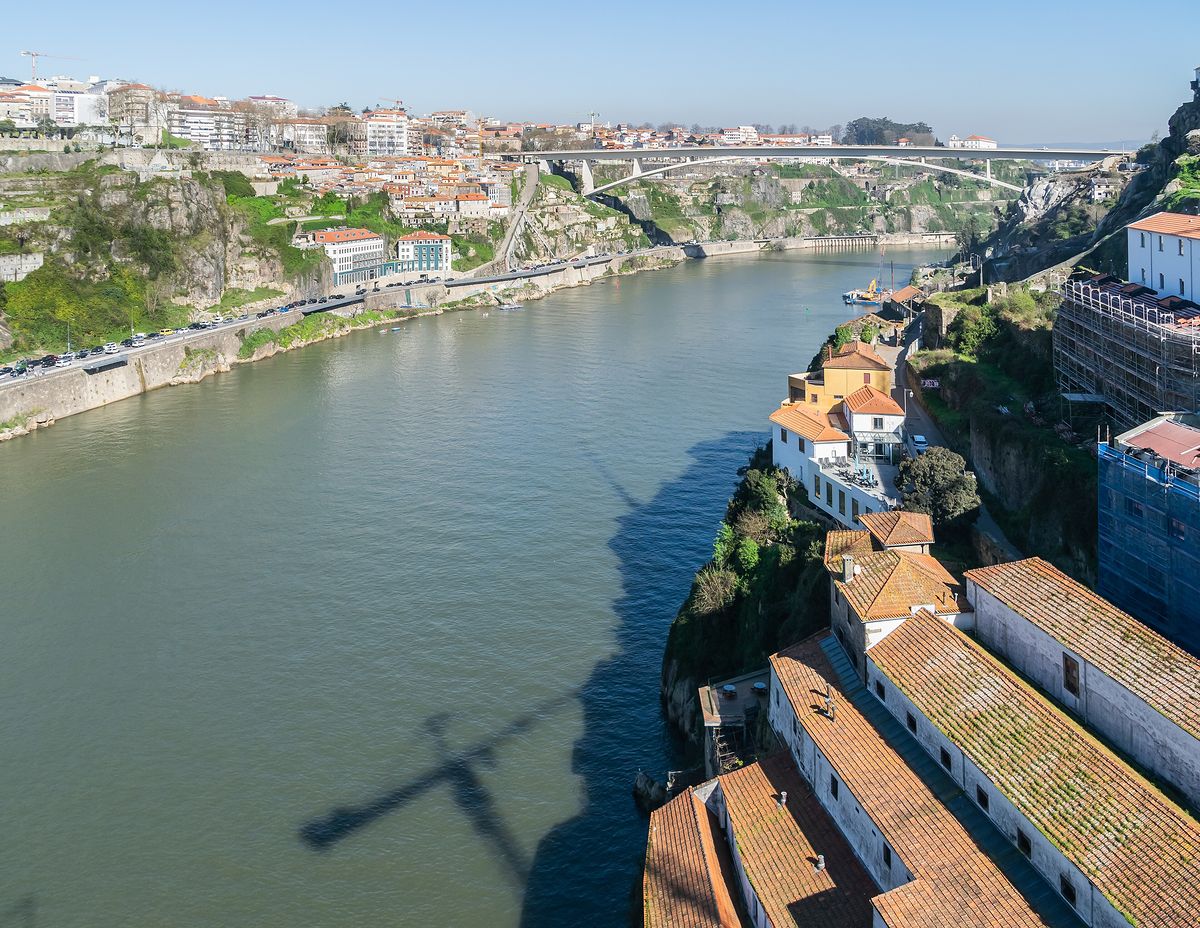
Then we climbed up to the Jardim do Morro and crossed back over the top deck of the Dom Luís I bridge, sharing it with the metro trains and a strong wind. It is a long way down. Below, the river was wide, green and fast after two days of rain.
The rain came back in time for the metro to the airport, of course. I didn’t mind. Nobody visits Porto in December for the weather. You go for the stone, the tiles and the river, and they all look better wet.
Notes
- Pack shoes with real grip; the granite lanes are treacherous in the rain.
- The best view of the Ribeira is from the Gaia side, early in the morning.
- The top deck of the Dom Luís I bridge is open to walkers as well as metro trains, but it is exposed in wind.