Old Wood and Patient Deer
Two day trips from Kyoto at the end of an autumn fortnight: deer that bow for crackers, a bronze Buddha, and the oldest wooden temples in Japan.
I left Nara out of our Kyoto story because it kept trying to take it over. Towards the end of that autumn fortnight we gave it two whole days, taking the early Kintetsu train down from Kyoto each morning and coming back after dark, and I think they were the two days of the trip that Tom talks about most.
The park
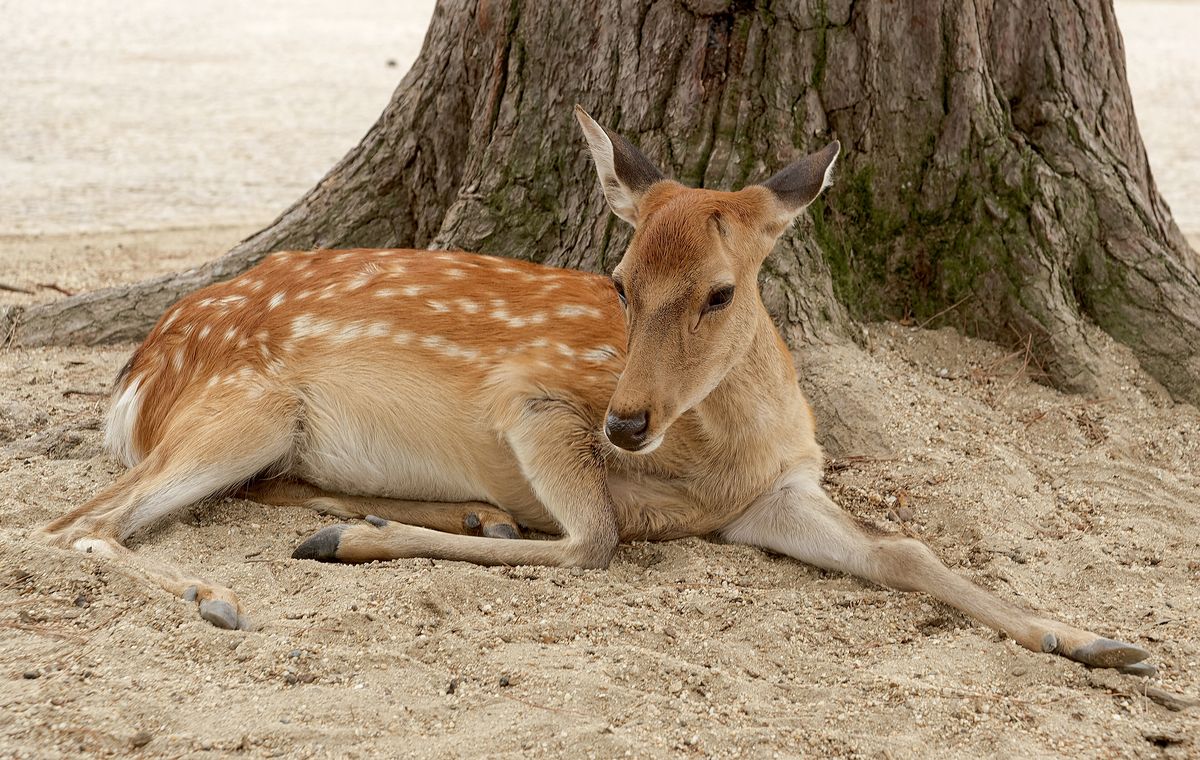
Everyone warns you about the deer, and everyone is right. They have been protected in Nara for centuries as messengers of the gods of Kasuga Taisha, and they know exactly what the stalls selling deer crackers are for. Some of them bow before they take one, which is charming until three more arrive behind you and one of them starts eating your map. The calmer ones lie in the shade of the big trees and ignore all of it.
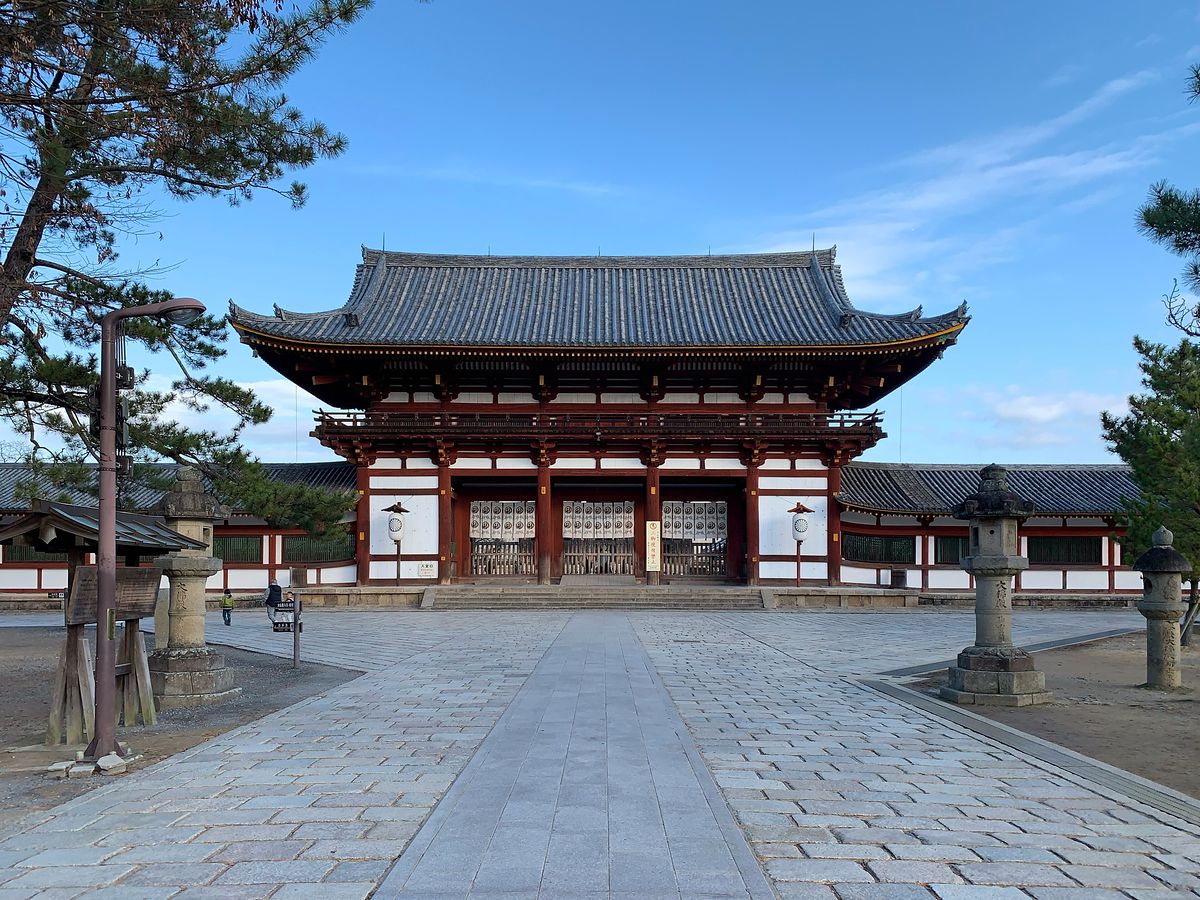
We went straight to Tōdai-ji, and it paid to be early. The low sun was coming across the stone lanterns in front of the inner gate, there were more deer than people, and the long paved approach was almost empty.
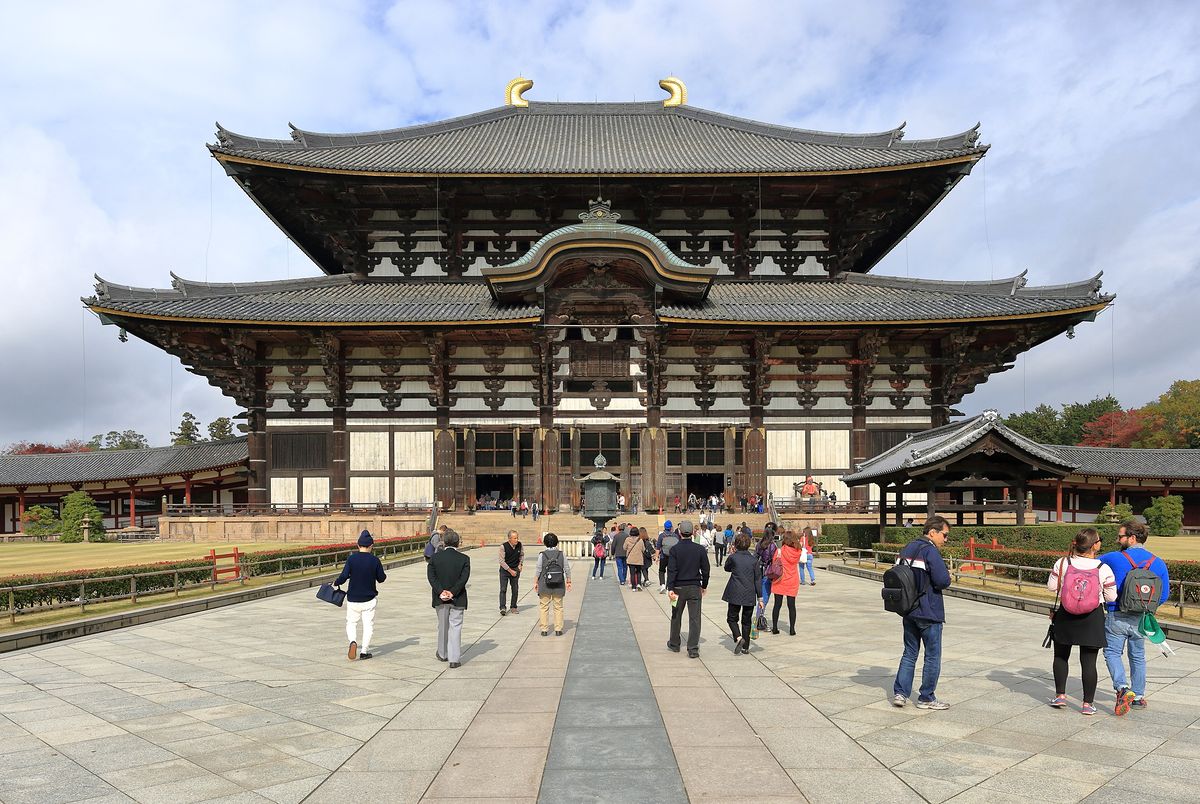
The Great Buddha Hall is hard to take in. It was rebuilt in the early eighteenth century smaller than the original and is still among the largest wooden buildings in the world. Inside, the bronze Buddha sits in a half-light that makes him seem even bigger. Behind him is a pillar with a hole at its base, said to be the size of one of his nostrils; squeezing through is supposed to bring enlightenment. A queue of schoolchildren went through it in seconds. Tom looked at the hole for a long time and decided he was enlightened enough.
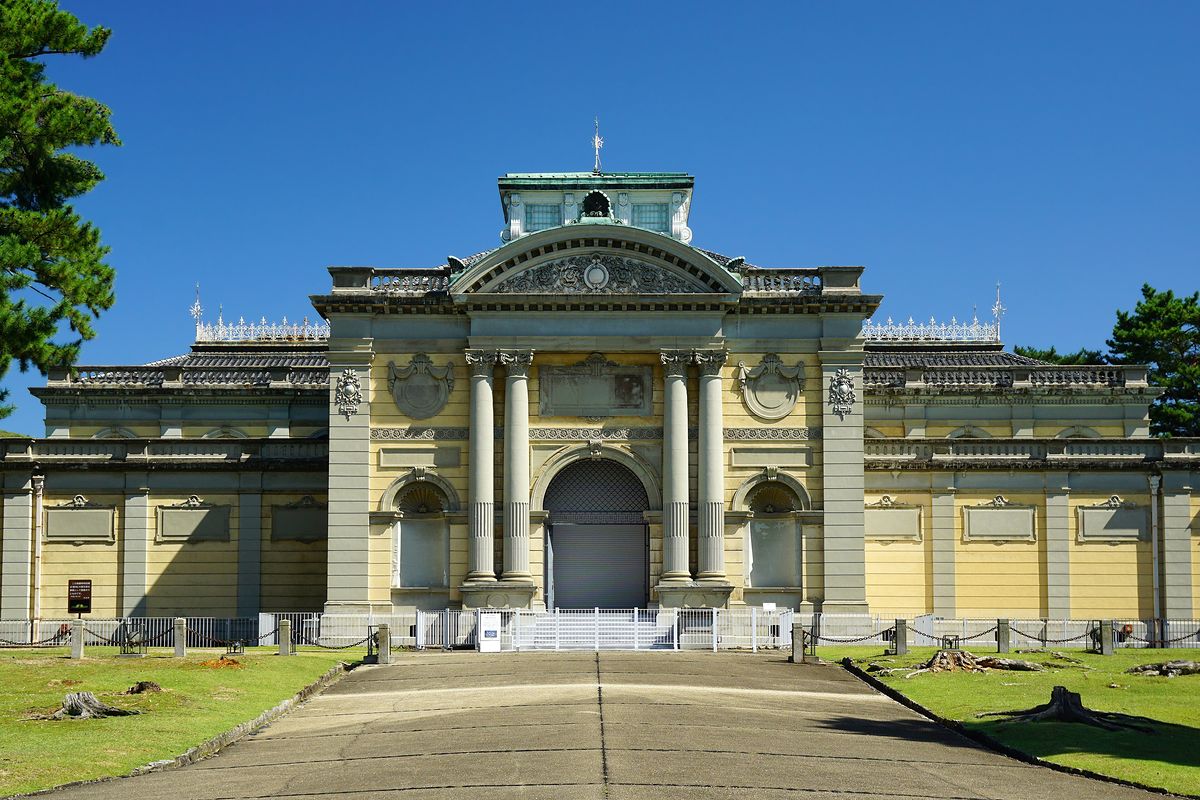
In the afternoon we walked up through the woods to Kasuga Taisha, where moss-covered stone lanterns line the paths in their thousands and bronze ones hang in rows under the eaves, then came back down past the Nara National Museum, whose Meiji-era hall looks like a French town hall that has wandered into a deer park.
The western temples
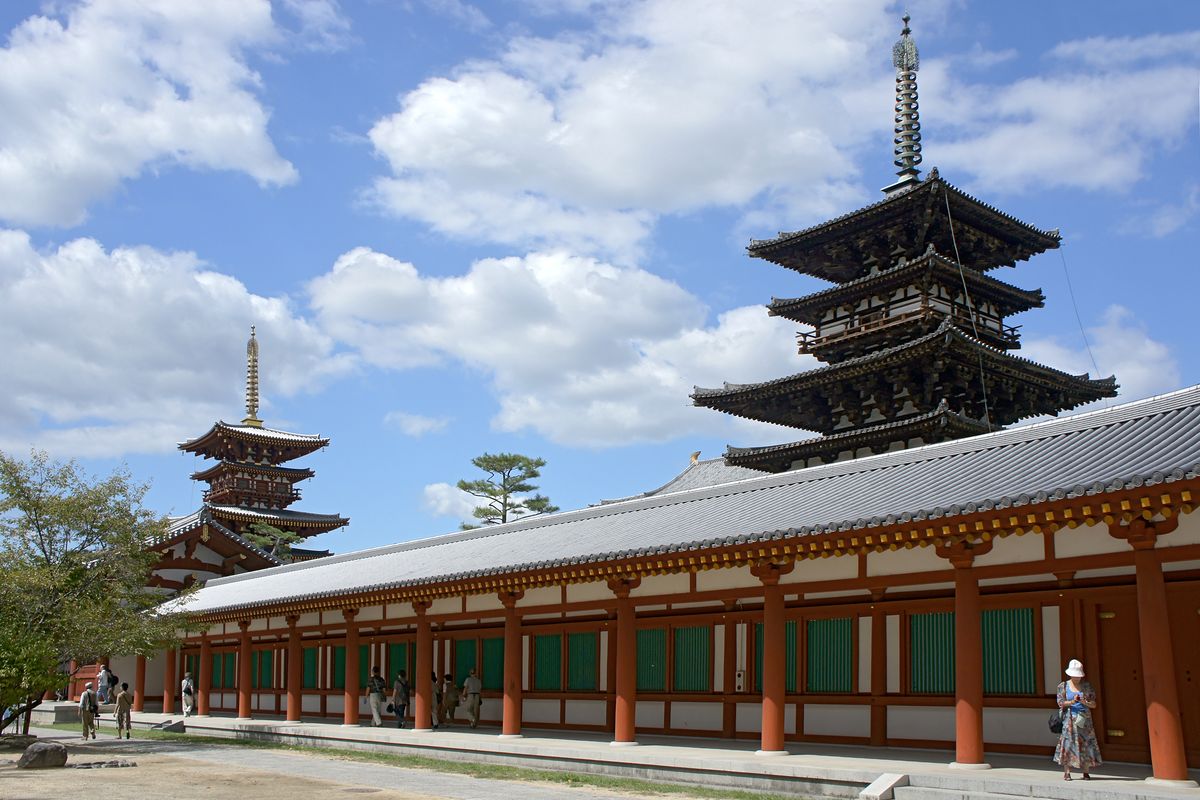
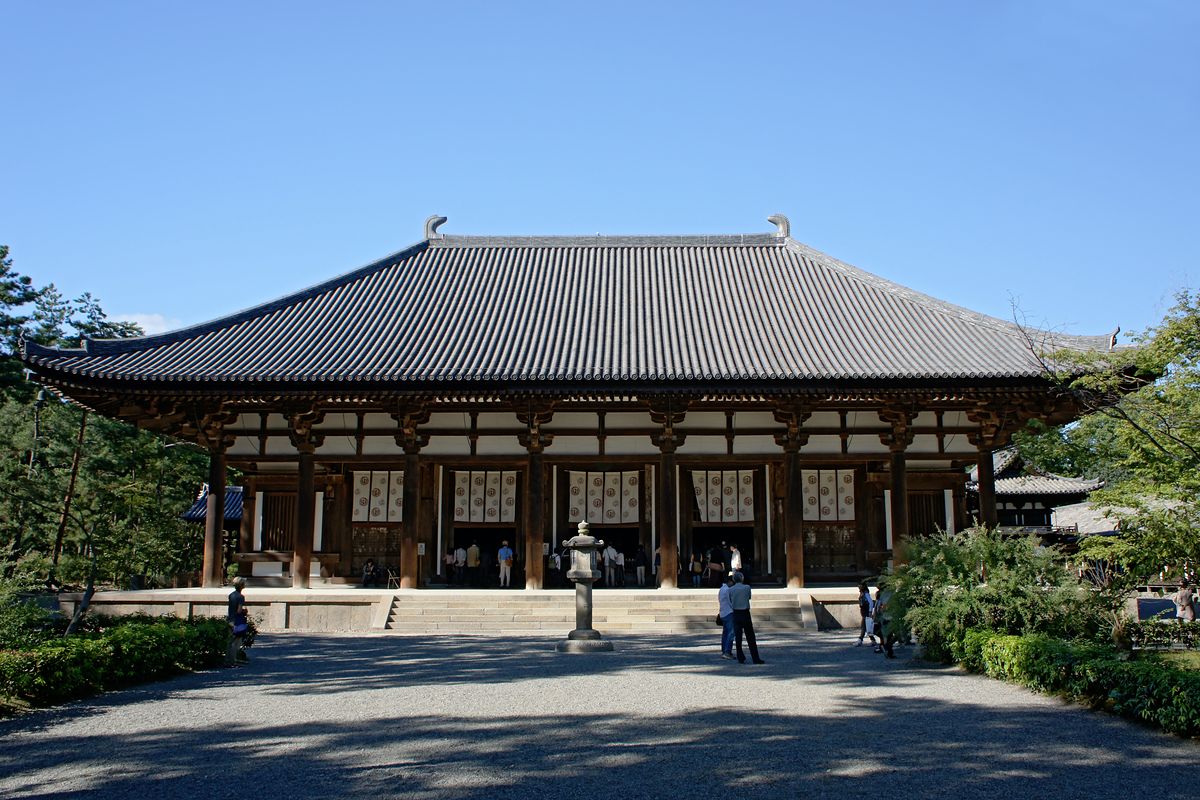
On the second day we left the park to the deer. The train took us to Nishinokyō, where Yakushi-ji’s pagodas stand above a long red cloister, one of them rebuilt within living memory and still startlingly bright. A short walk up a quiet lane brought us to Tōshōdai-ji, founded by a Chinese monk who reached Japan only after several failed voyages, blind by the time he arrived. Its Golden Hall is broad and low and very calm, with nothing much to do except stand in front of it.
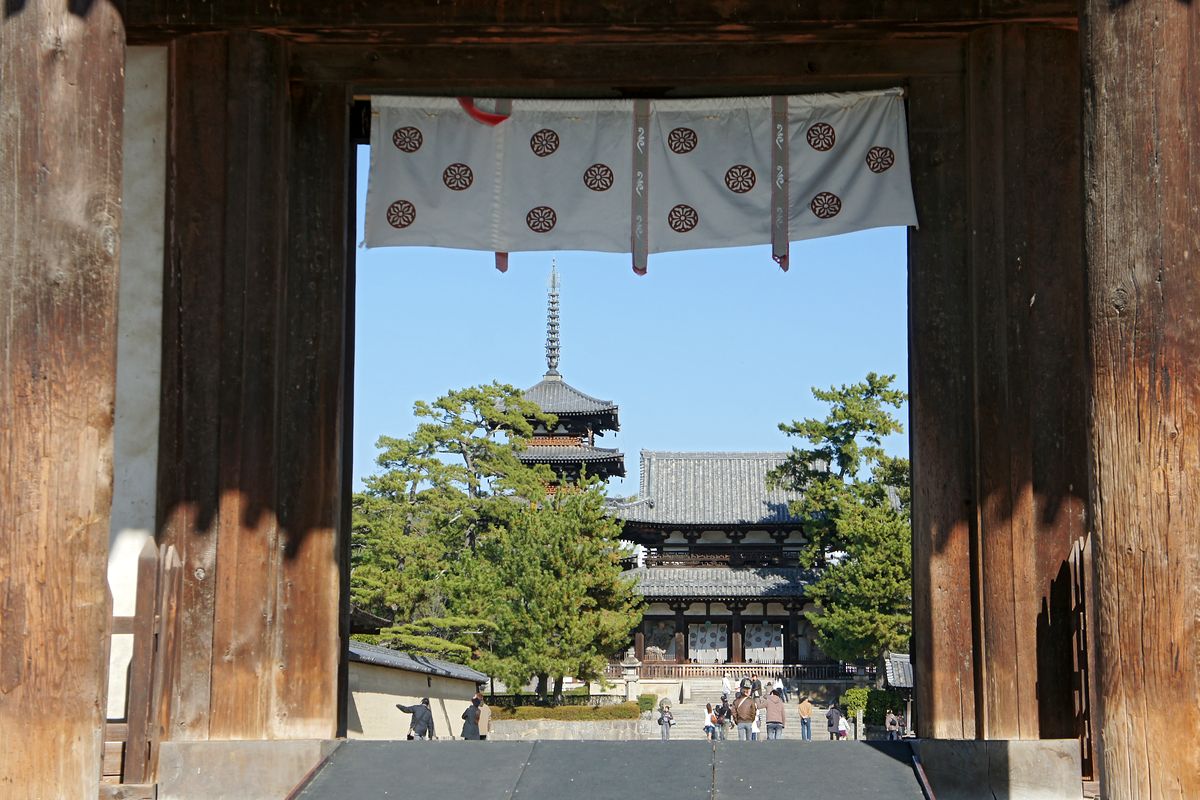
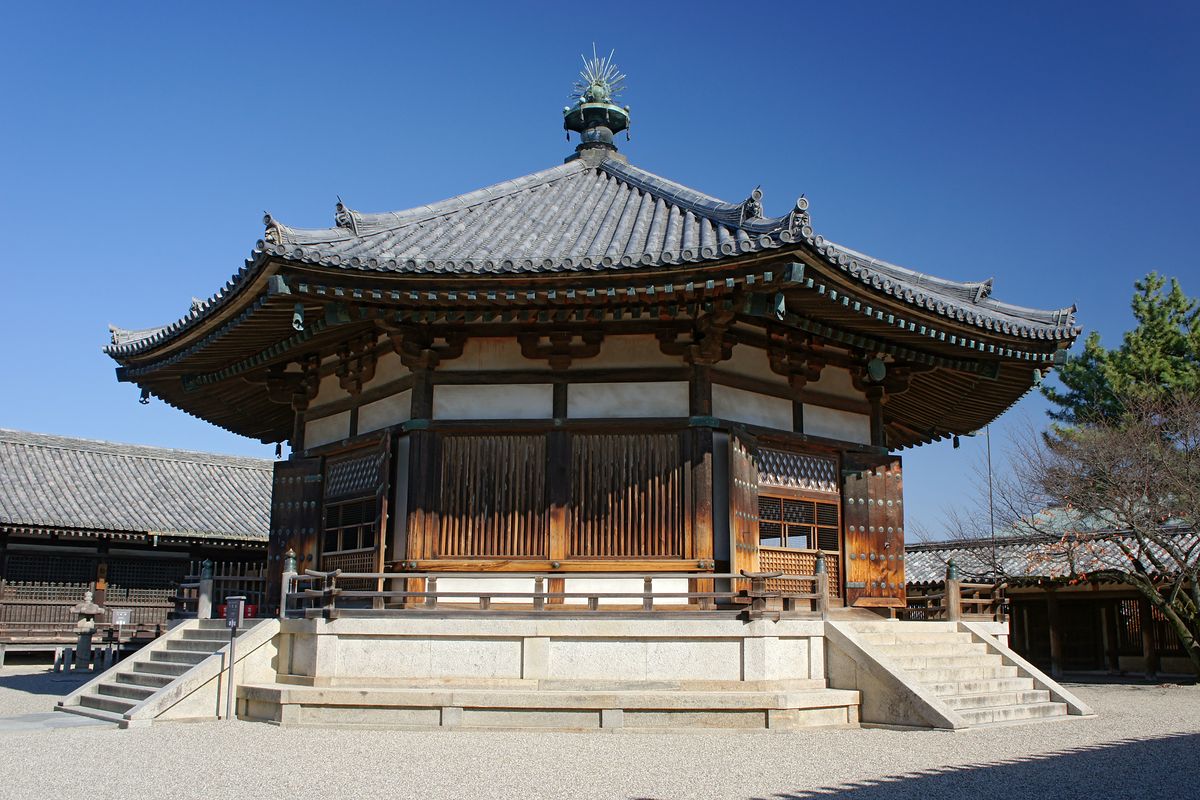
From there we went on to Hōryū-ji, out in the flat country to the south-west. Its oldest buildings date from around the year 700 and are counted among the oldest wooden buildings anywhere. You see the five-storey pagoda first through the frame of the great south gate, at the end of a gravel avenue lined with pines. In the eastern precinct, the octagonal Hall of Dreams sits on its stone platform like a lantern set down on a table.
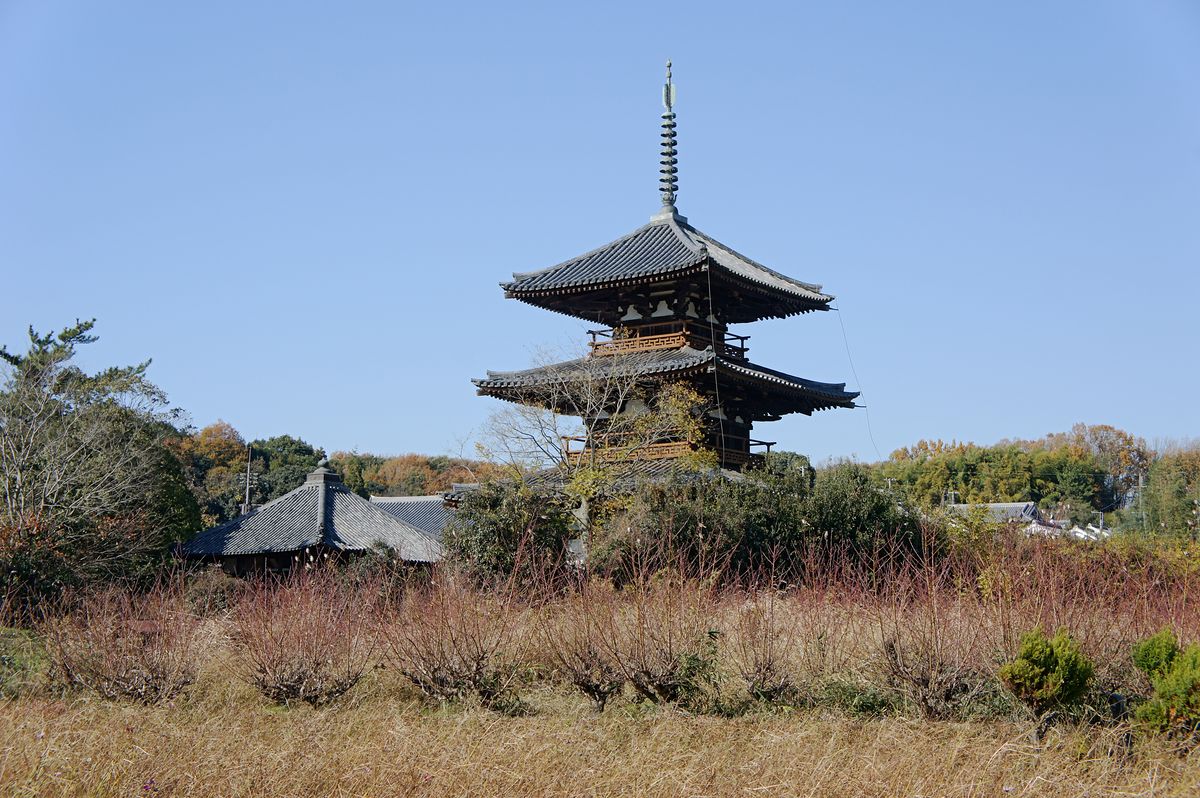
Late in the afternoon we walked north-east across the fields to Hokki-ji. It took longer than the map suggested. There were persimmons on the trees and in boxes outside farmhouses, the grass had gone the colour of straw, and the maples along the field edges were turning. The temple’s three-storey pagoda, said to be the oldest of its kind in Japan, stood alone above the dry scrub with nobody else in sight. We nearly missed the last convenient bus back to the station, and I didn’t mind at all.
Notes
- Nara is under an hour from Kyoto by train. Hōryū-ji and Hokki-ji make a separate day, or a long second half of one.
- Arrive at Tōdai-ji early; by mid-morning the school groups are in.
- Don’t tease the deer with crackers. Hand them over promptly, and show empty hands when you have finished.