The Maples Come Down the Hill
In Kyoto the autumn colour starts in the hills and works its way into the city. We spent two weeks following it, one temple garden at a time.
Nobody tells you that autumn in Kyoto moves. The maples on the wooded hills that ring the city turn first, and the colour drifts down into the temple gardens over a few weeks, so that one garden is still green while another, a bus ride away, is at its peak. We arrived at the beginning of November with a list of famous places and soon threw it out in favour of a simpler rule: go wherever the colour has got to, and get there before the coaches do.
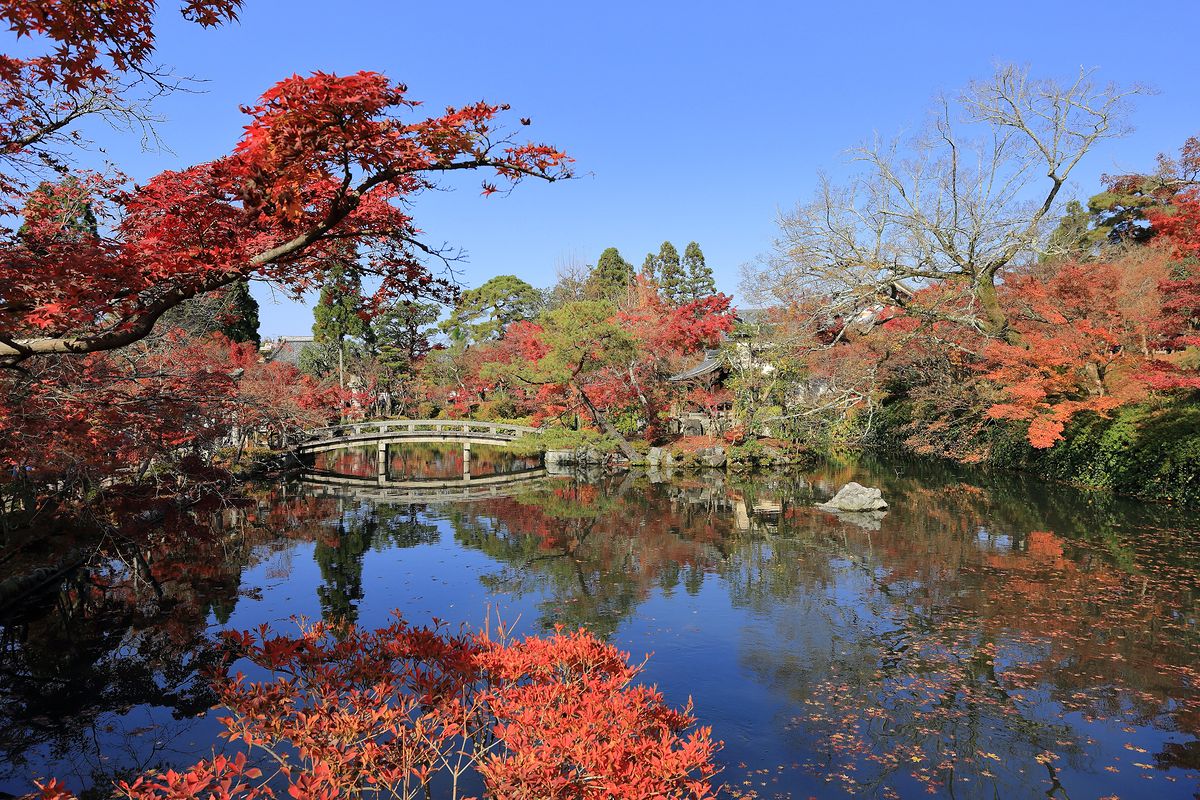
Eikan-dō, in the north-east, was the first garden that had properly turned. Its pond was a mirror full of red and orange, and the little arched bridge looked almost too neat. Inside, the temple’s Amida Buddha glances back over his left shoulder, as if checking whether you are keeping up. Tom said he knew the feeling.
The edges of the city
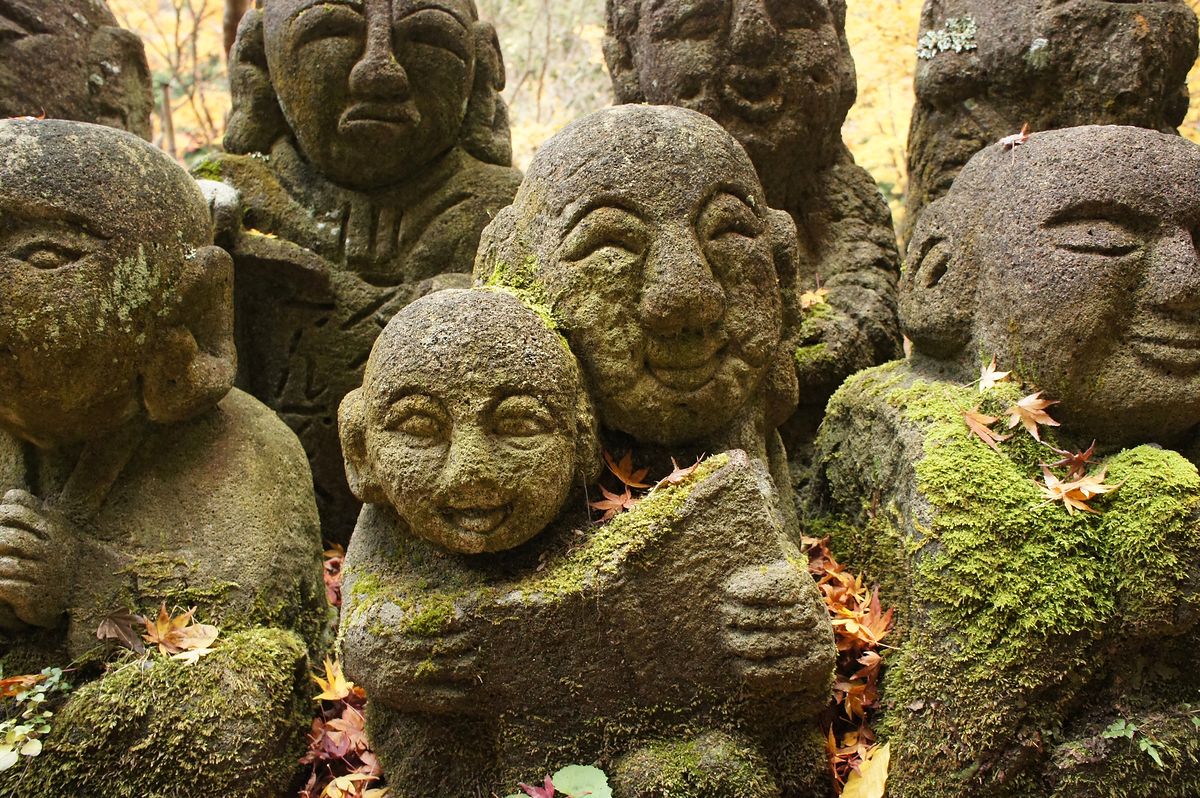
The colour arrived early on the western edge. At Otagi Nenbutsu-ji, beyond the bamboo of Arashiyama, twelve hundred small stone figures sit on the hillside, carved by ordinary worshippers within living memory. Each has its own face: one grinning, one frowning, one apparently asleep. Moss has grown over their shoulders and maple leaves had collected in their laps.
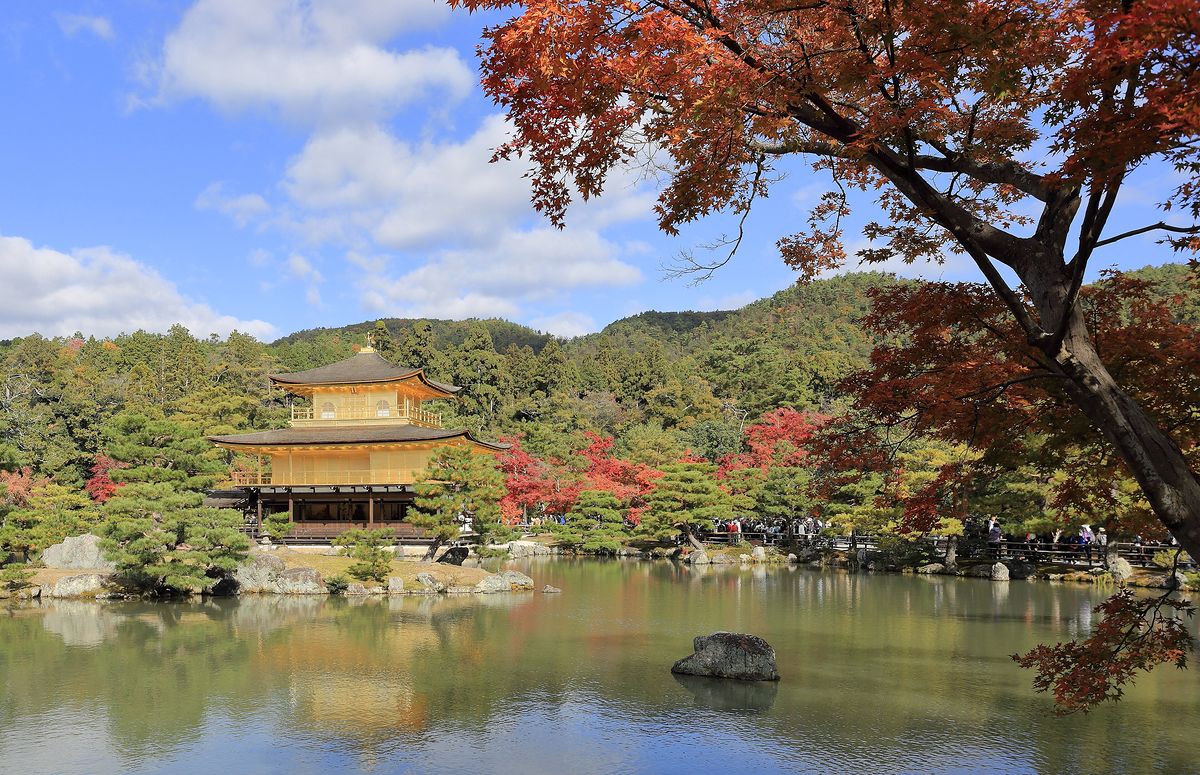
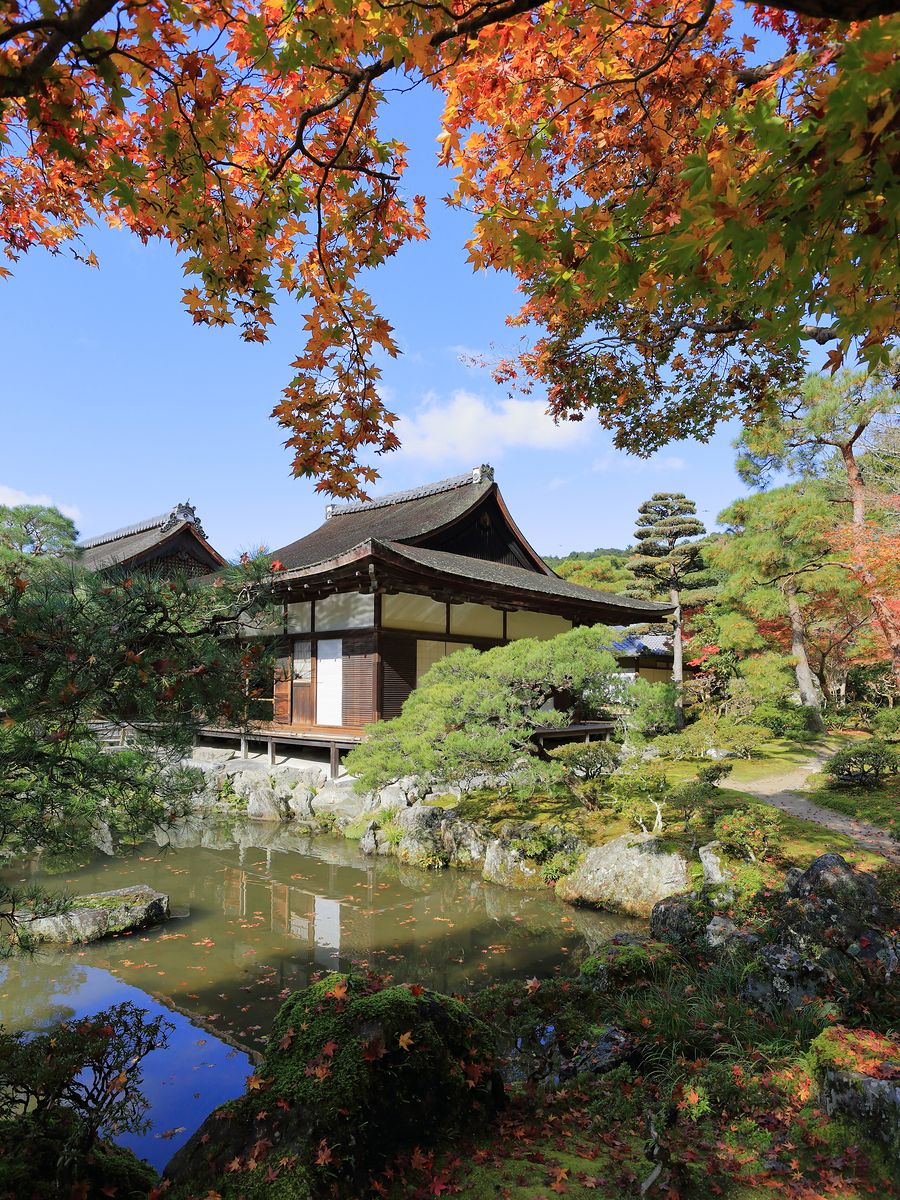
Kinkaku-ji is never quiet, and I didn’t expect it to be. But a gold pavilion against autumn maples is hard to resent, even with a hundred phones raised beside the pond. On the other side of the city Ginkaku-ji, the Silver Pavilion that never got its silver, is the better place to slow down, and the small Tōgu-dō hall beside its pond holds one of the oldest tea rooms in Japan.
Up the mountain
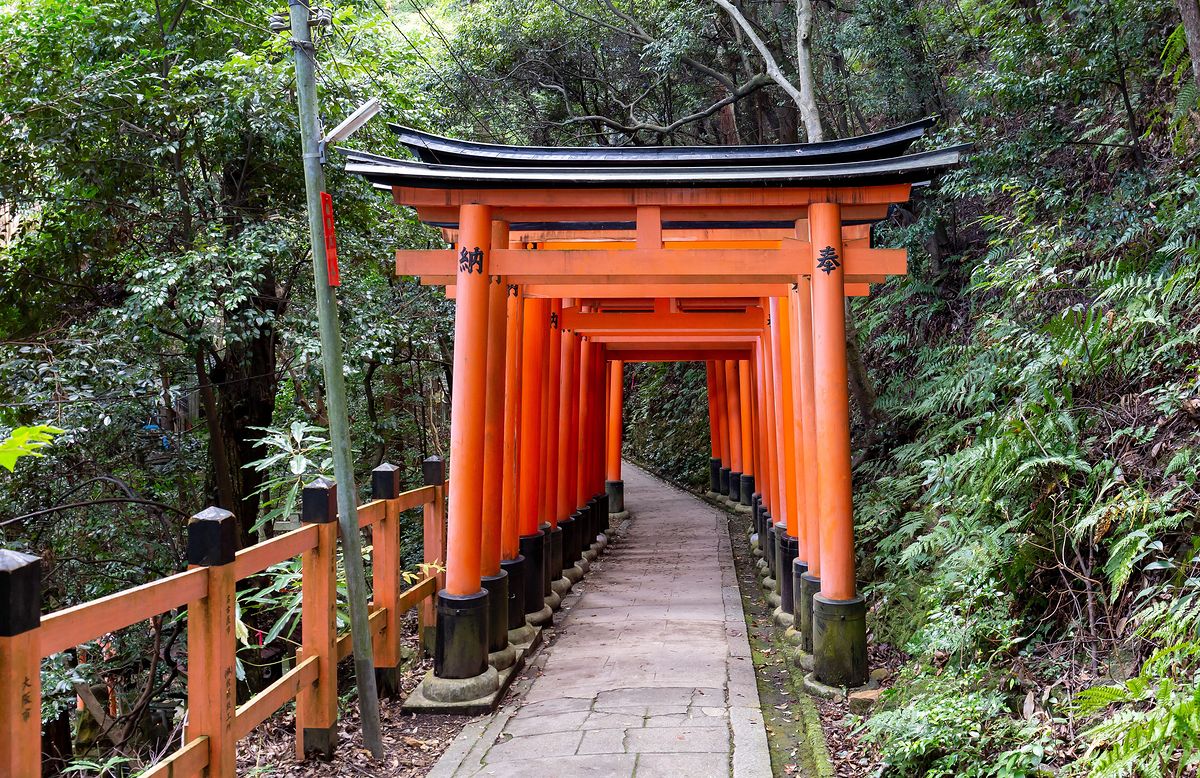
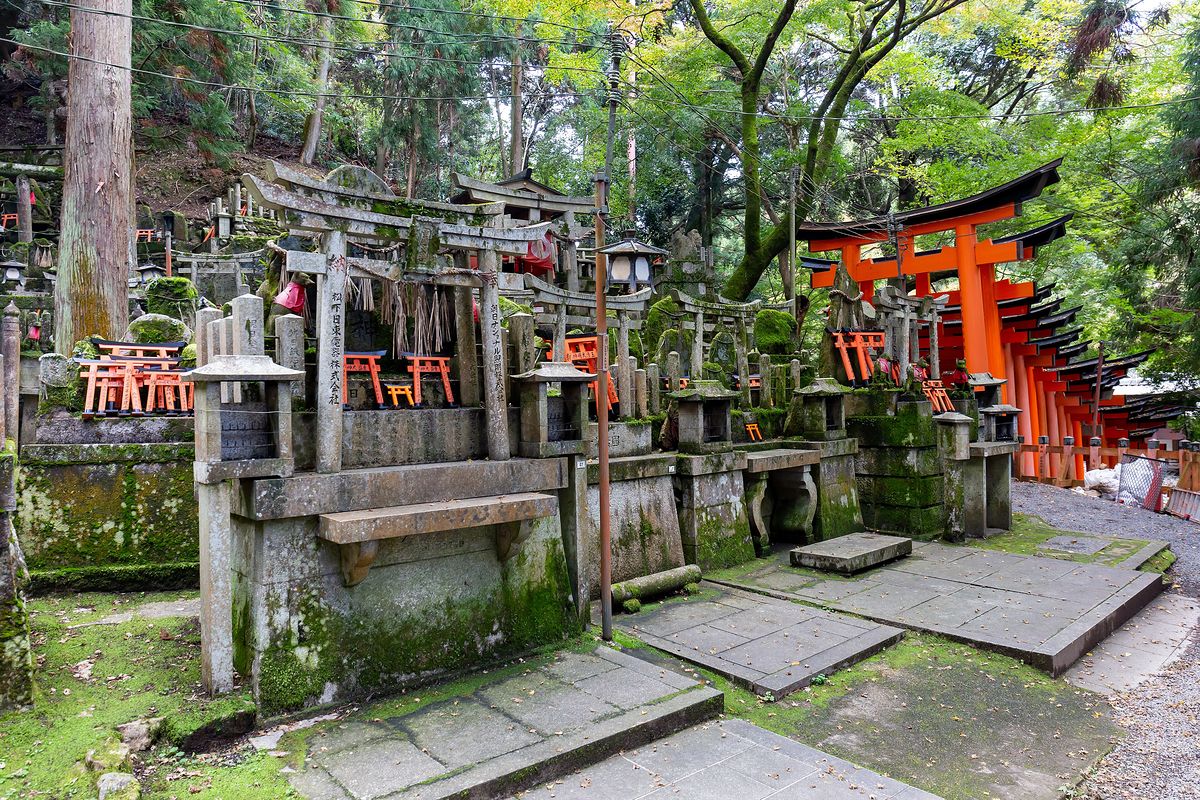
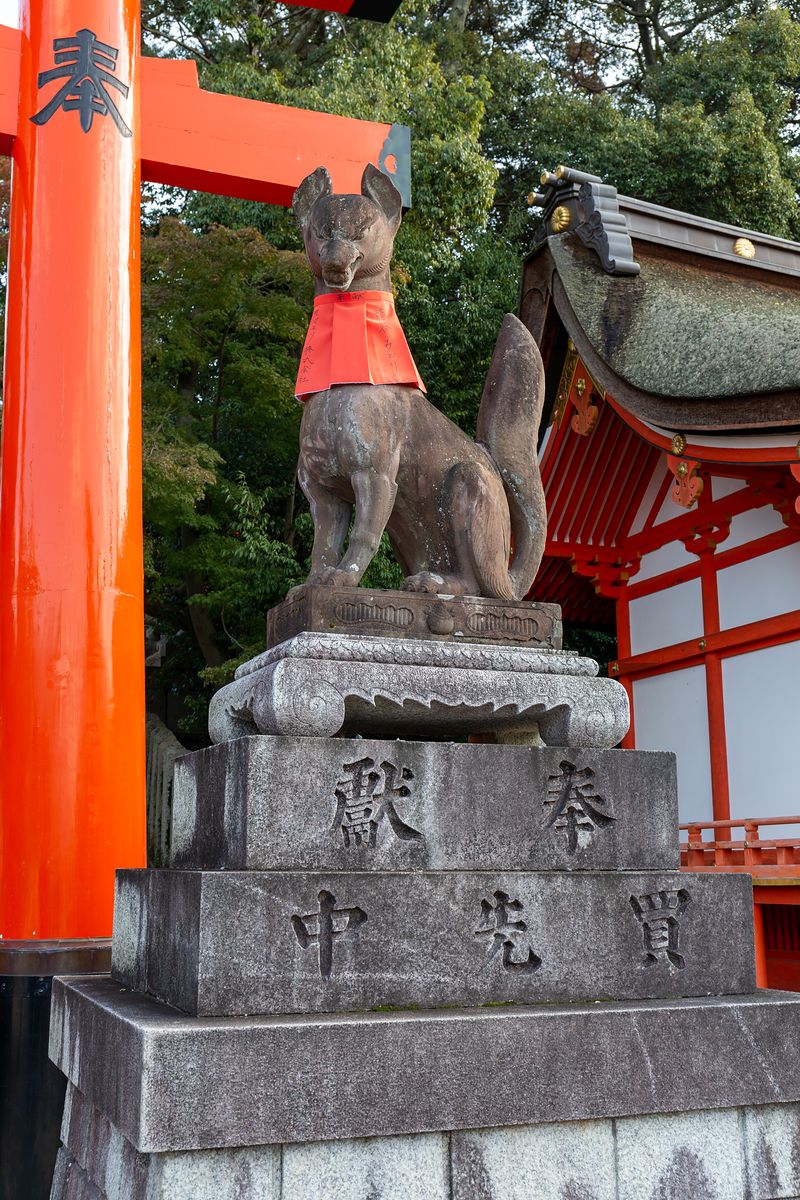
Fushimi Inari is evergreen, so the colour hardly matters there, and we went on a grey morning when the rain was keeping people away. The tunnels of torii thin out as you climb, and the higher shrines are a jumble of mossy stone altars and miniature gates left as offerings. Stone foxes, the messengers of Inari, guard nearly every one of them in red bibs.
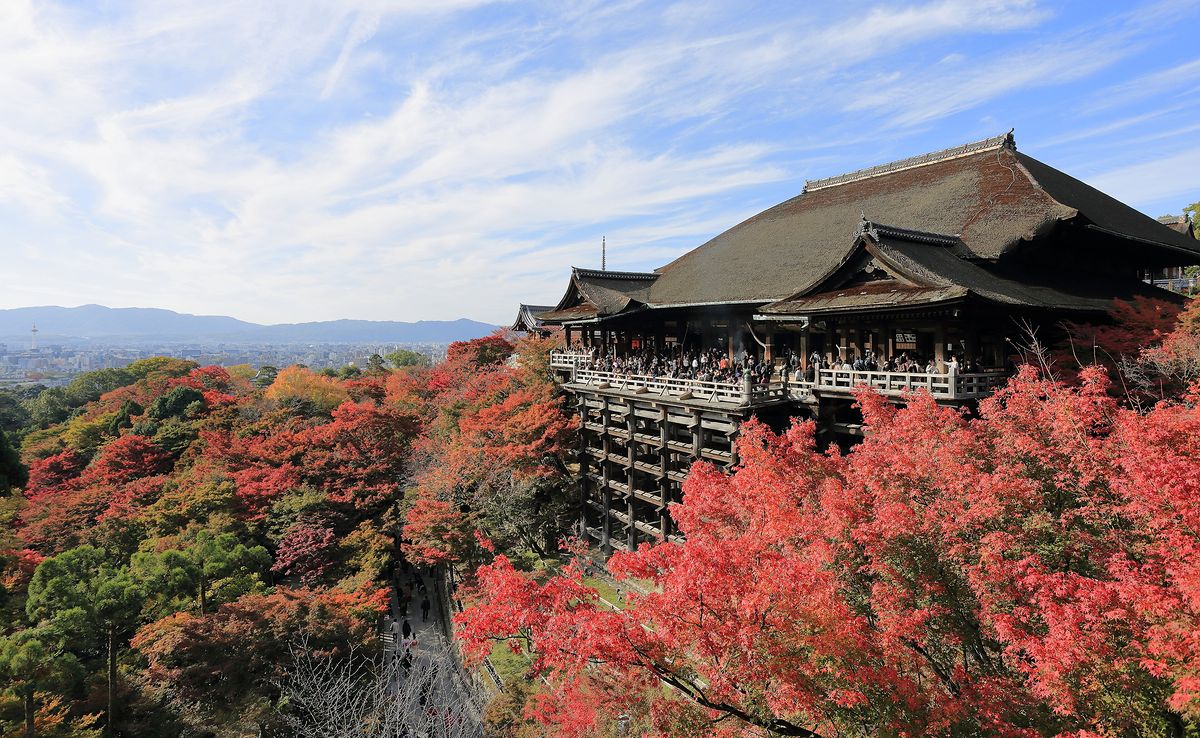
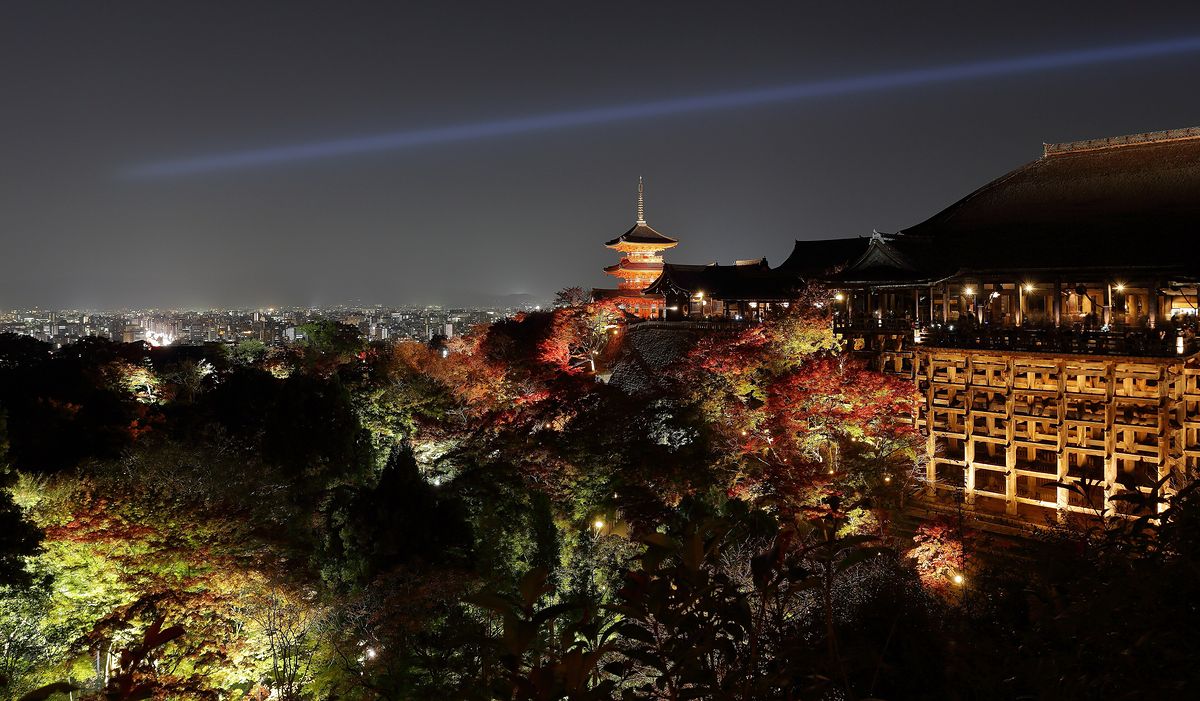
By the middle of the month the colour had reached Higashiyama. Kiyomizu-dera, high on its wooden stage, stood above a slope of red maples so thick that the city beyond looked faded. We went back after dark, when the temple lights its trees for the autumn evenings, and stood in a slow-moving queue that was worth every minute of it.
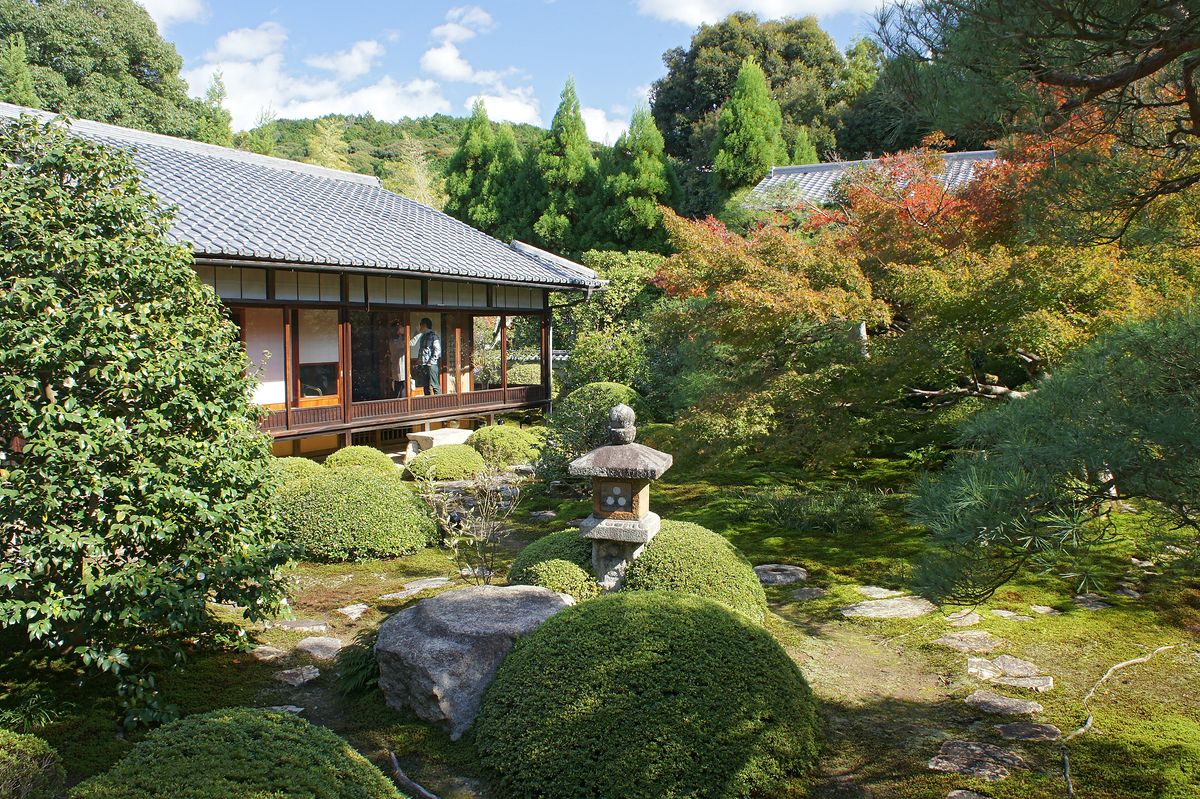
My favourite garden of the fortnight, though, was Unryū-in, a small sub-temple near Sennyū-ji, where the maples were just beginning to turn above clipped moss and a stone lantern, and the only other visitor was standing quietly on the veranda.
Uji
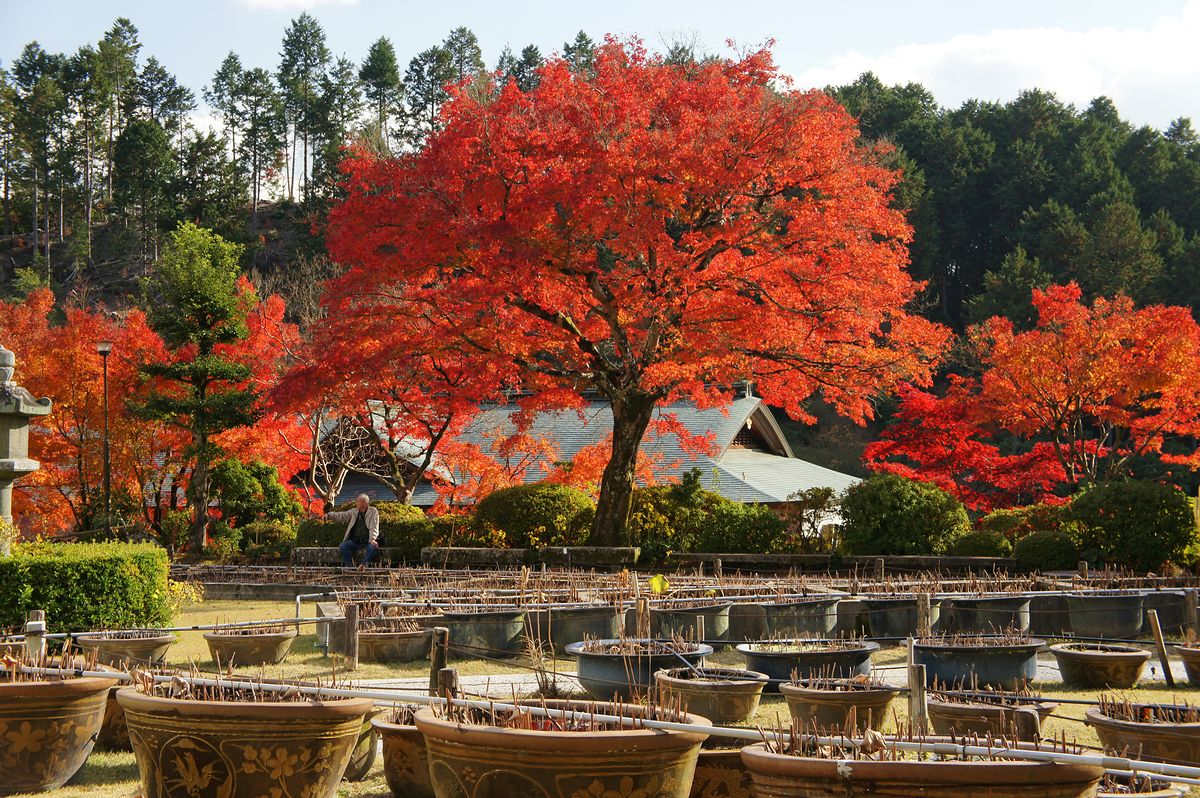
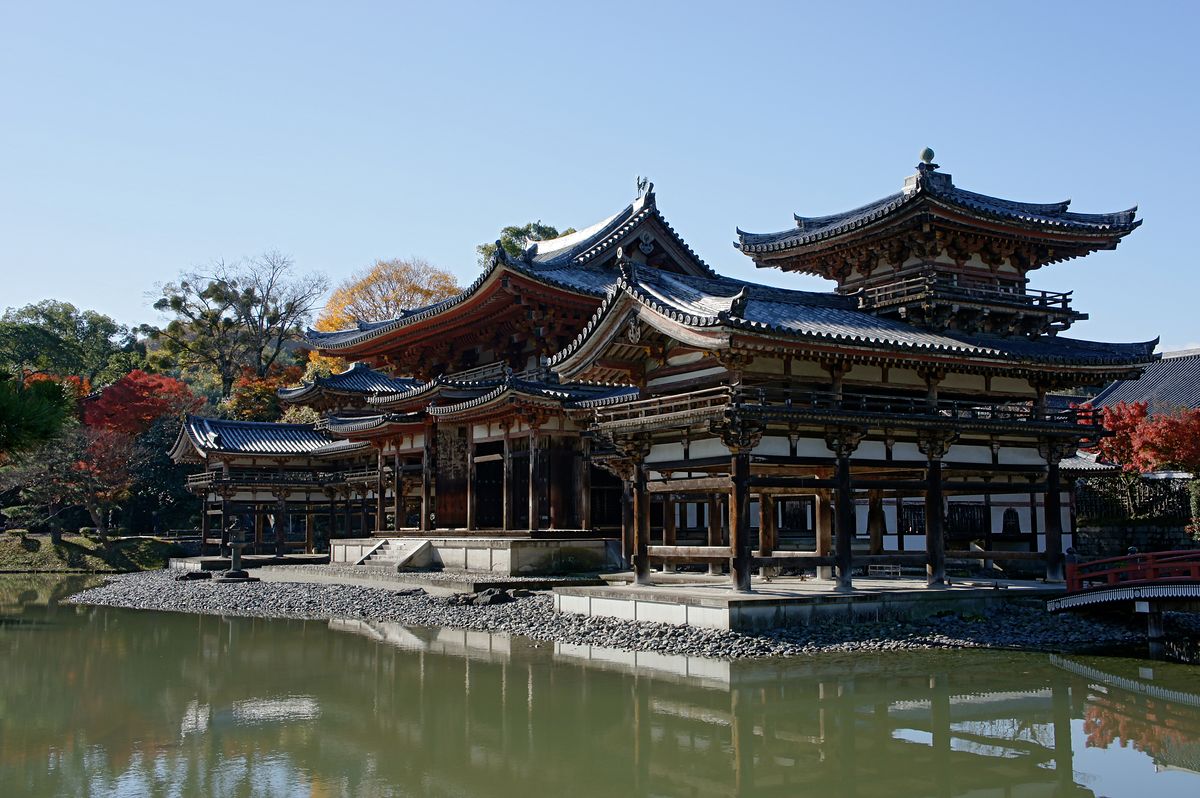
On our last full day we took the train south to Uji, the tea town. Mimuroto-ji is famous for its summer hydrangeas and lotuses, and its lotus pots stood in rows, cut back for the winter, beneath a maple that had gone completely scarlet. Down by the river, Byōdō-in’s Phoenix Hall, the building on the ten-yen coin, sat on its pond as if it had been put there to be looked at. We ate matcha ice cream in the thin November sun and agreed that we had seen the colour all the way down.
Notes
- Peak colour in central Kyoto usually comes in the second half of November, but it varies from year to year. Watch the forecasts and stay flexible.
- Go early to the famous gardens. By mid-morning the crowds are heavy.
- Several temples, Kiyomizu-dera and Eikan-dō among them, open in the evening during the autumn season.
- Uji is an easy half-day by train from central Kyoto.