Wind and Granite: Four Days in Torres del Paine
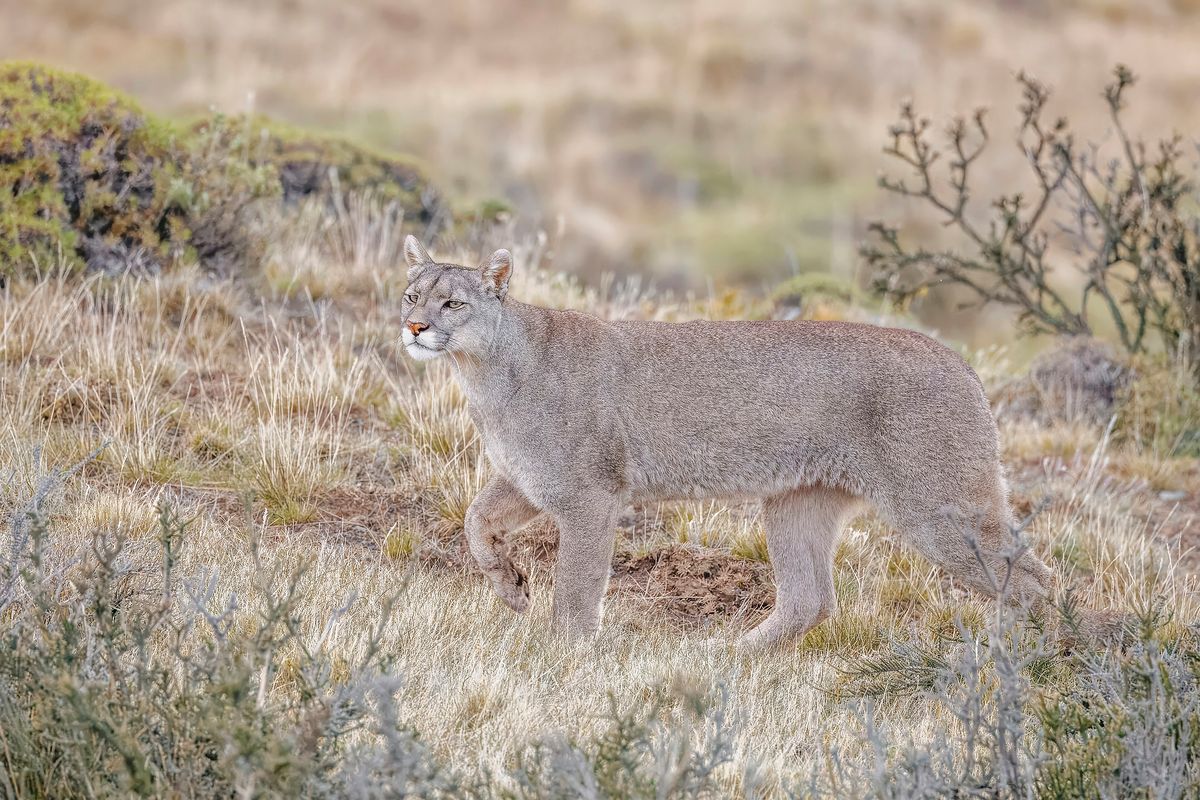
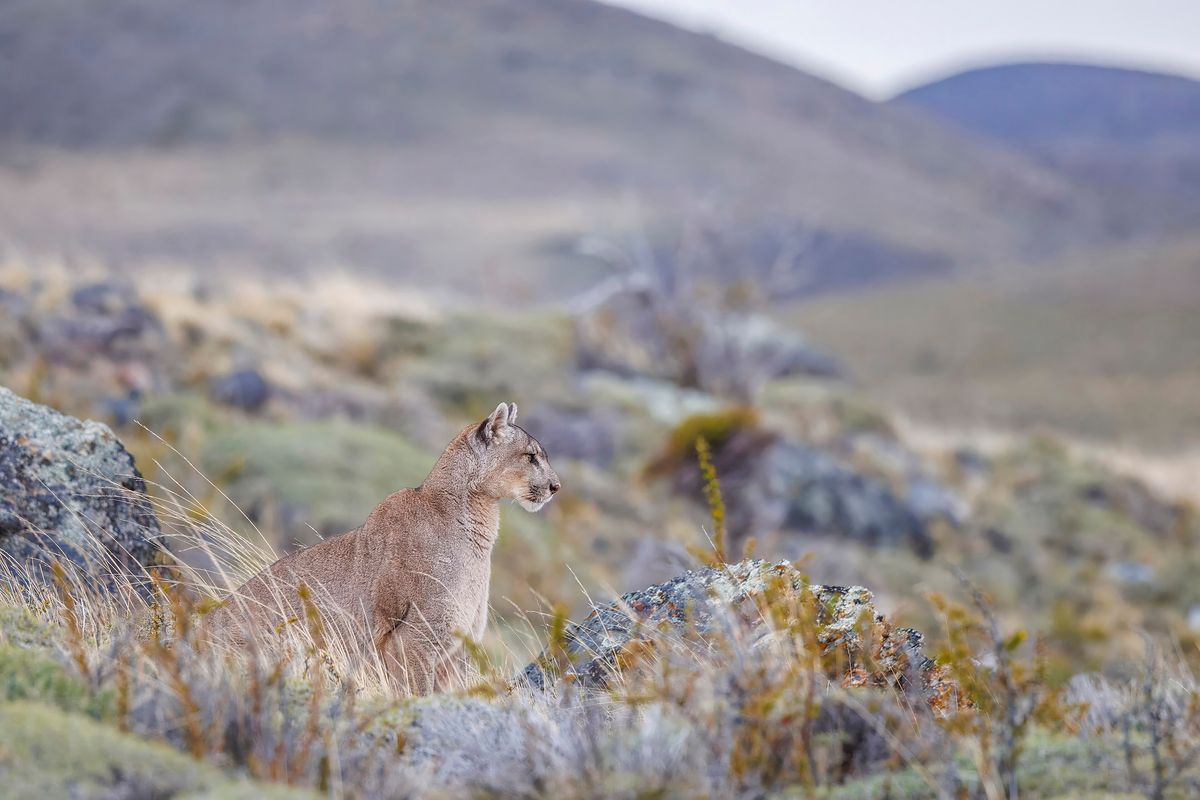
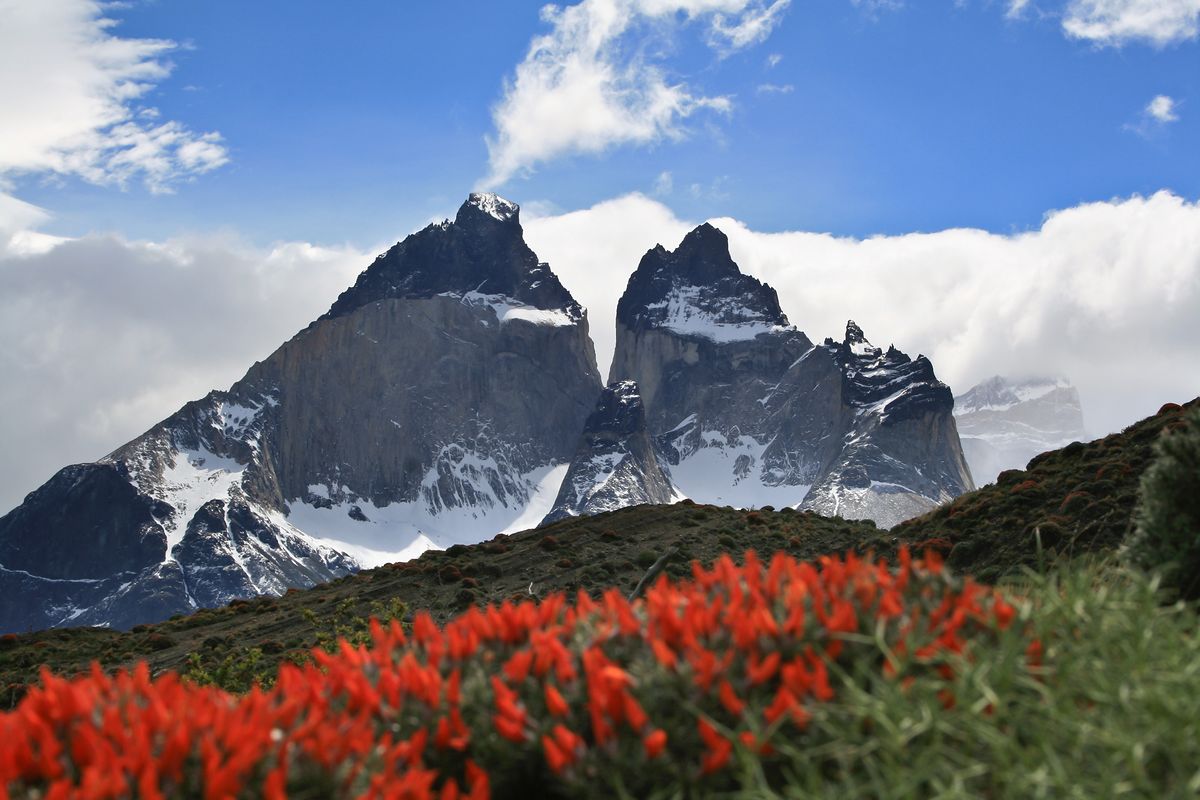
Early summer in Torres del Paine: a puma in the grass, firebush on the slopes and a wind that never quite let us finish a sentence.
Everyone warns you about the wind. They warn you in Puerto Natales, where the buses leave for the park in the half-dark, and again at the park gate, where a ranger told us to hold on to our hats in the weary tone of someone who has watched a great many hats leave for Argentina. None of it prepares you. On our first afternoon Clara tried to unfold a map at a viewpoint, and it took both of us, and a rock, to win.
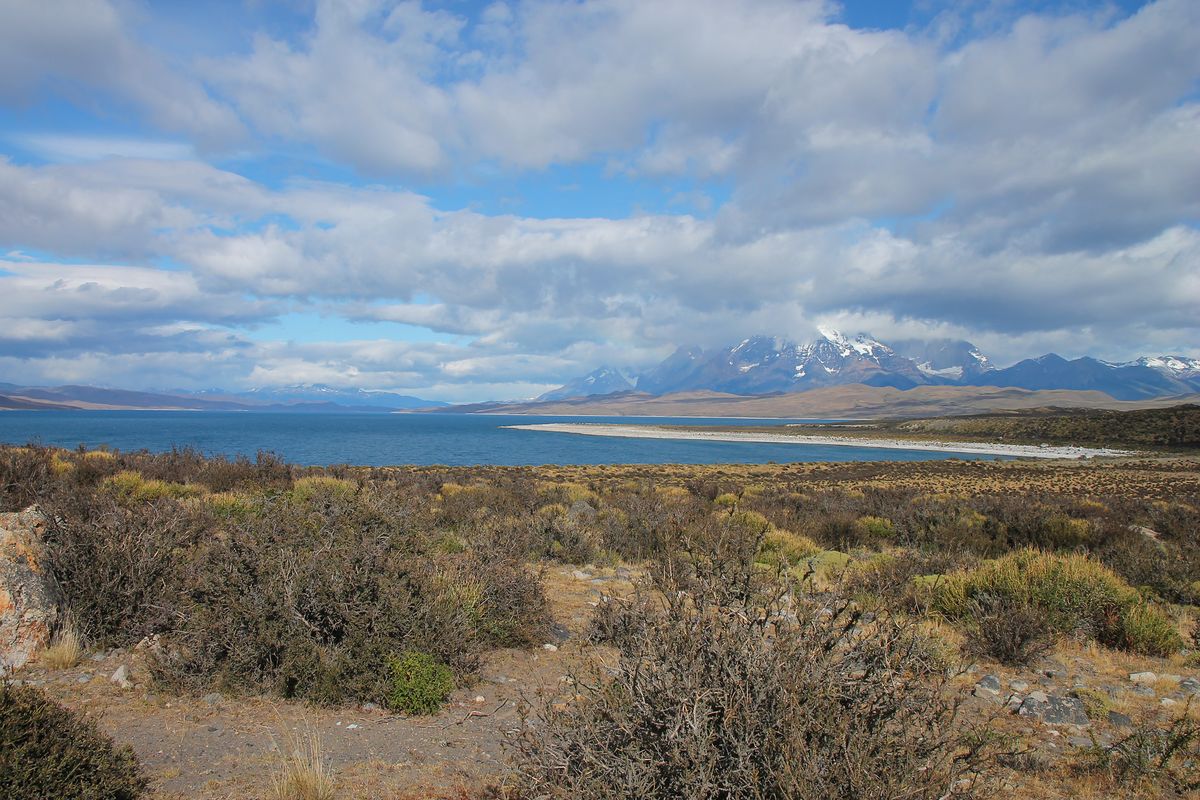
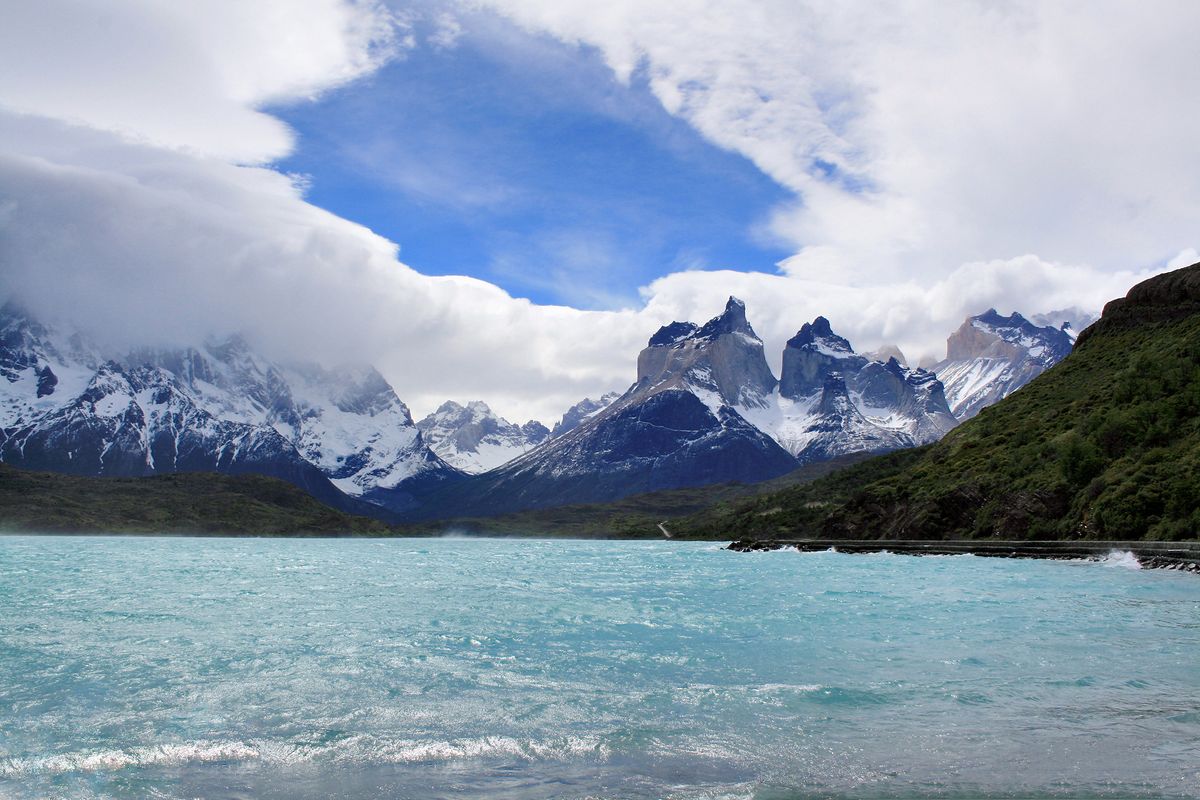
We came in December, at the start of the southern summer, which in Patagonia means long light, sudden hail and four seasons before lunch. The eastern side of the park is open steppe: low scrub, pale lakes, and the mountains standing off to the west as if waiting to be noticed. The first time the cloud lifted off the Cuernos del Paine, the dark-capped horns of the massif, we stopped talking mid-word and simply looked.
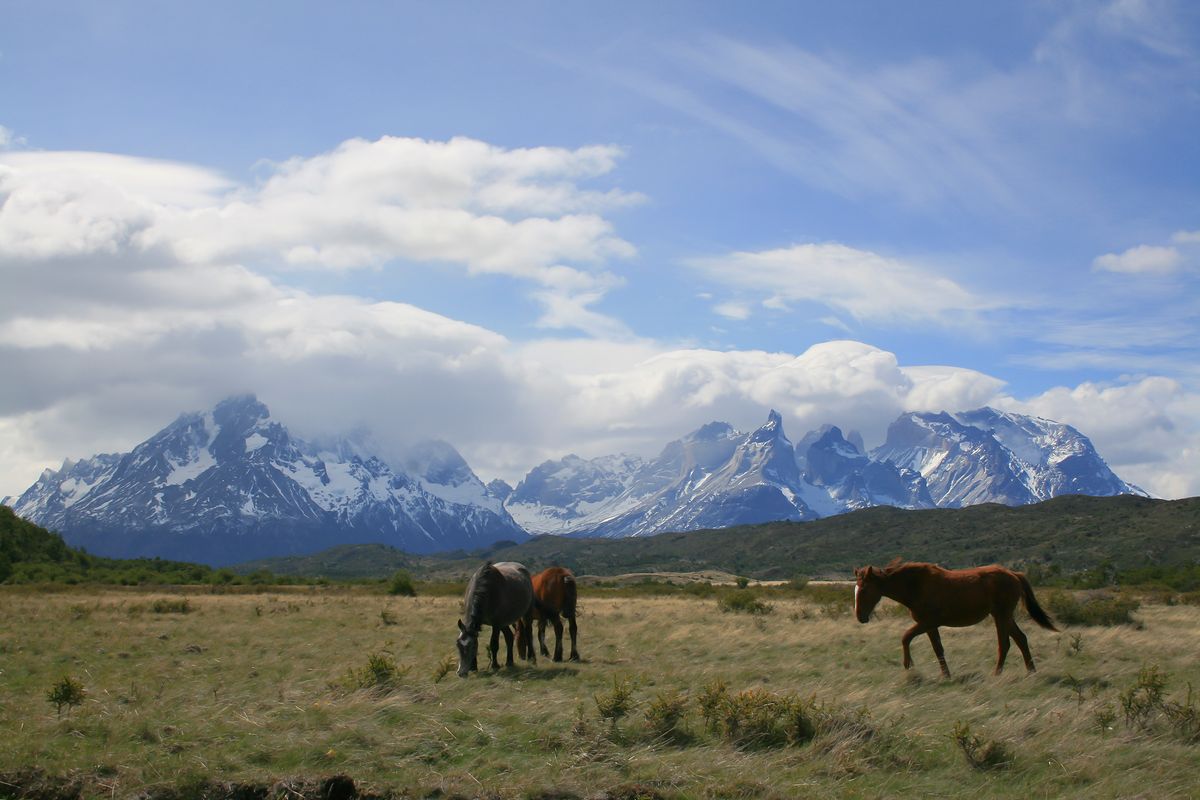
The animals come first
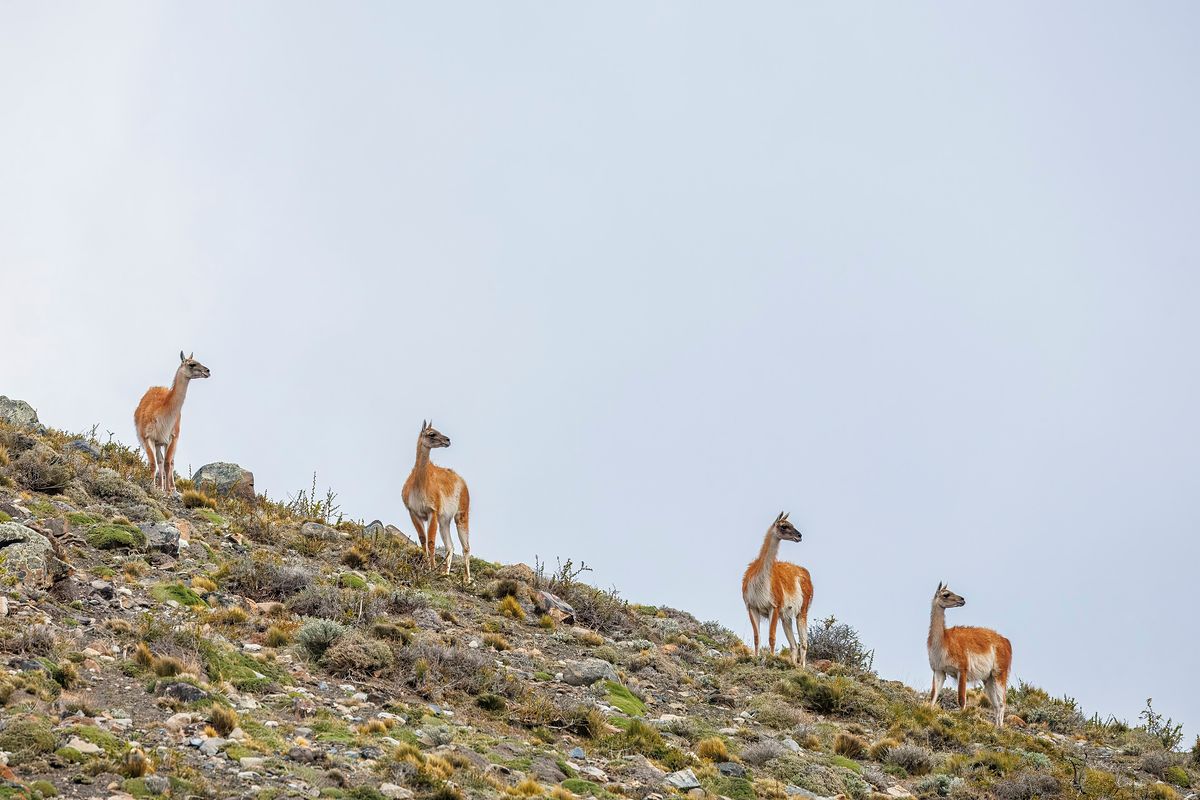
I had read that guanacos were common here and assumed common meant occasional. In fact they are everywhere: on ridgelines, on the verges, standing in the road with the air of minor officials. They have a sharp, whinnying alarm call and a way of watching you sideways that makes you feel slightly overdressed.
The puma was another matter. We spent a cold morning in the scrub on the eastern edge of the park with a local tracker, sitting very still among the tussocks while he scanned the slopes. Two hours in, he pointed. A female came down through the grass at an unhurried walk, paused, looked straight through us, and moved on towards a group of guanacos who had already noticed and were complaining loudly. It lasted perhaps ten minutes. Clara says she forgot to breathe for most of it; I spent it failing to whisper.
Up to the towers
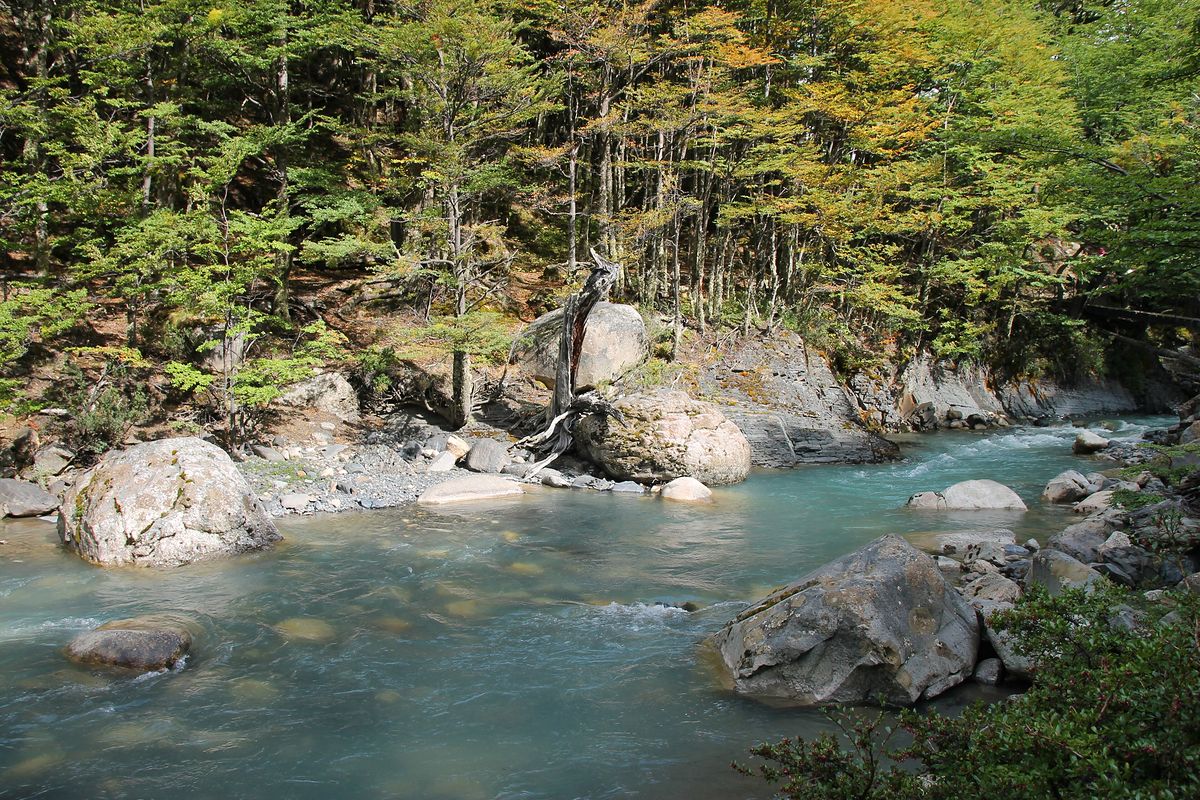
The walk to the base of the Torres is the one everybody does, and with reason. It climbs the valley of the Río Ascencio, crosses streams the colour of bottle glass, and threads through woods of southern beech that are cool, dim and sheltered from the wind.
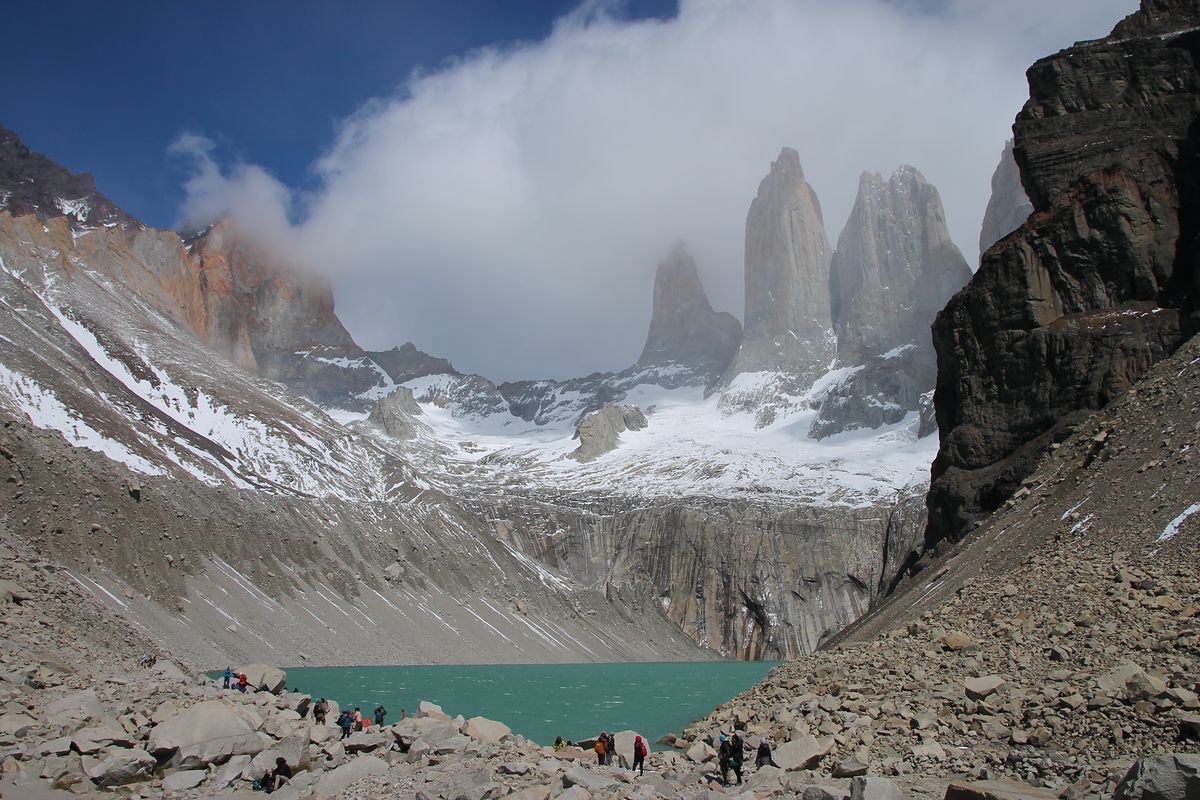
The last hour is a scramble up a moraine of loose boulders, shared with a long, mostly polite queue of walkers. At the top, three granite towers rise straight out of a grey-green lake. They were wearing cloud when we arrived. We ate our sandwiches, the cloud thinned, and for a few minutes the whole cirque stood clear. Then it closed in again and began, quite gently, to snow.
Firebush and ice
Lower down, early summer had put the Chilean firebush into flower, and whole banks of it glowed red against the grey rock. It is the kind of colour that looks faked in photographs and somehow even less plausible in person.
We spent our last full day on the western side. Salto Grande, where Lago Nordenskjöld spills towards Lago Pehoé, is a short walk from the road and throws up enough spray to soak a jacket from a surprising distance. Further on, the beach at Lago Grey was strewn with ice. Bergs that had broken from Grey Glacier at the far end of the lake had drifted south on the wind and run aground, blue as a gas flame and creaking softly as they settled.
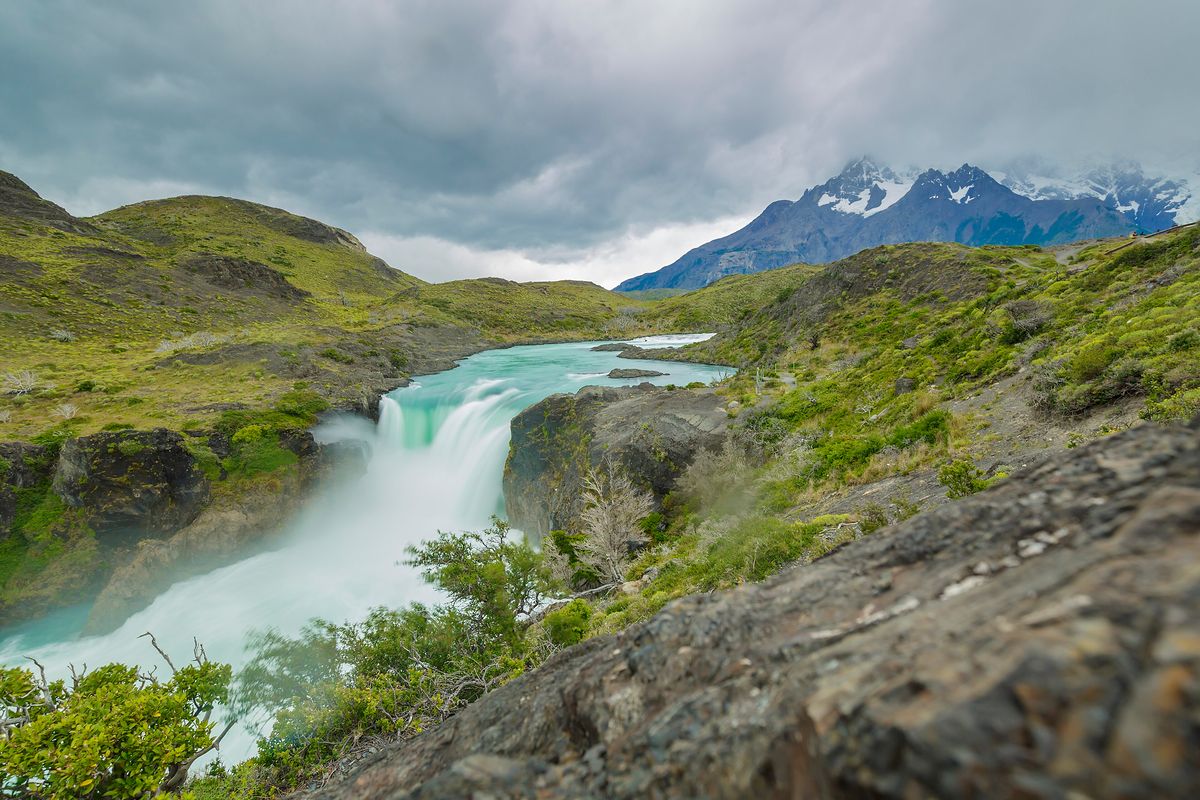
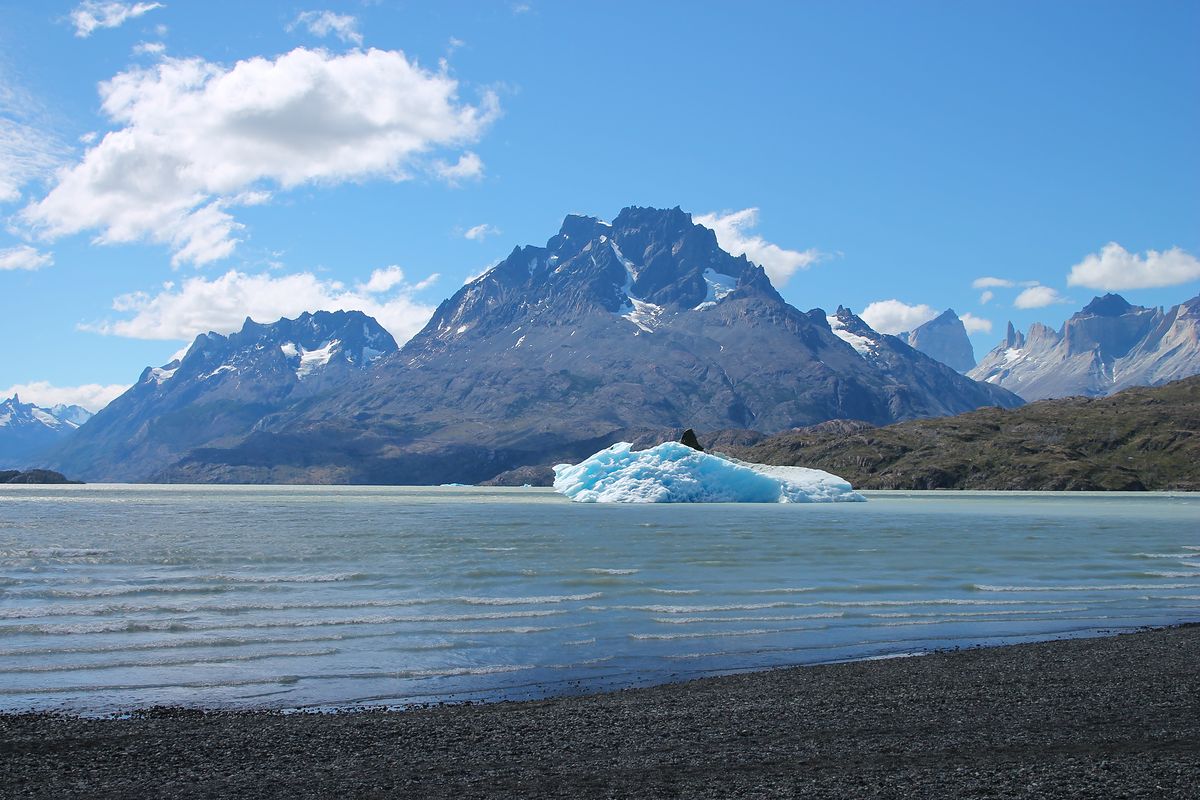
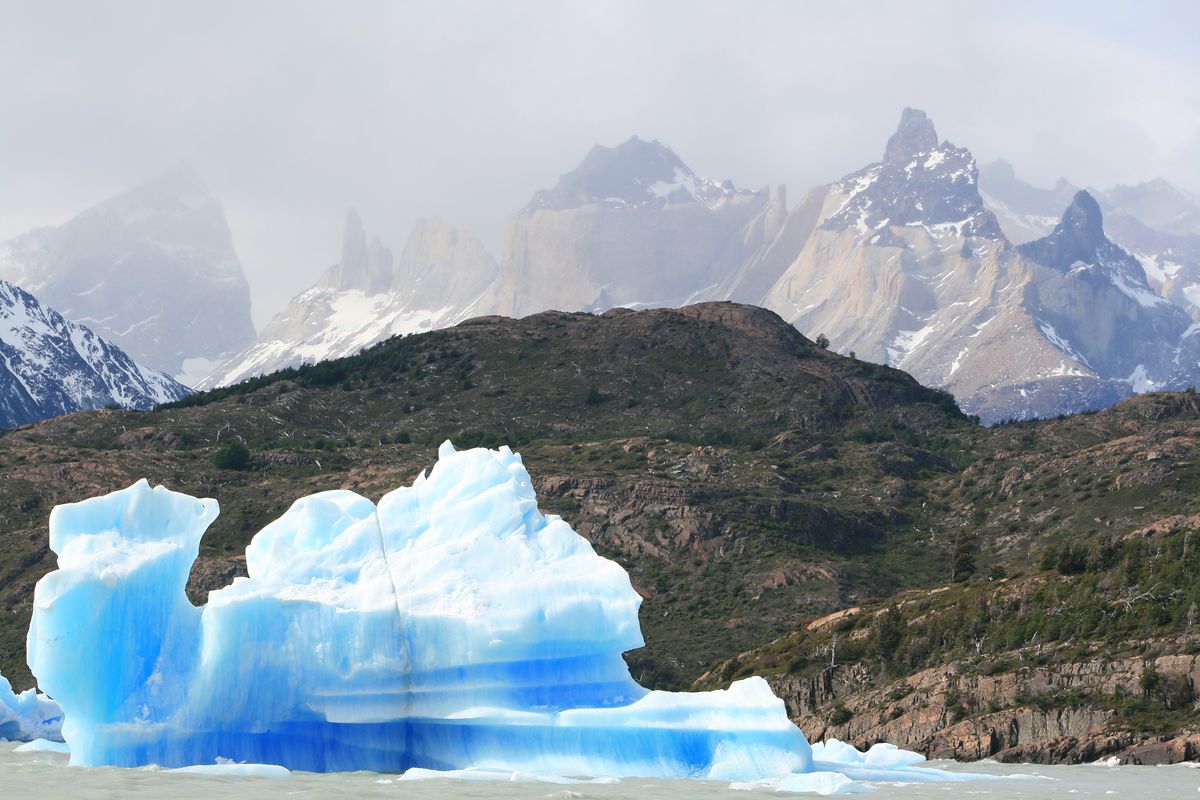
Clara picked up a shard from the shingle, held it to the light, and put it back. It was the stillest moment of four windy days.
Notes
- Puerto Natales is the usual base; buses into the park leave early, so pack lunch the night before.
- Book campsites and refugios on the trails well ahead for the summer months.
- Carry a windproof shell and a warm layer even on bright days.
- Puma tracking is best done with a local guide, who will also know where you may walk.