Sossusvlei, from Dark to Dark
One long day among the red dunes of the Namib, from the queue at the Sesriem gate before dawn to the dead trees of Deadvlei.
Everyone who had been to Sossusvlei told us the same thing: be at the gate in Sesriem when it opens, or don’t bother. So on our second morning in the Namib we sat in a line of headlights before dawn, engine off, windows fogging, a flask wedged between the seats and the stars still out. We went last August, in the middle of the southern winter, and the desert at that hour is properly cold. I wore everything I had packed, plus Tom’s spare jumper.
The road from the gate runs west for sixty-odd kilometres up a valley walled with dunes. By the time we reached Dune 45, named, unromantically, for its distance along that road, the sun was on the crest and the shadow side had gone almost black.
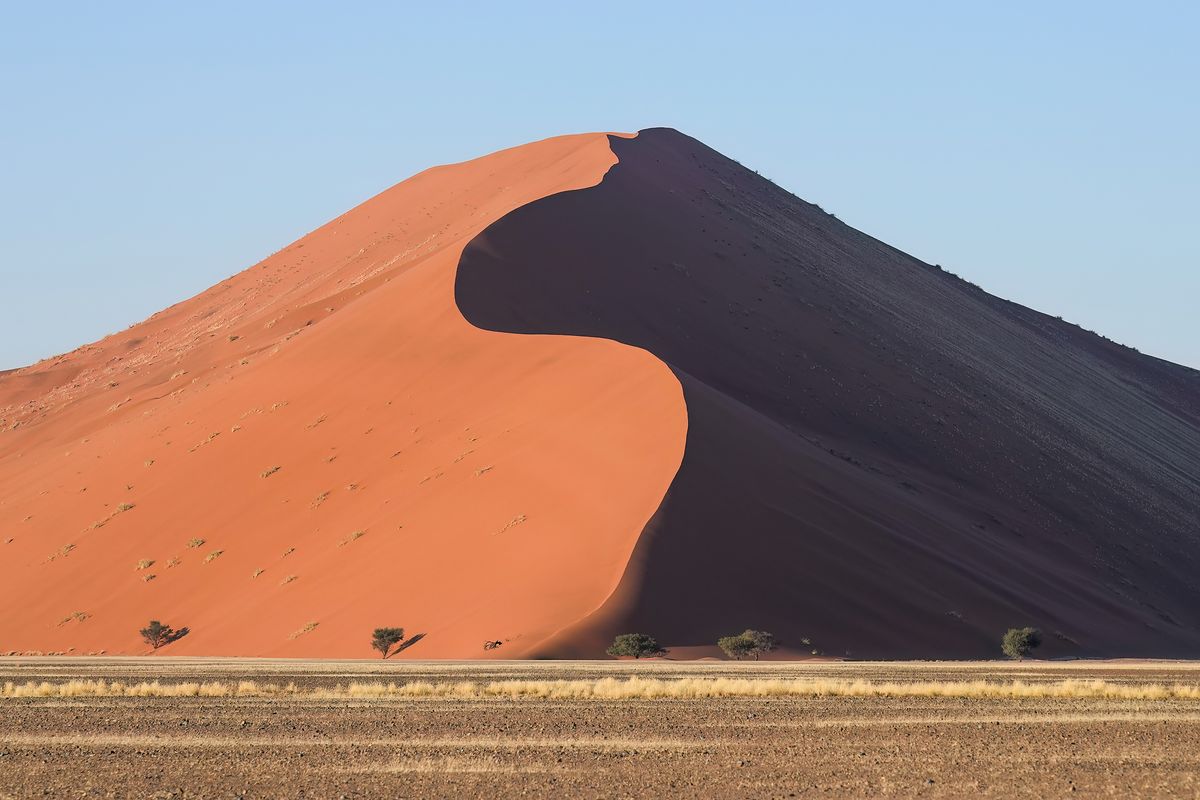
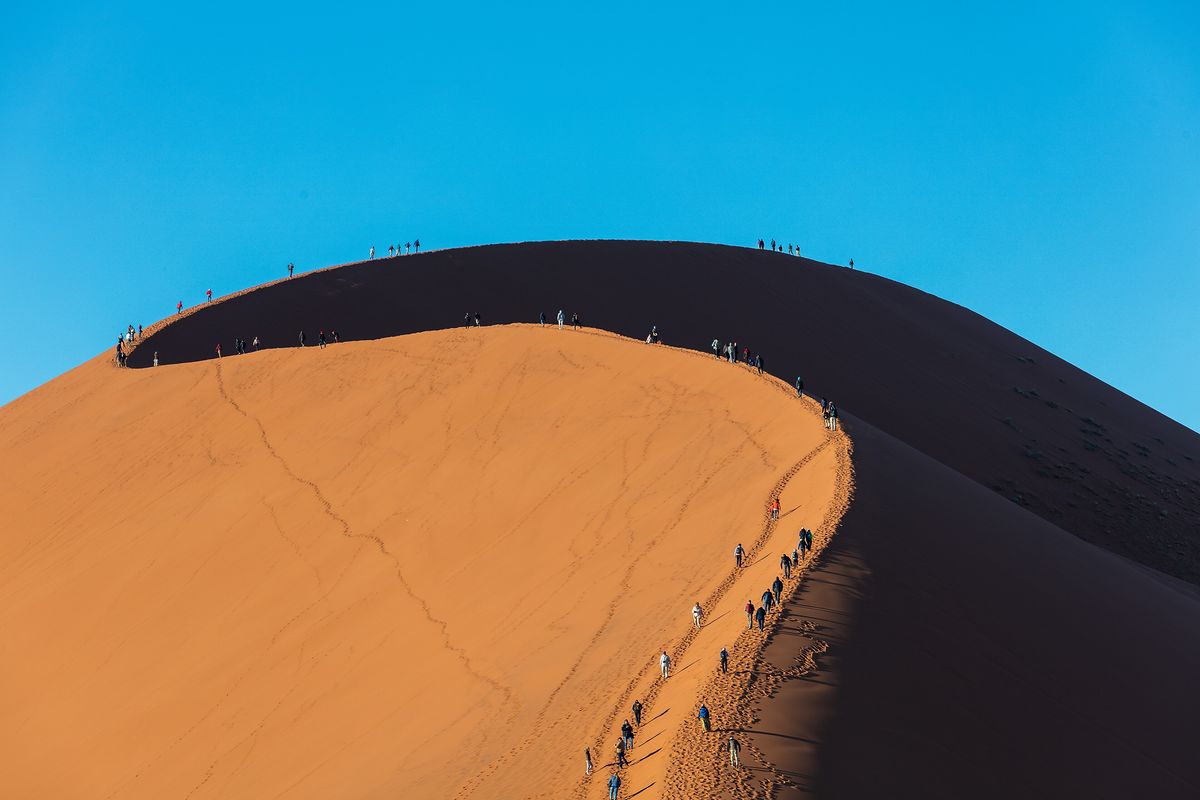
We climbed it. Everyone climbs it. The ridge is narrow and the sand gives under every step, so you go up two paces and slide back one, and the people ahead turn into a line of small dark figures against the blue. From the top the dunes run on in every direction, red and apricot, with blue shadows in the troughs.
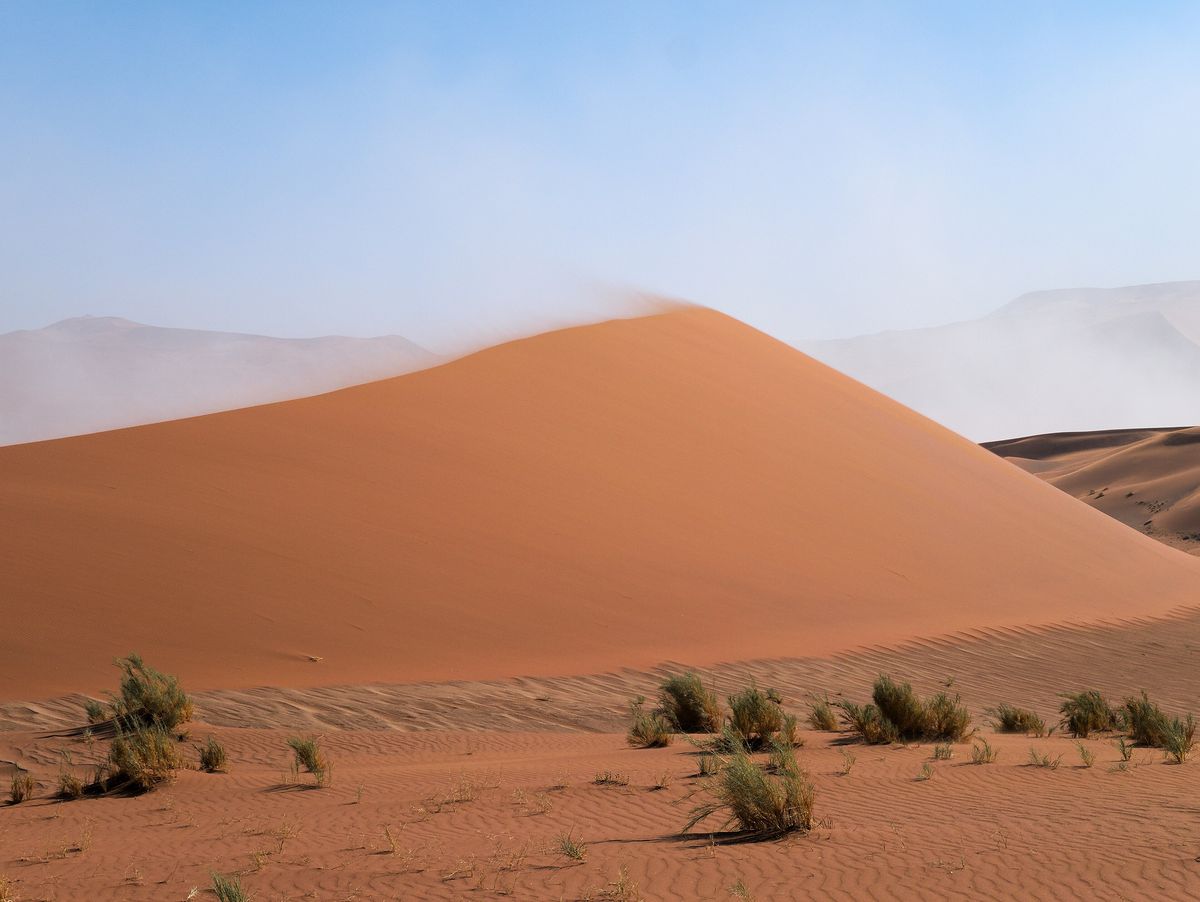
Where the tar ends, the last few kilometres are deep, soft sand, and unless you have a proper four-by-four and the nerve to use it, you leave the car and take the shuttle. We took the shuttle. On the way we passed a hire car sunk to its axles. Nobody in the shuttle said a word, but the smugness was audible.
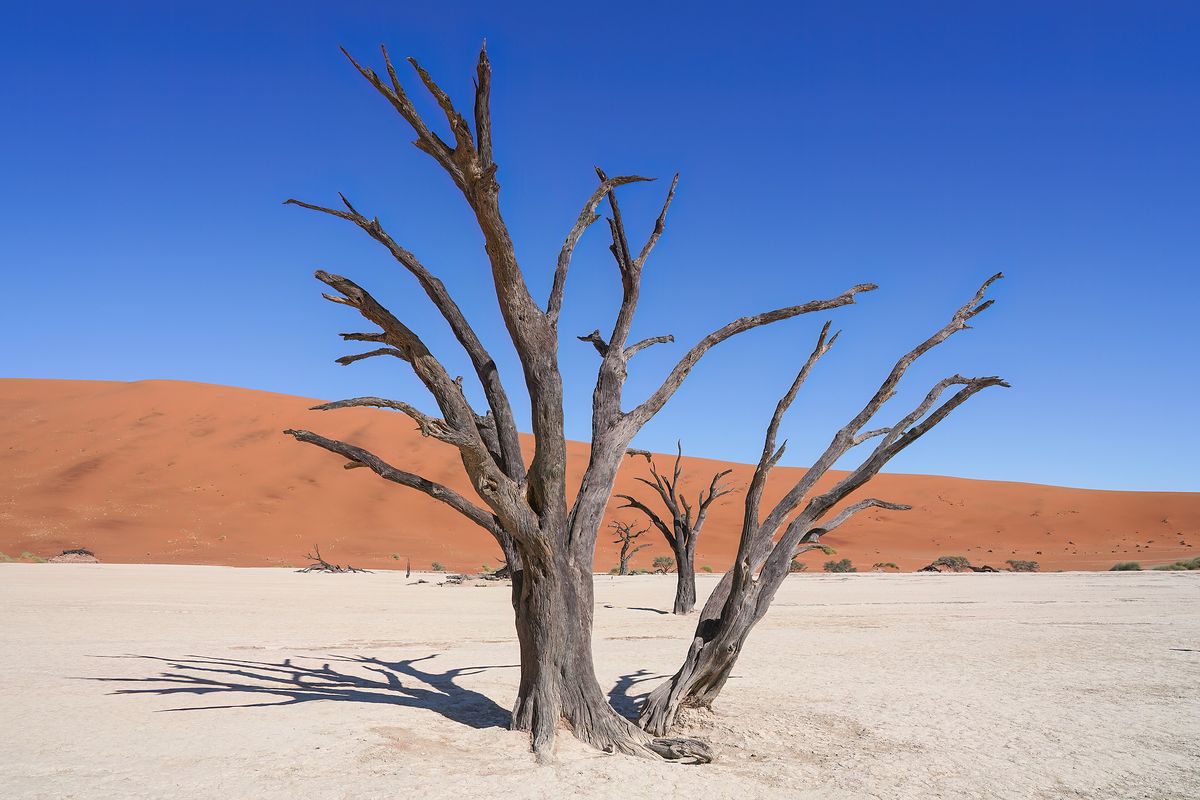
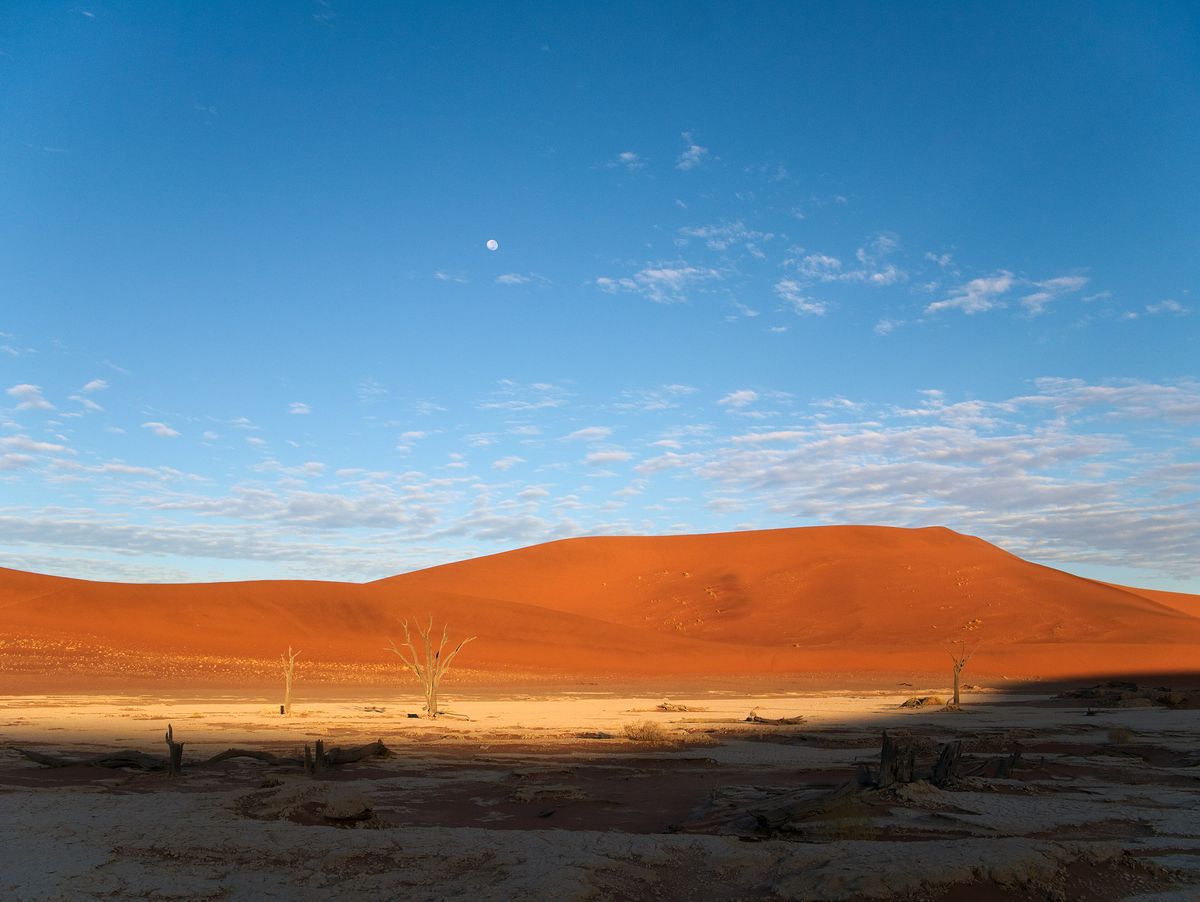
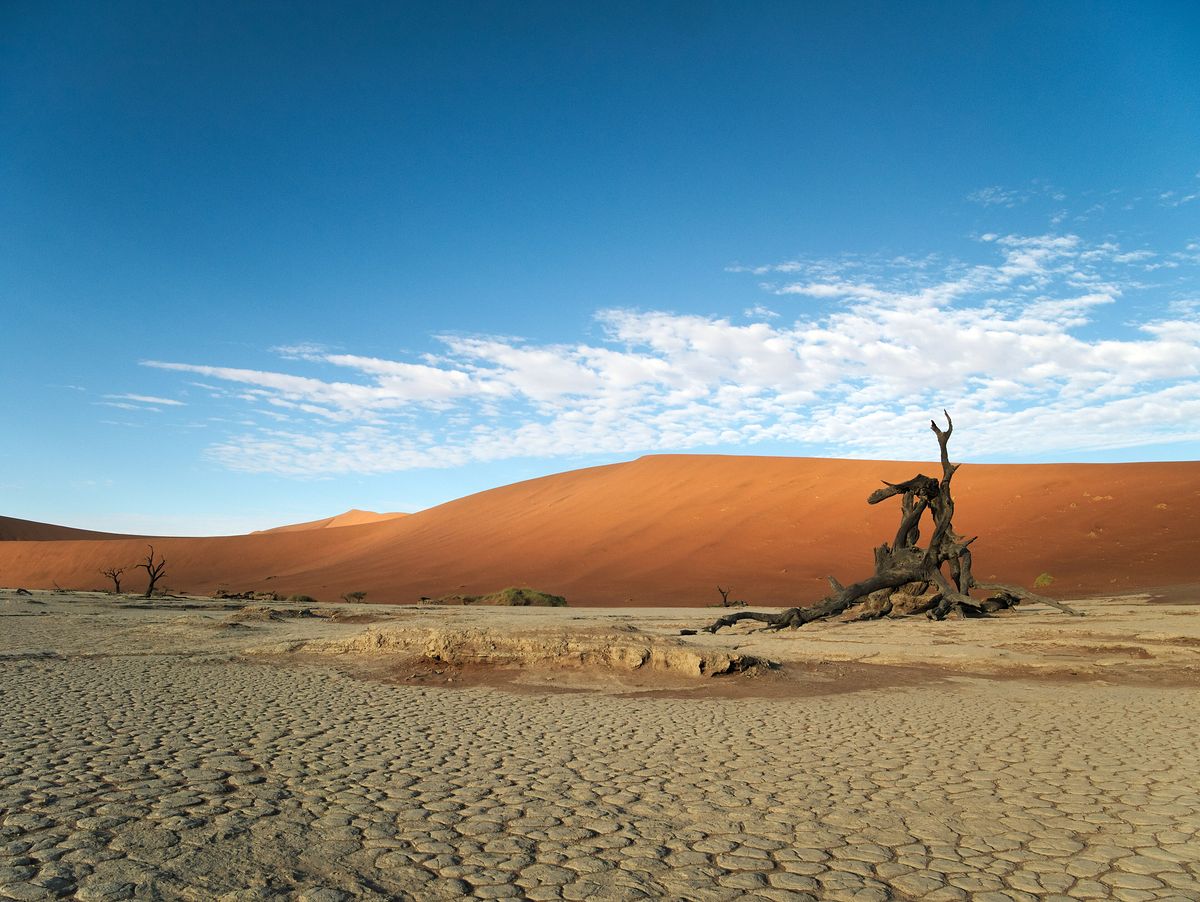
Deadvlei is a short walk from the drop-off, over a low ridge of sand, and I was not ready for it. A white clay pan, cracked into plates; dead camel thorn trees standing on it, black and twisted; and beyond them dunes that look far too red against a sky that looks far too blue. The trees died centuries ago, when the dunes cut the pan off from the river that used to flood it, and the air is so dry that they have never rotted. They simply stand there.
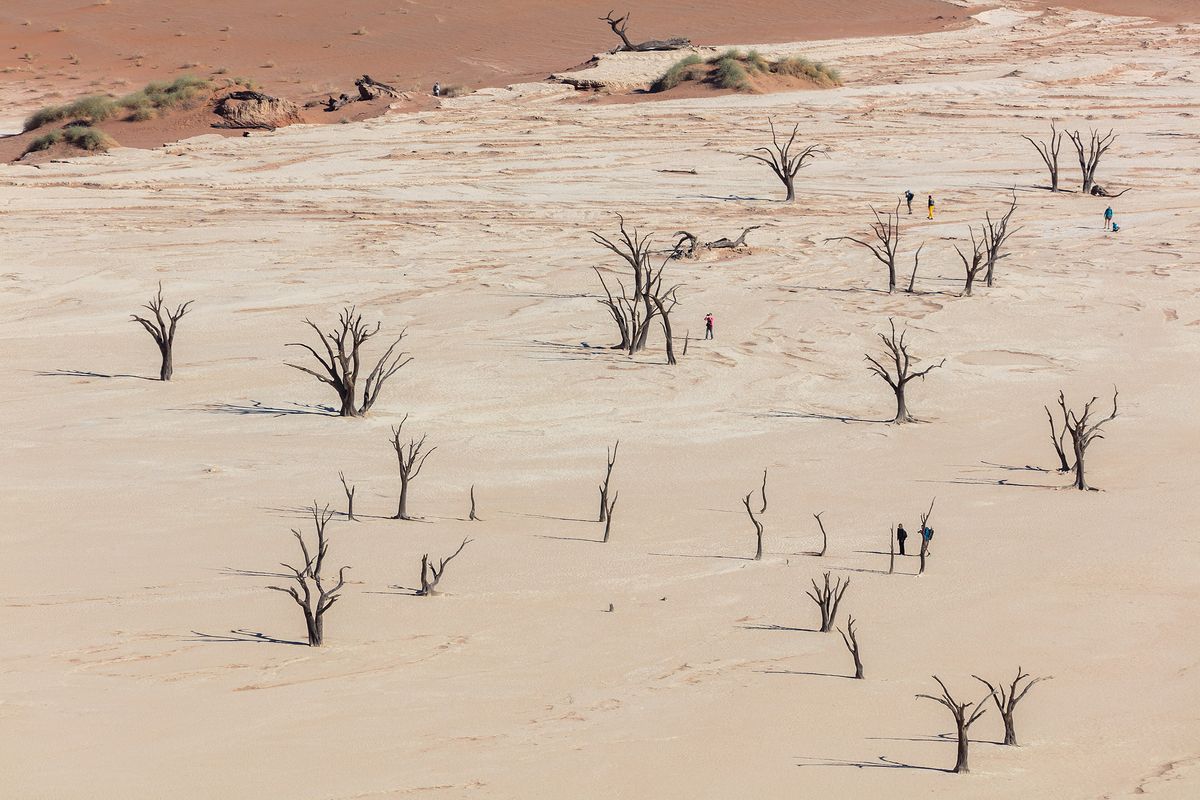
We stayed far longer than we meant to. Tom set off up the big dune above the pan, which looks like a gentle stroll and is not. I sat on the clay with the pale moon still hanging over the sand and was surprised by how quiet it was, even with people drifting between the trees.
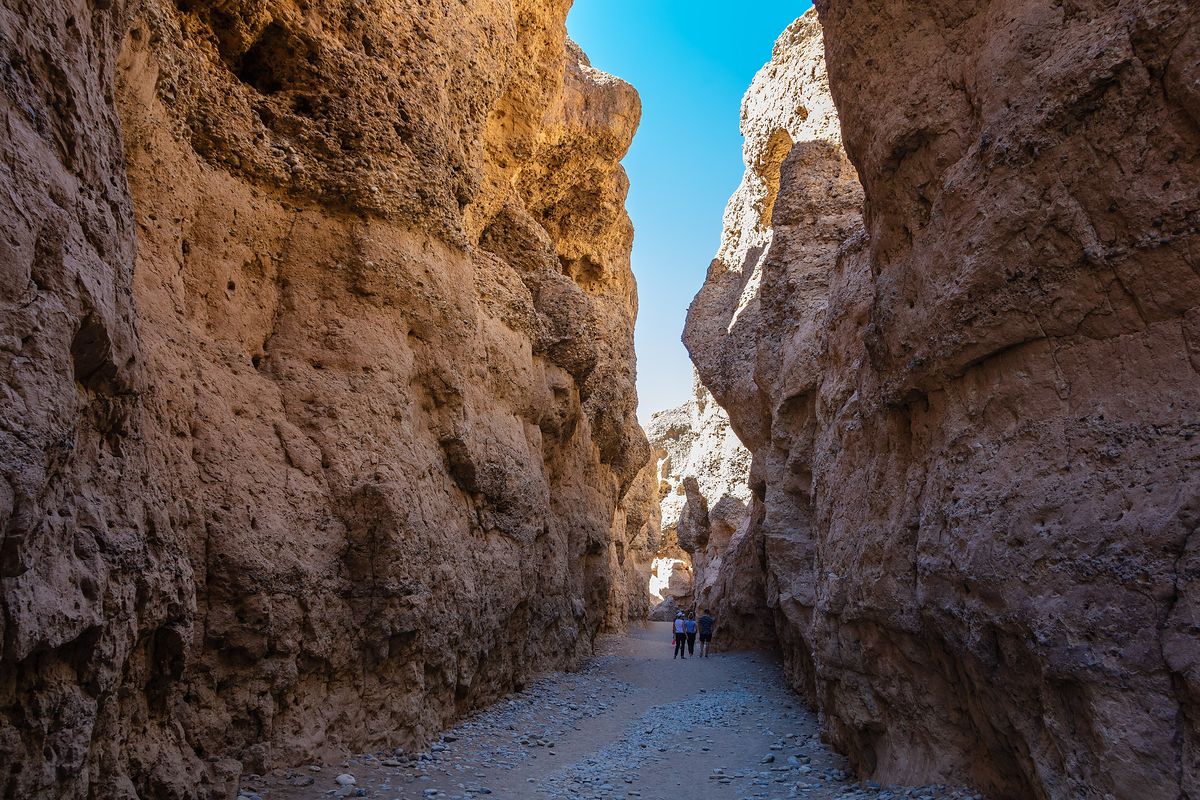
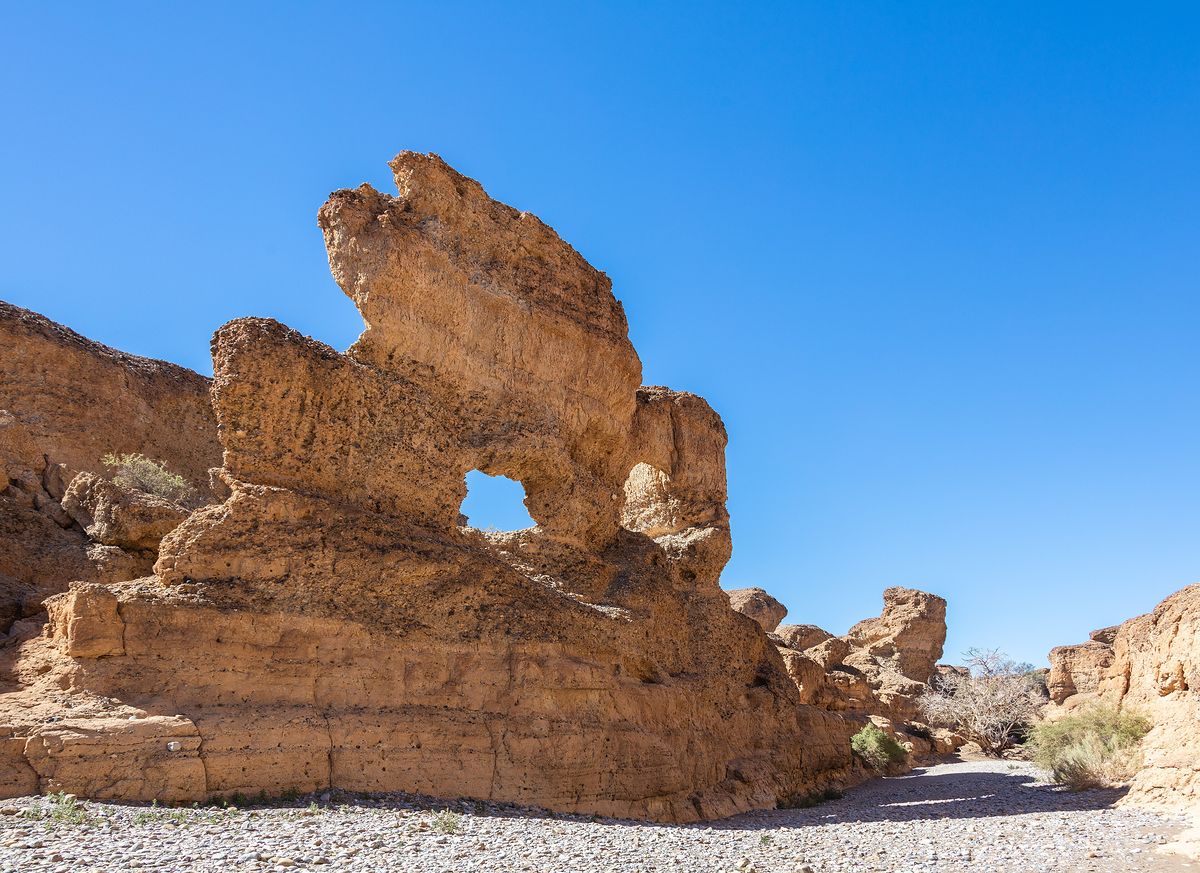
By late morning the heat was up and the light had gone flat and white, so we retreated. Sesriem Canyon, near the gate, is a narrow gorge cut by the Tsauchab River; the name is said to come from the six leather straps early settlers had to knot together to lower a bucket to the water. At the bottom it was shaded and almost cool, and after a morning of open sand it felt like stepping into a church.
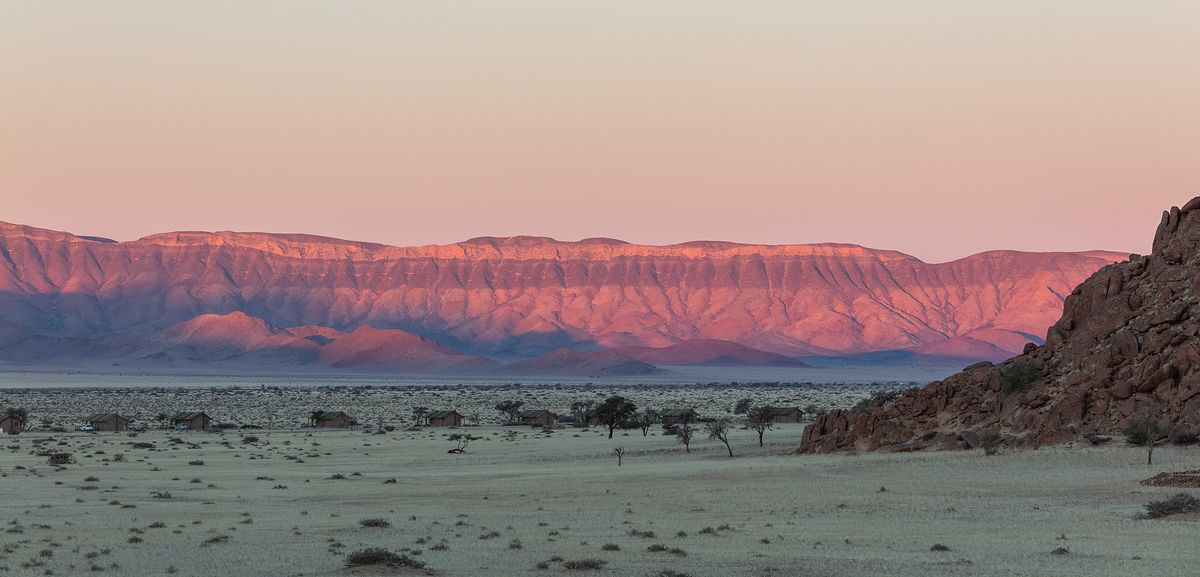
We drove back to camp as the sun went down and the mountains to the east turned pink, then mauve. It had been dark when we started and it was dark when we stopped, and I can’t think of a day on any trip that felt longer, or went faster.
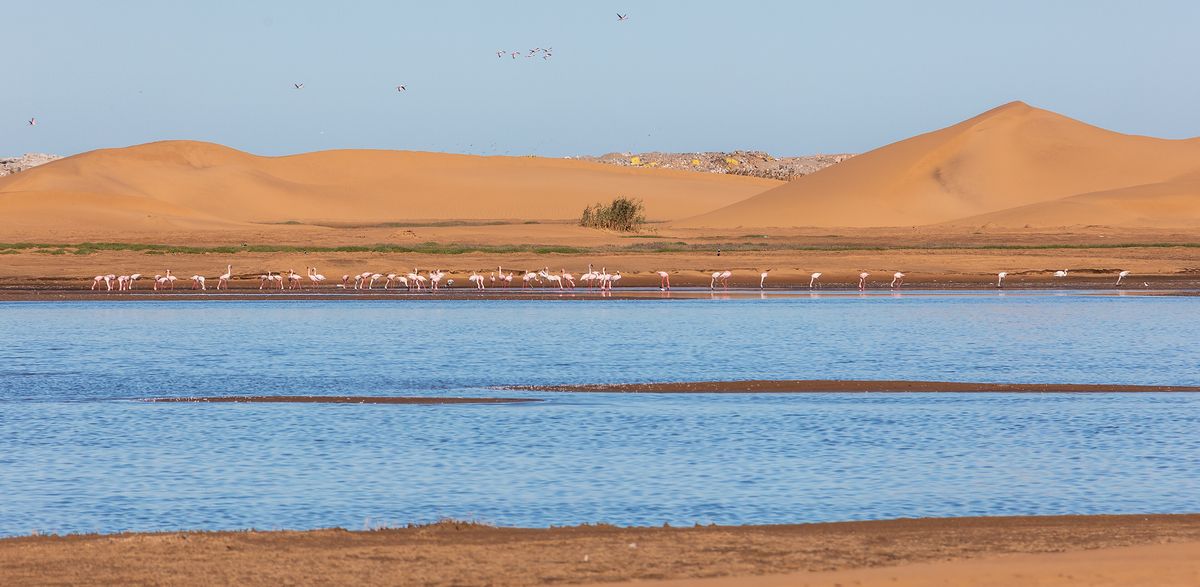
A few days later we stood on the shore at Walvis Bay in a cold wind, watching flamingos sift the lagoon with dunes behind them, and it was hard to believe it was the same desert. It is, though. The Namib runs right down to the sea.
Notes
- Stay as close to the Sesriem gate as you can; the early light is the whole point.
- The last stretch to Sossusvlei and Deadvlei is deep sand. Take the shuttle unless you know how to drive in it.
- Deadvlei has no shade at all. Carry more water than seems sensible, and a hat.