Lofoten, in Grey and Green
Low cloud, wet boots and a small boat into the Trollfjord: a week of early-autumn weather in the Lofoten islands, and one clear night.
We landed in Svolvær under a ceiling of cloud so low and even that it looked plastered on, and for most of the following week it barely moved. People who know Lofoten from posters expect needle peaks against a hard blue sky. What we found in early September was grey and green, the mountains switching on and off as the weather drifted across them, and I have come round to thinking that is the better version.
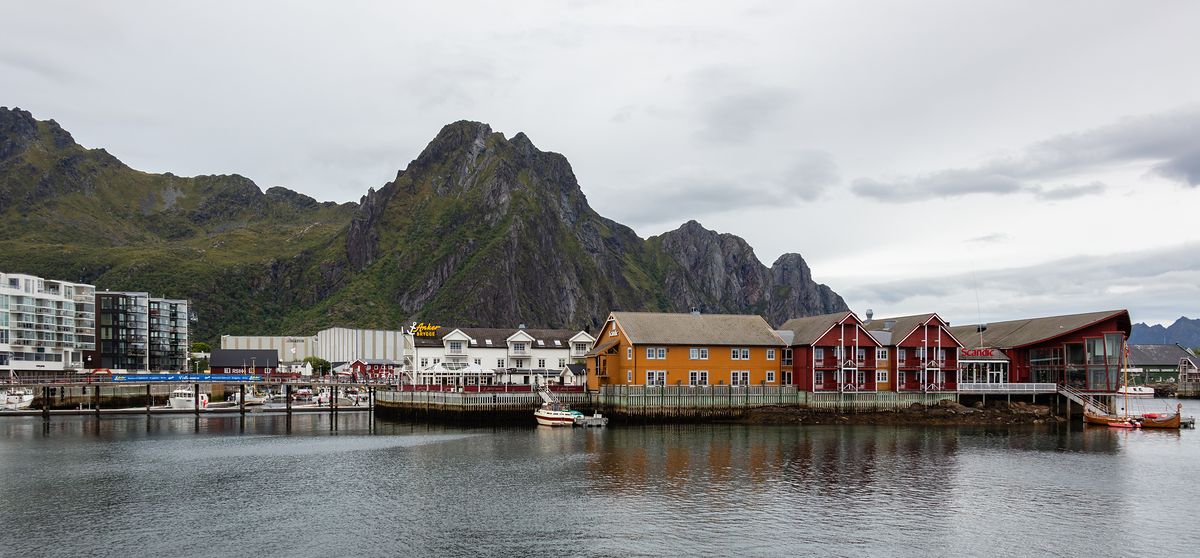
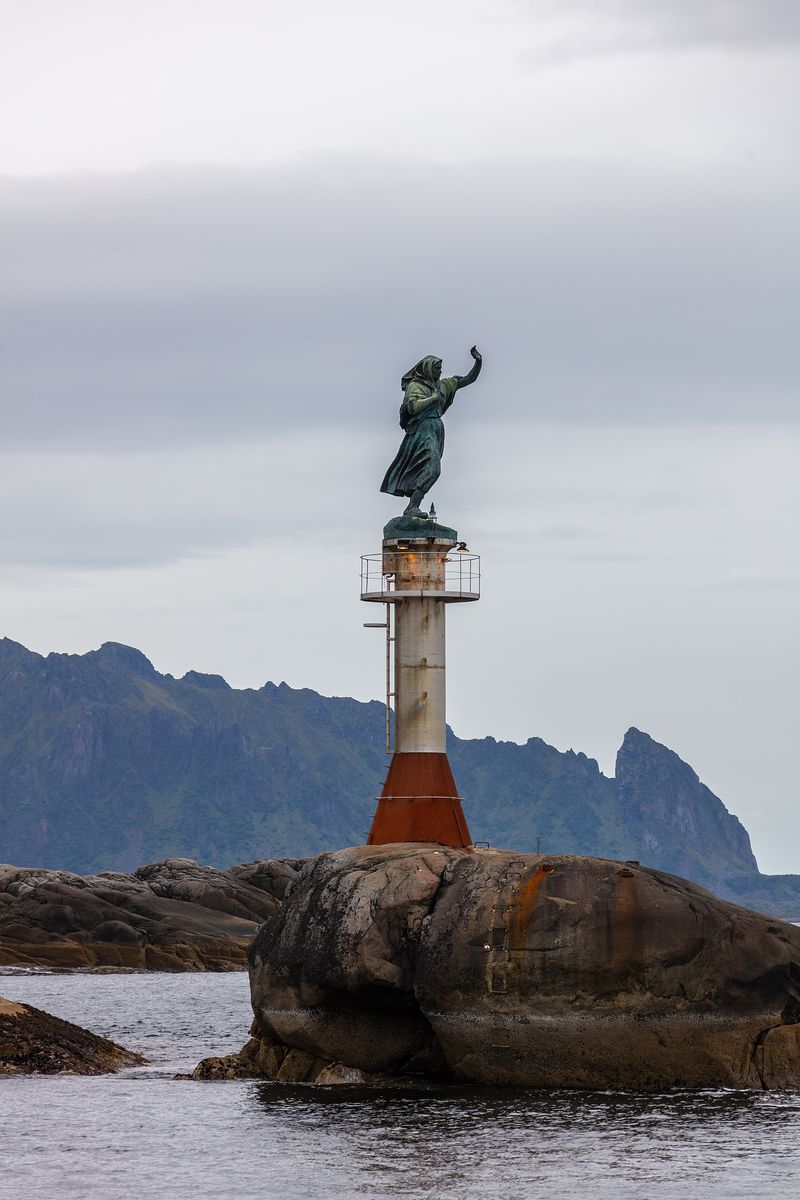
Svolvær is a working harbour first. Fishing boats tie up beside the rorbuer, the old fishermen’s cabins now mostly let by the night, and on our first morning the water was so flat that the red walls hung upside down in it. Out at the harbour mouth the Fiskerkona, the fisherman’s wife, stands on her rock and waves at boats that may or may not be coming home. Tom thought she looked cheerful. I didn’t.
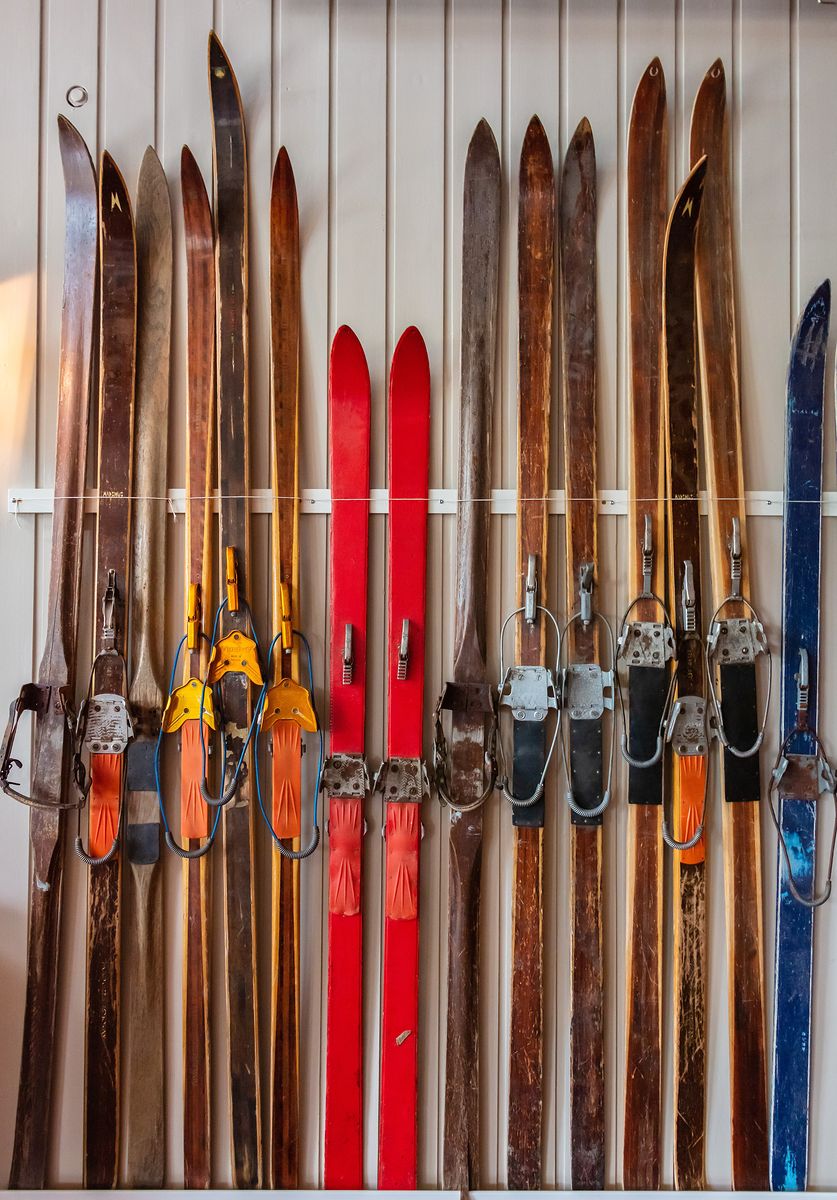
We spent a wet afternoon in Kabelvåg, a short hop down the coast. In one old building there, a row of skis stood against a white wall, most of them dark and scuffed, two painted pillar-box red, all with bindings that looked older than the boats outside.
Into the Trollfjord
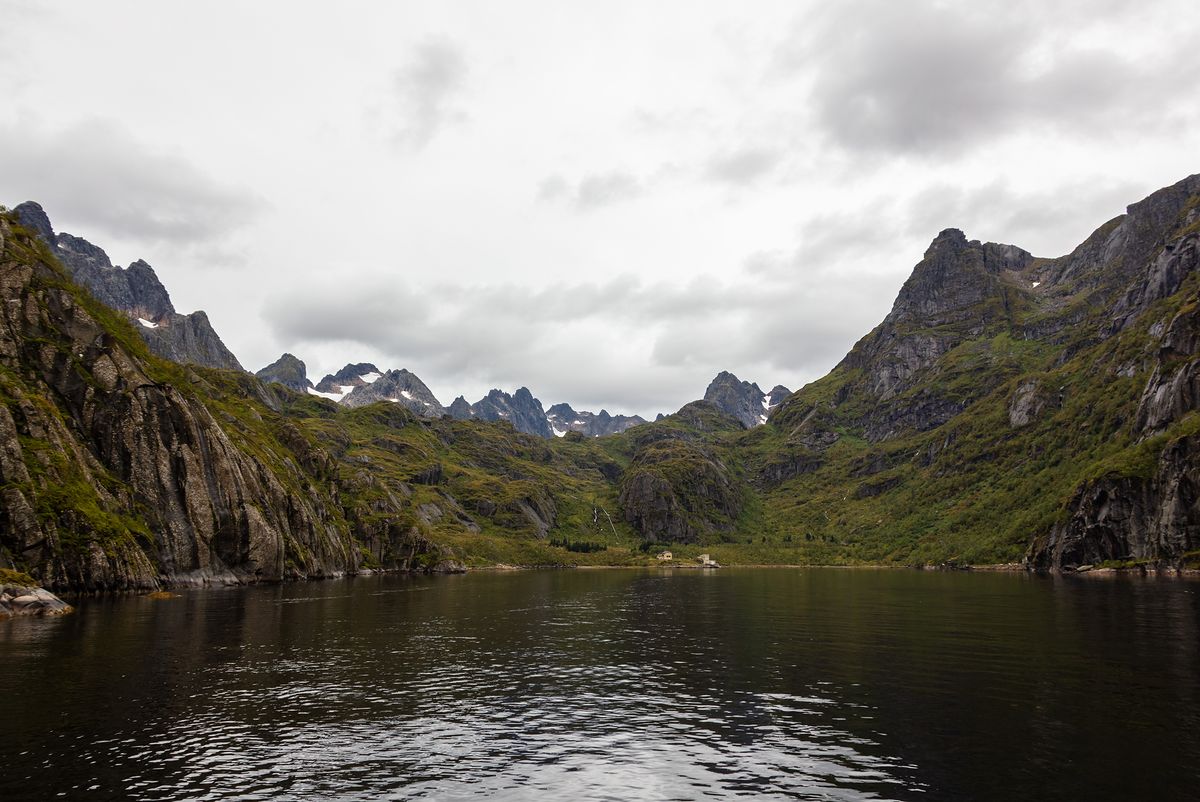
The boat into the Trollfjord is the trip everyone takes from Svolvær, and it deserves its popularity. You cross open water, run up the Raftsund and then turn into a gap that hardly looks wide enough for the hull. Inside, the walls climb so steeply that the light stays dim and mossy even at midday.
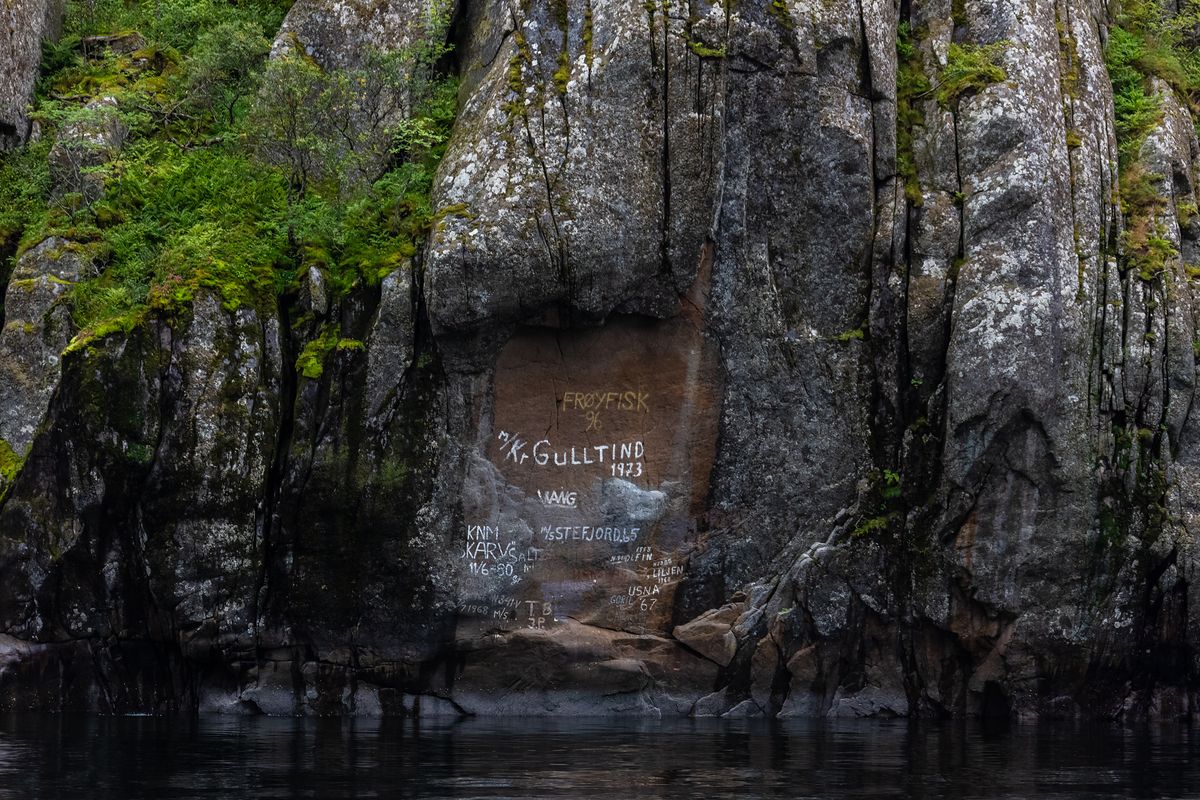
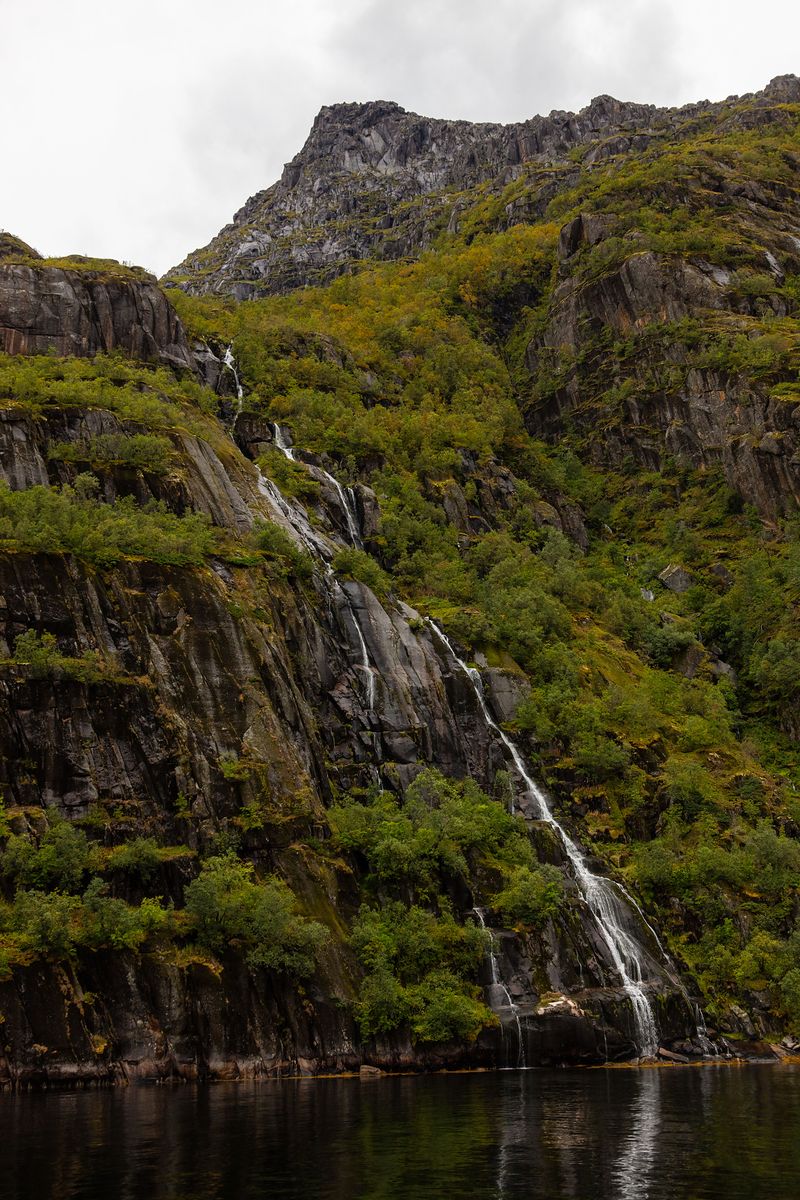
After days of rain, water came down every gully. Near the entrance, crews have painted names and years onto a smooth patch of cliff, a visitors’ book you can only sign from the water. In 1890 this quiet slot was the scene of a famous quarrel between local fishermen and steamship owners who tried to close it off, which is hard to picture once the engine is cut and the only sound is falling water.
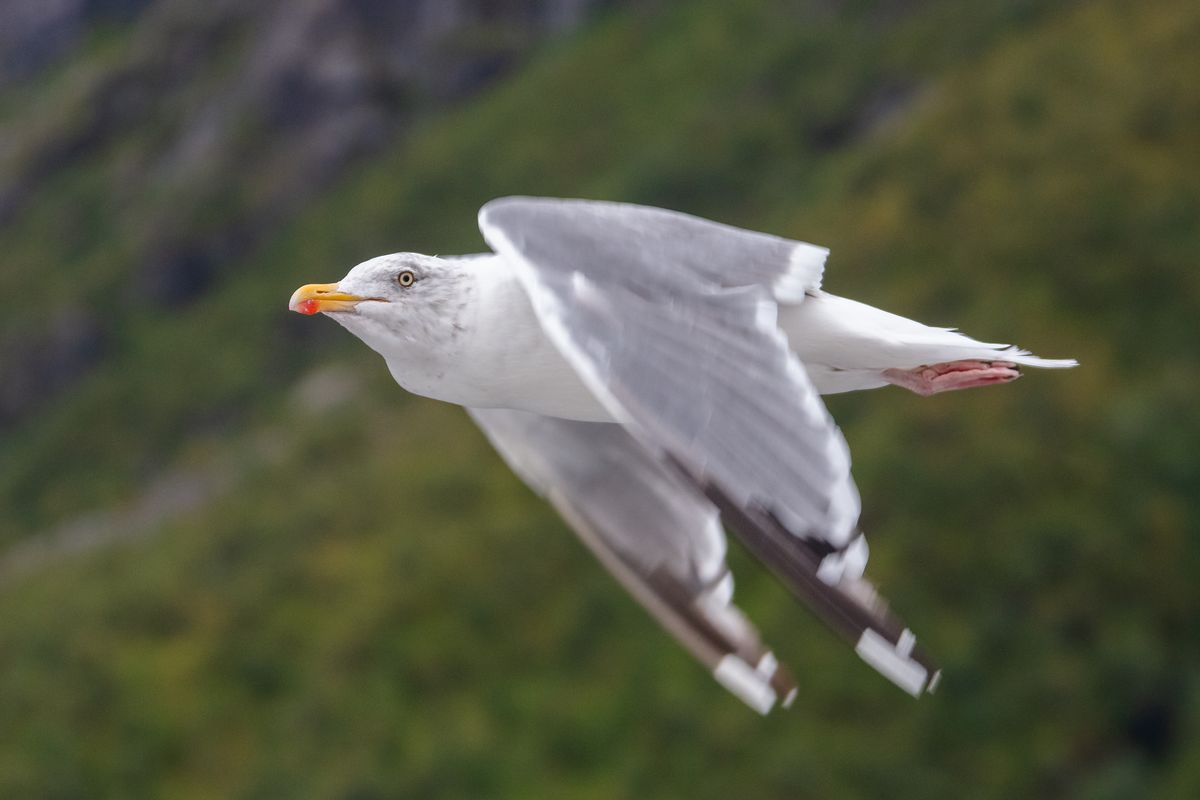
On the way back the herring gulls followed us, riding the wake and sliding across the green slopes as if they were pinned to them.
West along the road
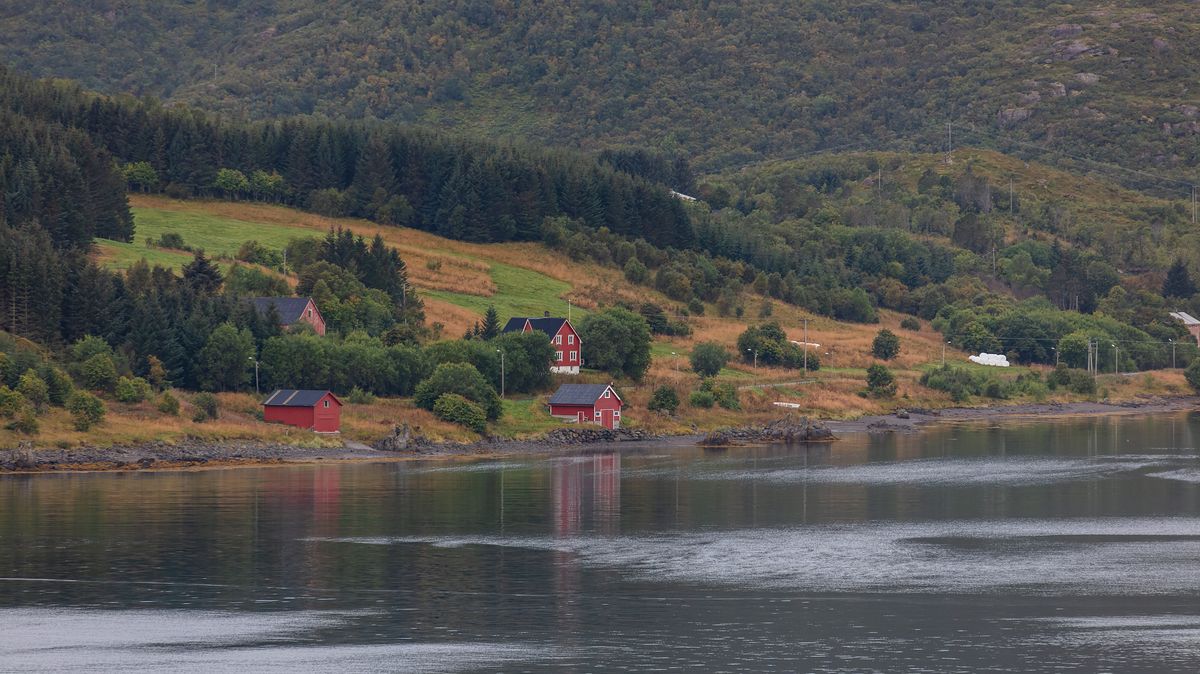
For the second half of the week we hired a car and drove west on the E10. Gravdal, on Vestvågøy, was the gentlest place we saw: red farmhouses, birch woods just yellowing at the edges, a fjord the colour of pewter. We ate sandwiches in the car with the heater running and watched the cloud lift, then settle again.
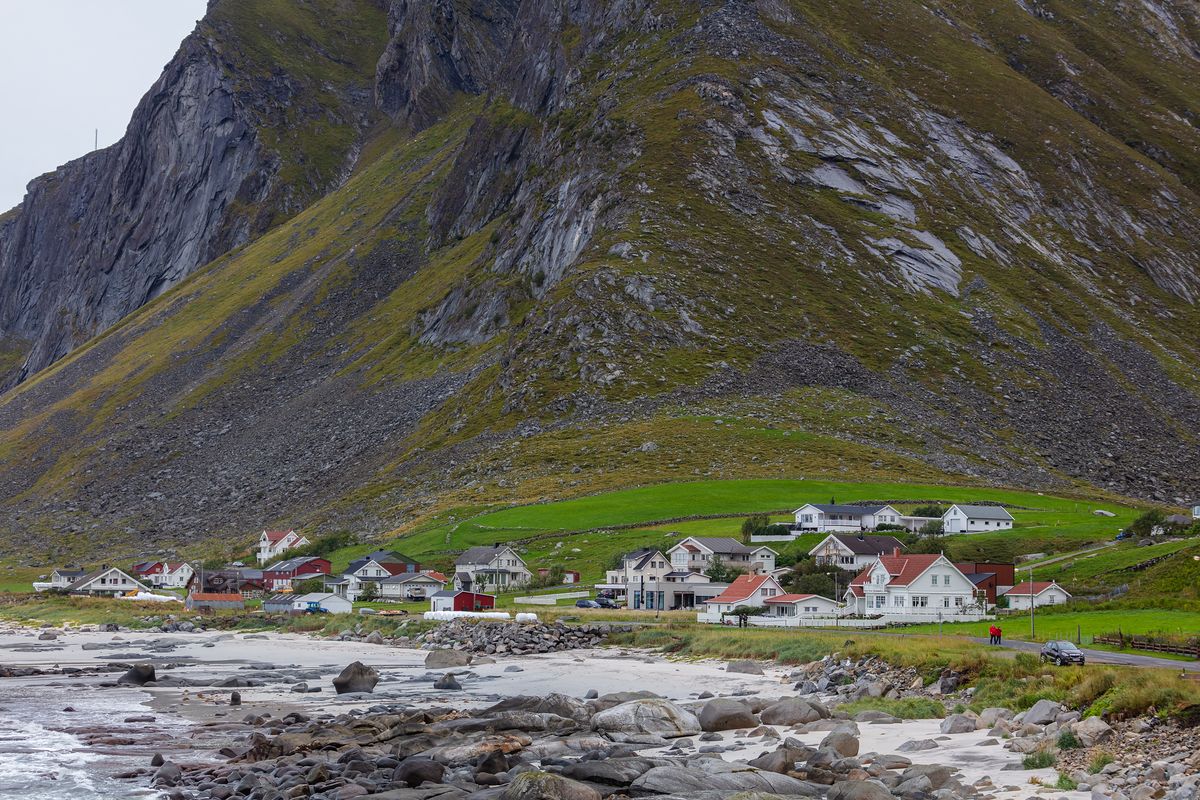
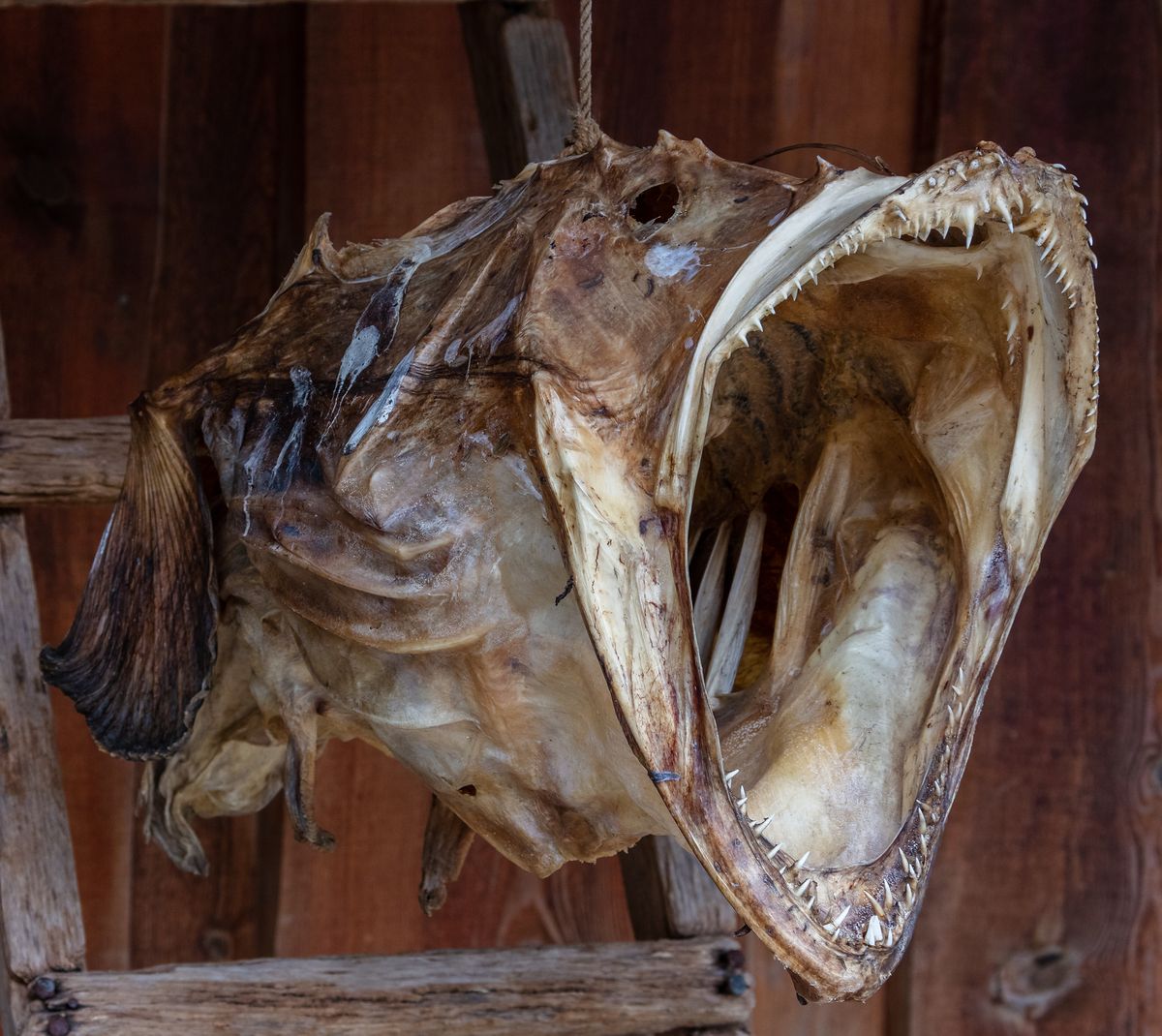
Further west, Napp sits just beyond the tunnel under the sound to Flakstadøya: a line of houses below a cliff, a boulder beach and sheds where cod hang to dry. The fish themselves mostly go south to Italy; the heads, Tom told me, go to West Africa. Up close they are fierce things, all teeth and leathery gape, and I stood looking at one for longer than was strictly comfortable.
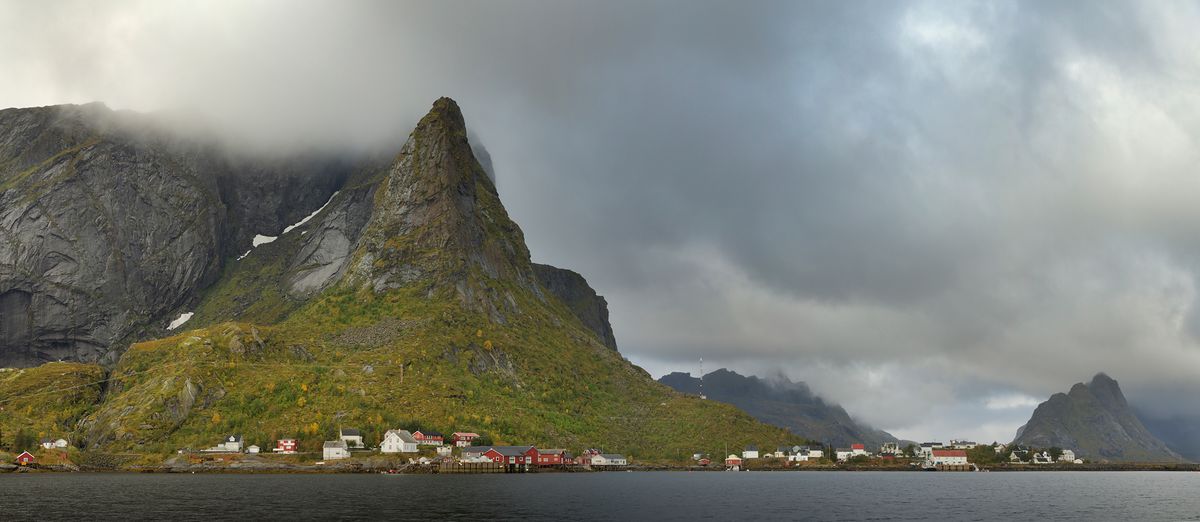
On the last full day we reached Reine, where the cloud sat on the peaks and the cabins along the shore looked like red matchboxes set at the foot of Hammarskaftet. My boots had been wet since Tuesday. I had stopped minding.
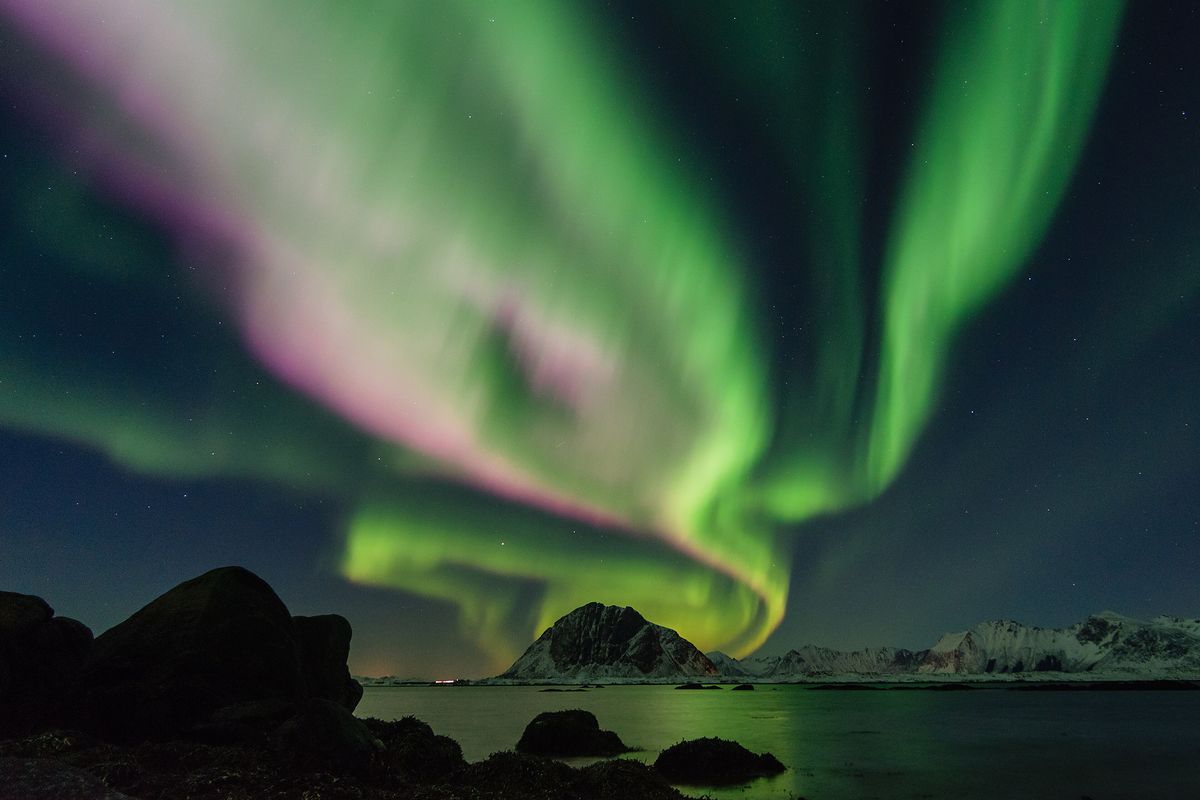
Then, on the final night, the sky cleared. Tom, who had been checking the aurora forecast with the faith of a convert, got me out of bed and down to the shore, where green light was already pouring over the mountains above Flakstad. It lasted perhaps twenty minutes. Grey and green again, in its own way.
Notes
- Trollfjord boats leave from Svolvær harbour. Even in September the fjord is cold and shaded, so take a warm layer.
- A car gives the most freedom; buses run less often after summer.
- Aurora season starts in late August. The hard part is clear sky, so stay flexible.