Terraces and Tunnels on the Cinque Terre
A June day on foot along the Ligurian coast, from Riomaggiore up through the vineyards to Corniglia and on to Vernazza, with the train never far below.
You can see the Cinque Terre from the train, in theory. The line from La Spezia runs almost entirely through tunnels, so the coast arrives in flashes: black, then a slab of blue sea and a pink house, then black again. We had come in the first week of June, before the schools break up, which felt like a clever plan and turned out to be everyone’s plan.
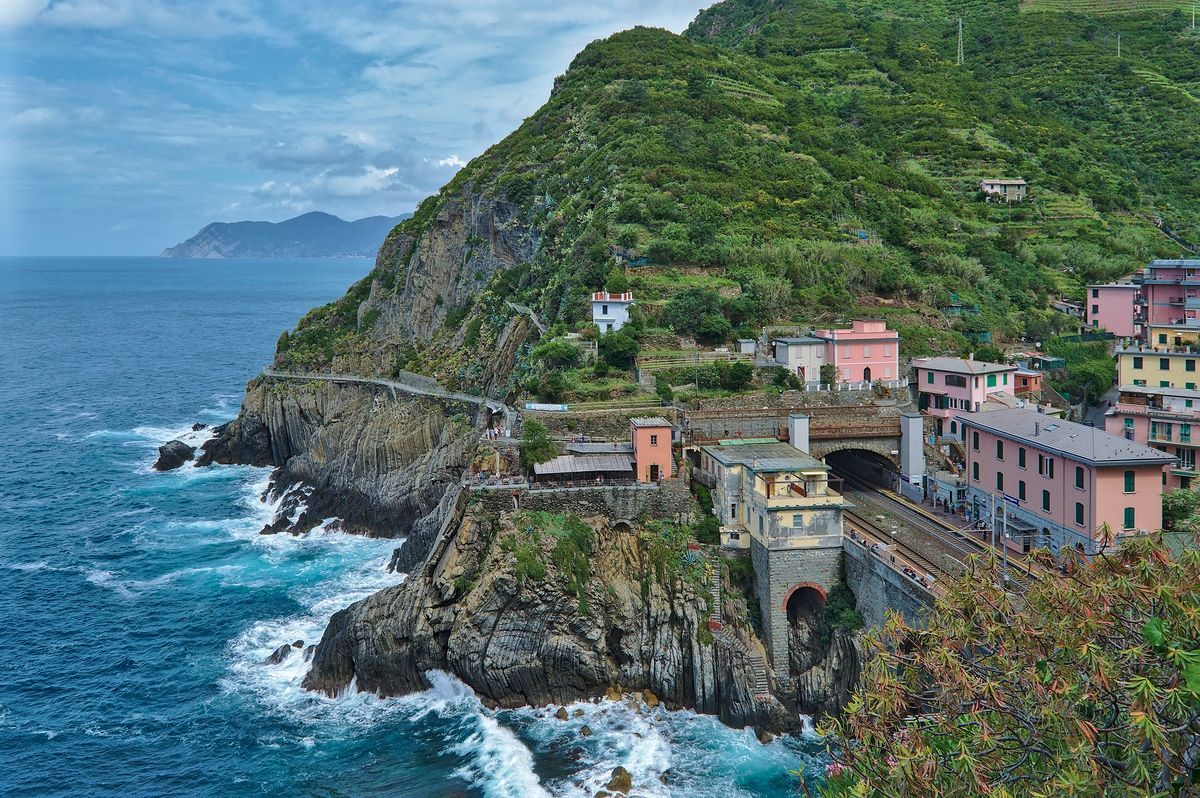
Riomaggiore station sits in a gap between two tunnels, the sea on one side and a platform full of rucksacks on the other. From the end of it the Via dell’Amore runs along the cliff to Manarola, open again after its long closure: paved, railed and over in twenty minutes. It is less a hike than a promenade with a drop. We walked it early, under a grey sky that had cleared by Manarola, while the shutters in the village were still going up, and I recommend that hour without reservation.
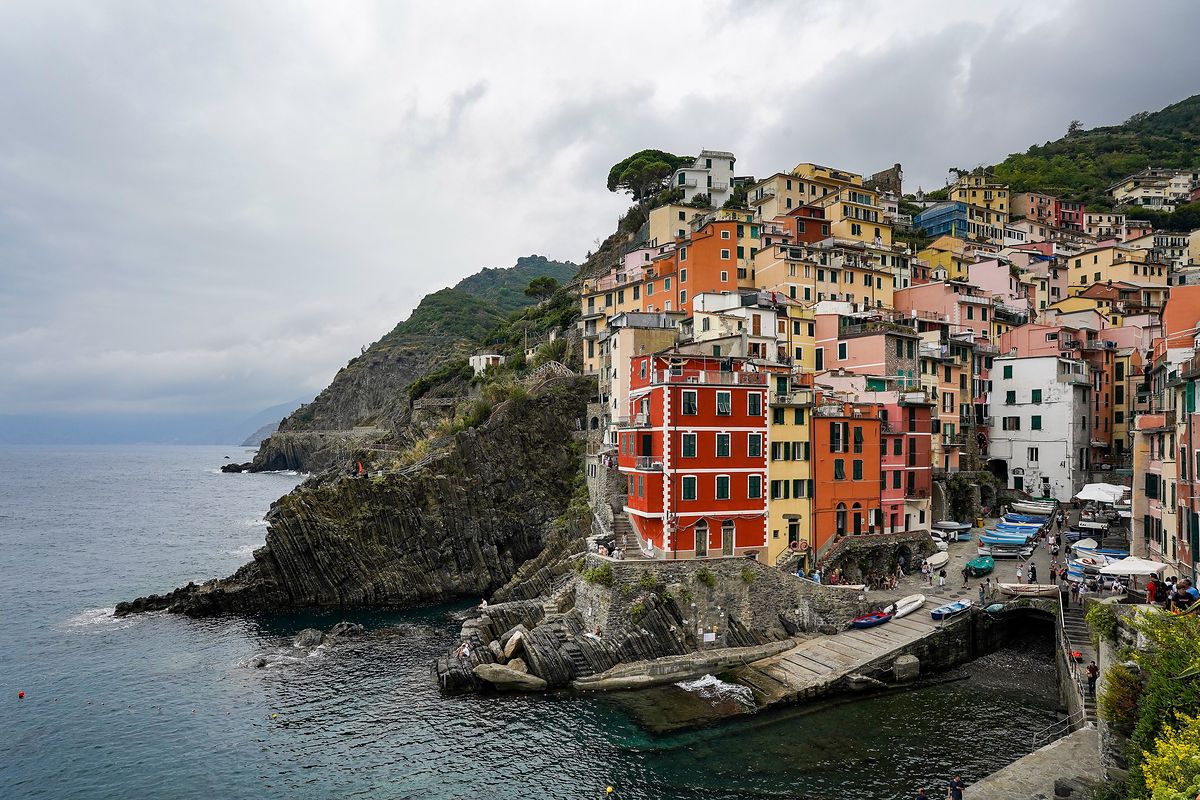
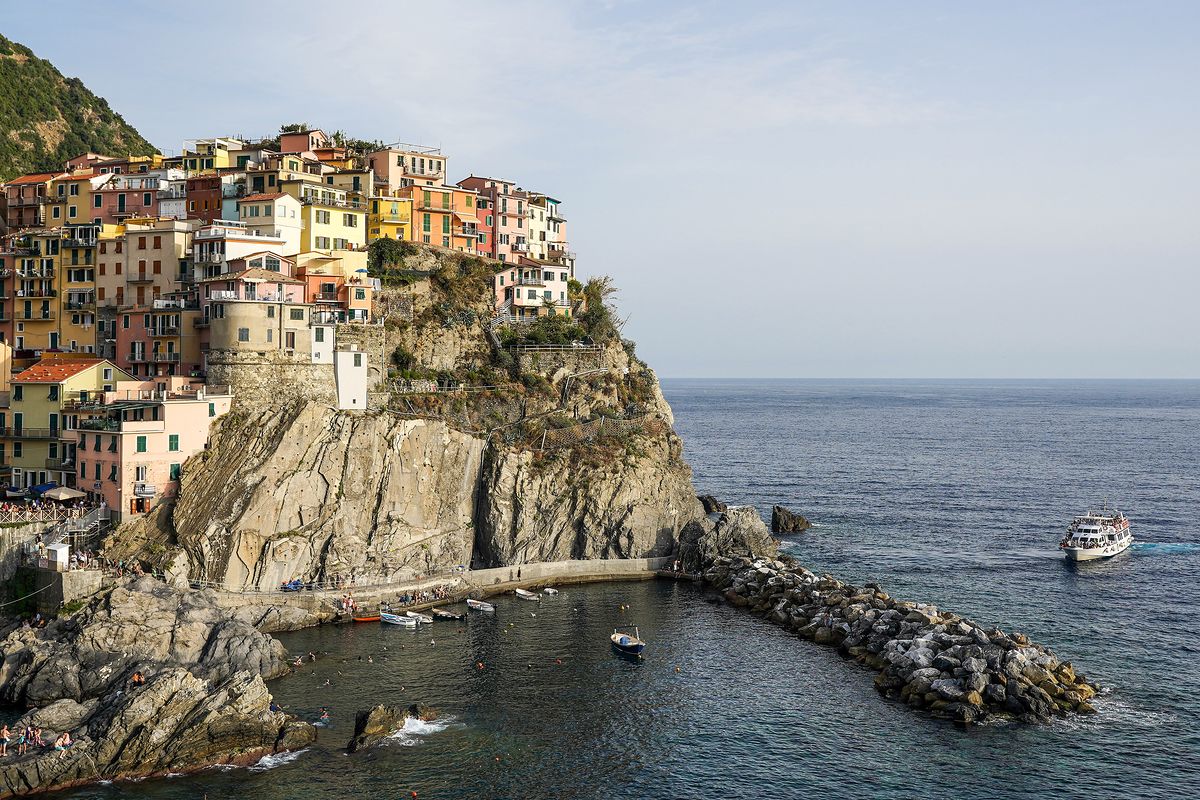
Manarola is the one on the postcards, houses stacked up a dark rock like books on a shelf, a slipway, boats hauled out on the road. The ferry was nosing in as we arrived. We bought focaccia and took it the wrong way: uphill.
Up through the vines
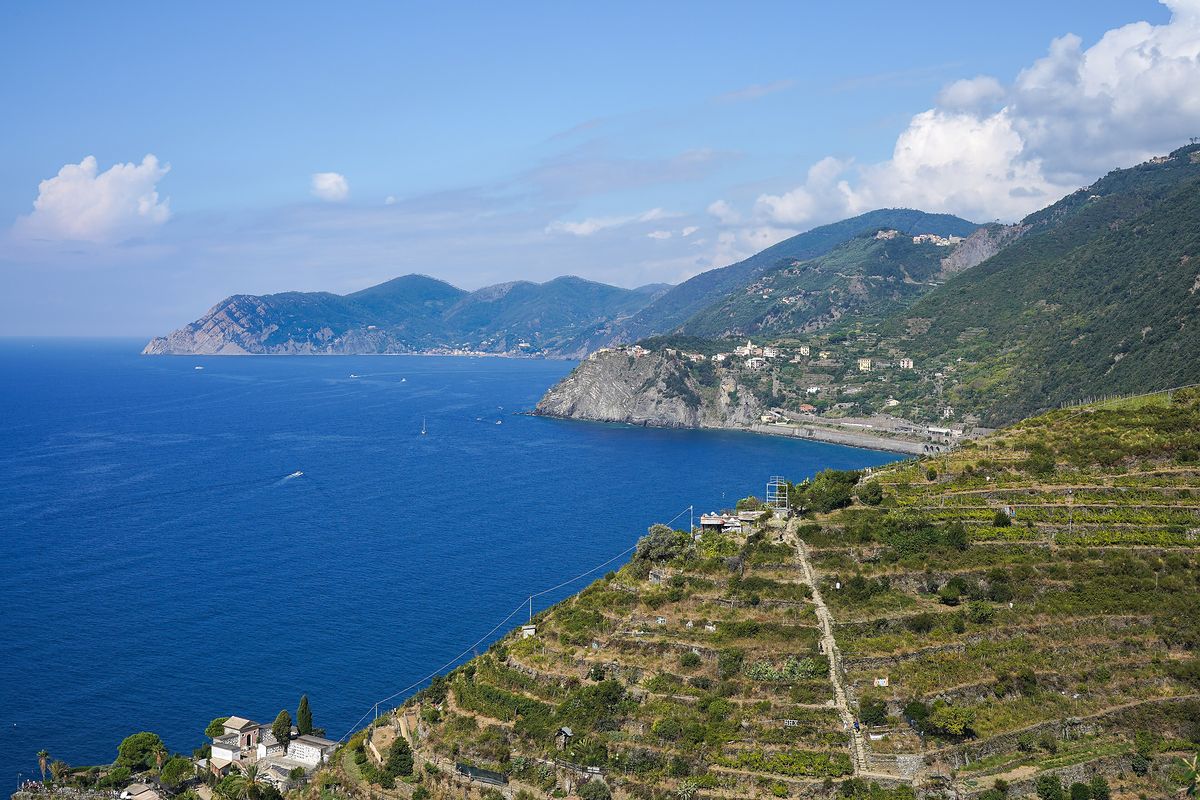
The low path from Manarola to Corniglia was shut, as it has been for years after landslides, so the way north goes up. A steep trail climbs past the cemetery and through the terraces towards Volastra, and it is from here that the place finally makes sense.
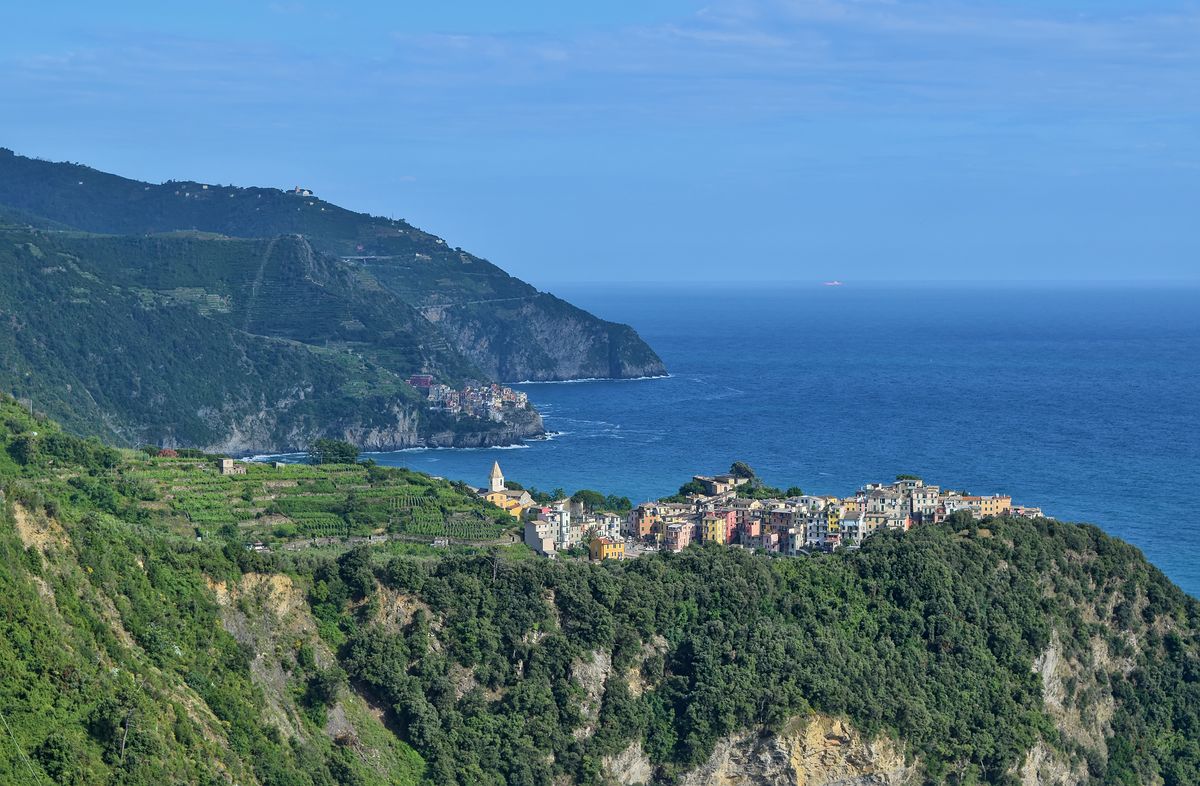
The whole coast is walls. Dry-stone terraces climb every slope that isn’t sheer, some barely a vine wide, built and rebuilt over centuries by people who carried the stone and the soil up on their backs. Looking north you can see Corniglia on its spur and Monterosso’s beach curving round to Punta Mesco. Clara stopped talking for a good five minutes, which I note for the record.
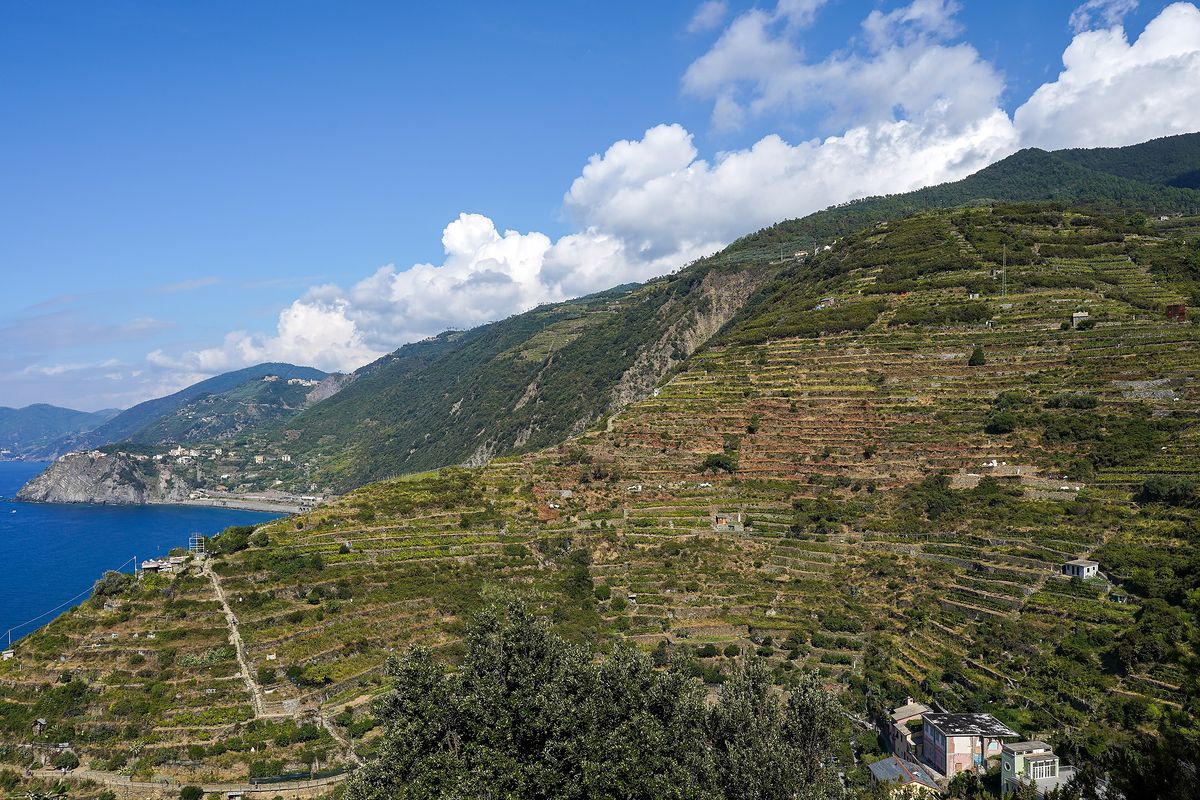
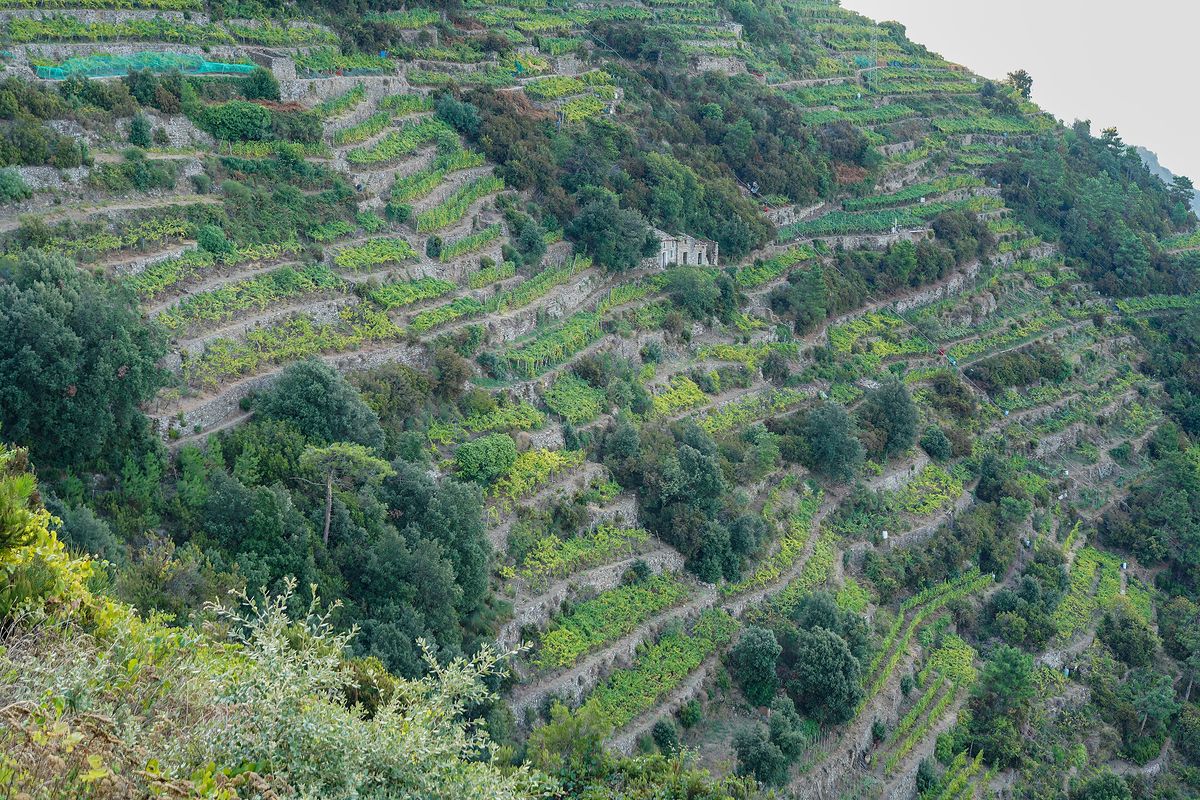
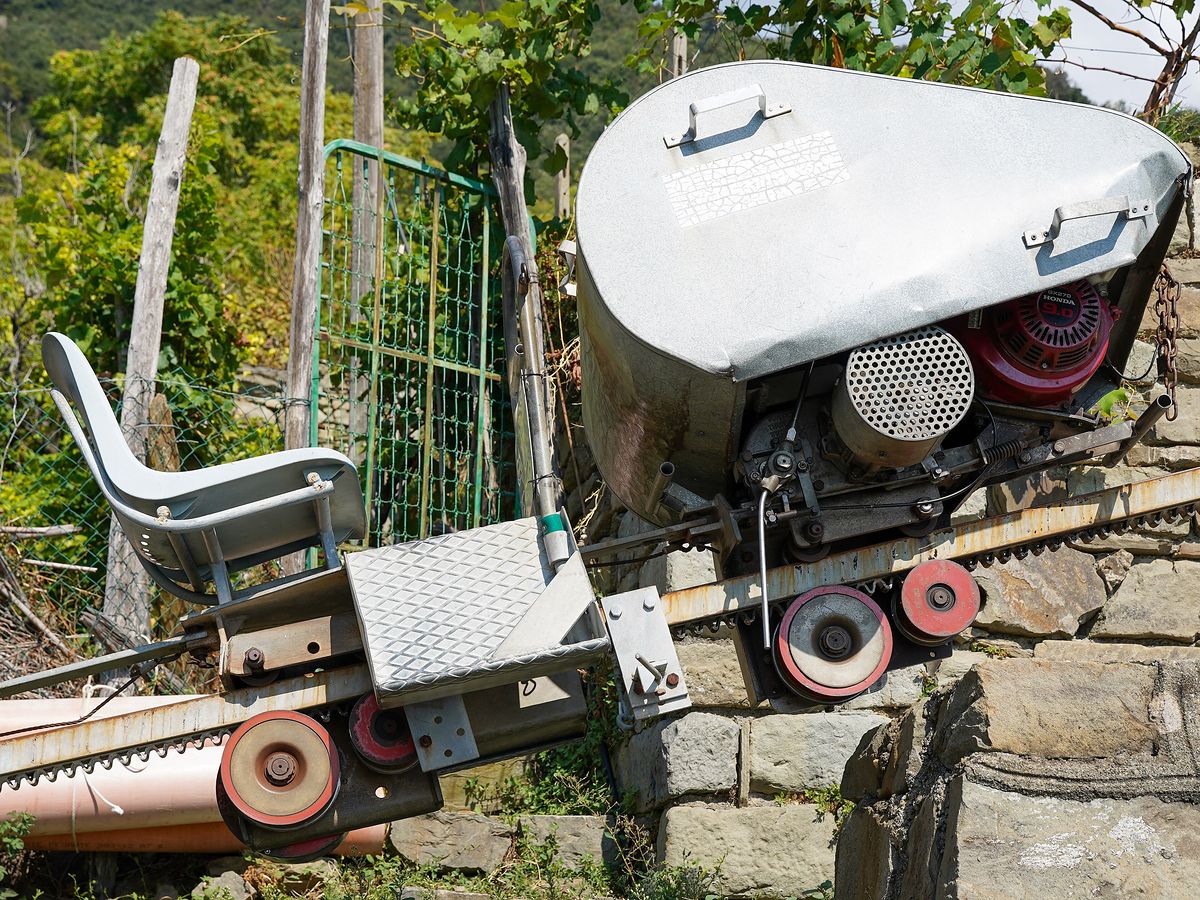
The vines were in fresh leaf and the broom along the edges was still in flower. Here and there a narrow rail snakes up the hillside: the monorails that carry grapes, tools and the occasional tired farmer between terraces. One little transporter sat parked at the top of its track with a plastic seat bolted on, looking like a fairground ride someone had abandoned halfway through building.
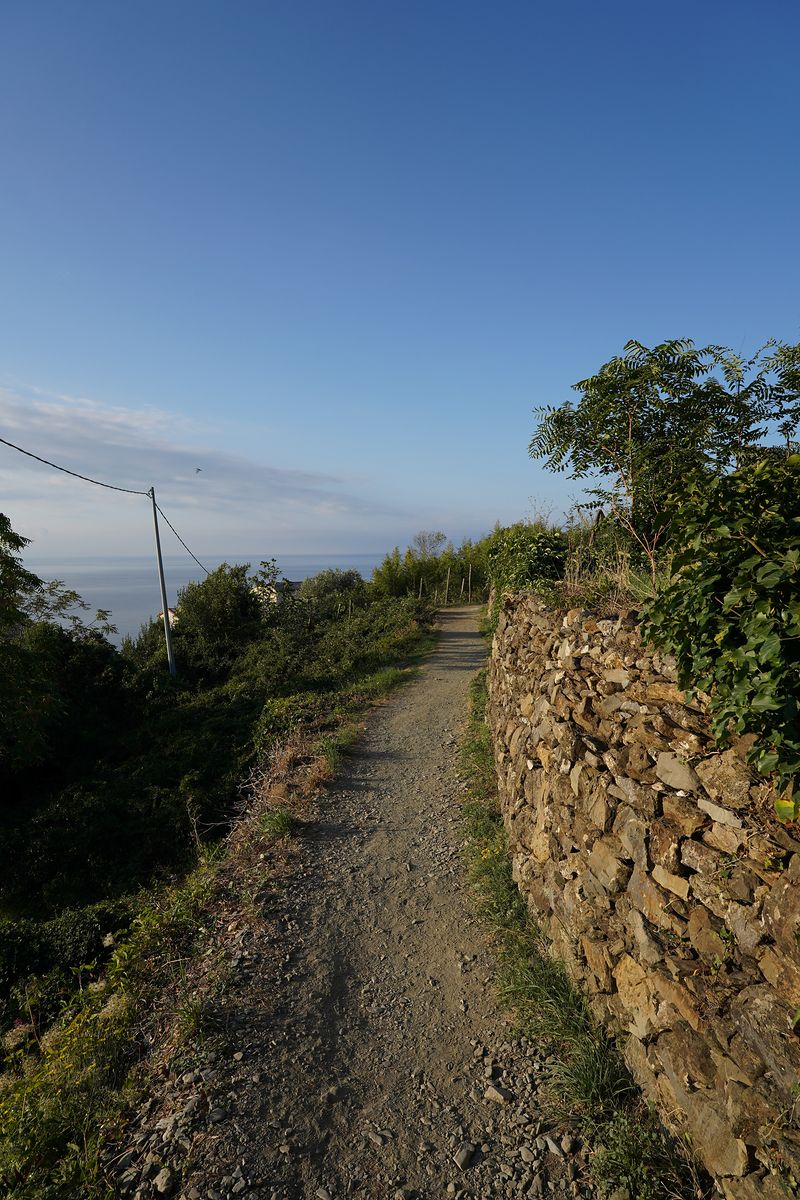
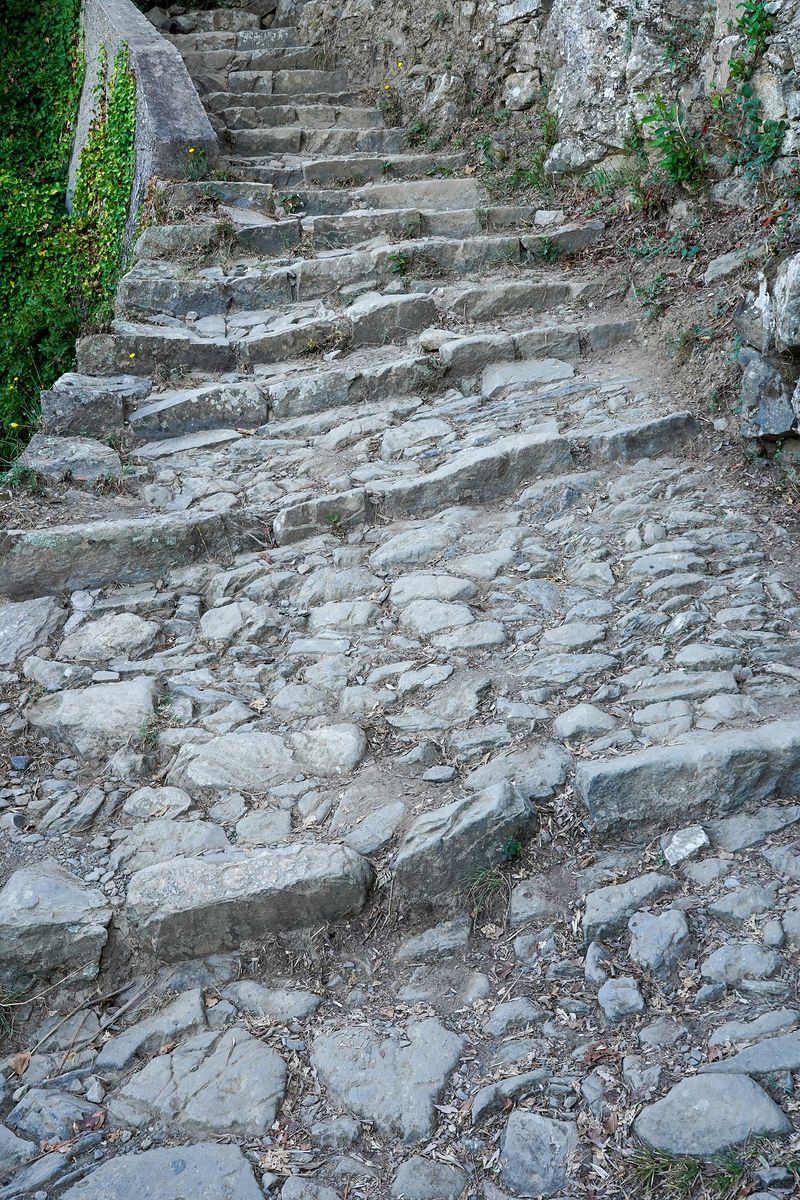
Beyond Volastra the path to Corniglia contours along the terrace walls, then drops over cobbled steps worn smooth and slightly treacherous. My knees had opinions by the bottom.
Corniglia and the last stretch
Corniglia is the only one of the five that isn’t at the water’s edge. It sits on a headland about a hundred metres up, and its station is far below, reached by a long zigzag stair that people arriving by train meet with visible dismay. Coming in from above, we had it easy. We sat on a wall with a granita each and watched the trains slide in and out along the shore, a blue line of carriages between one tunnel and the next.
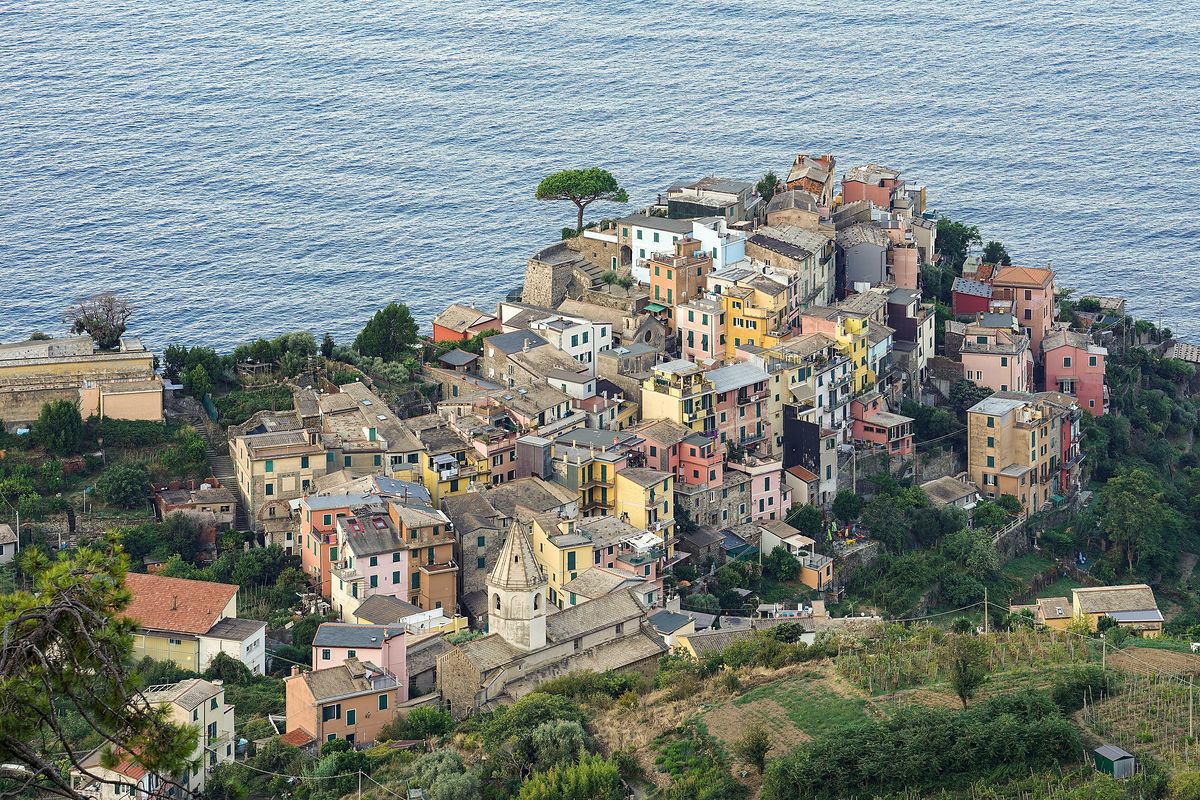
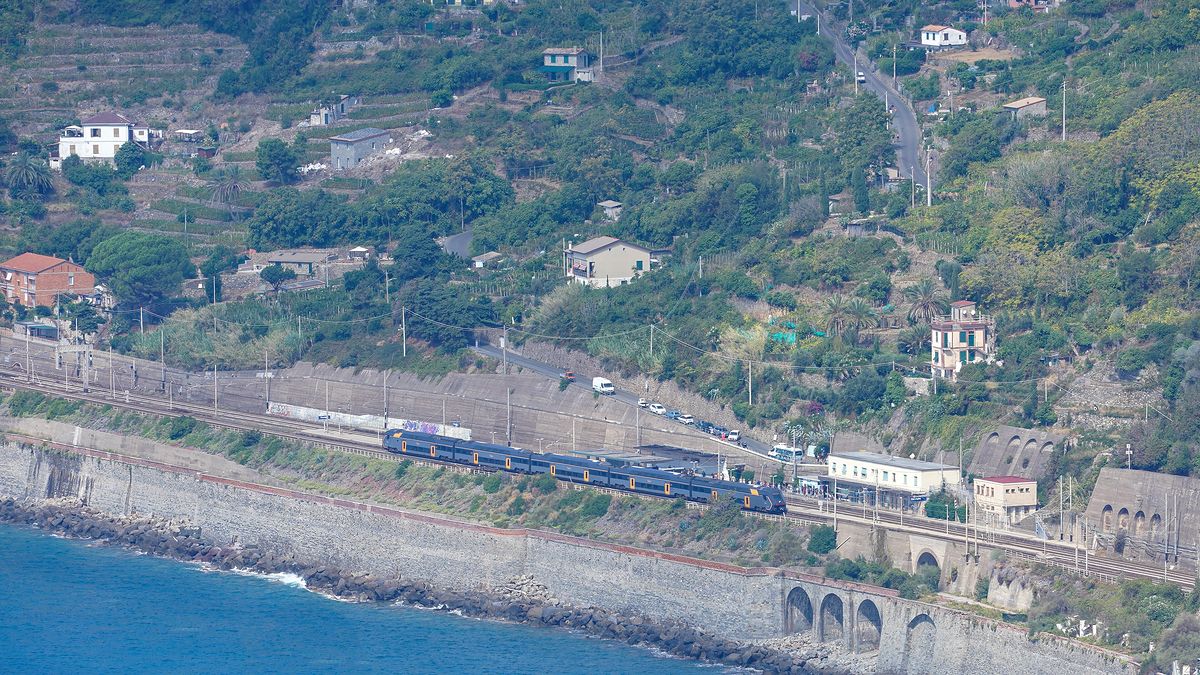
The path on to Vernazza is the Sentiero Azzurro proper: narrow, shaded in places, busy with people coming the other way, and lovely. Every bend gives you another look back at Corniglia, a little smaller each time.
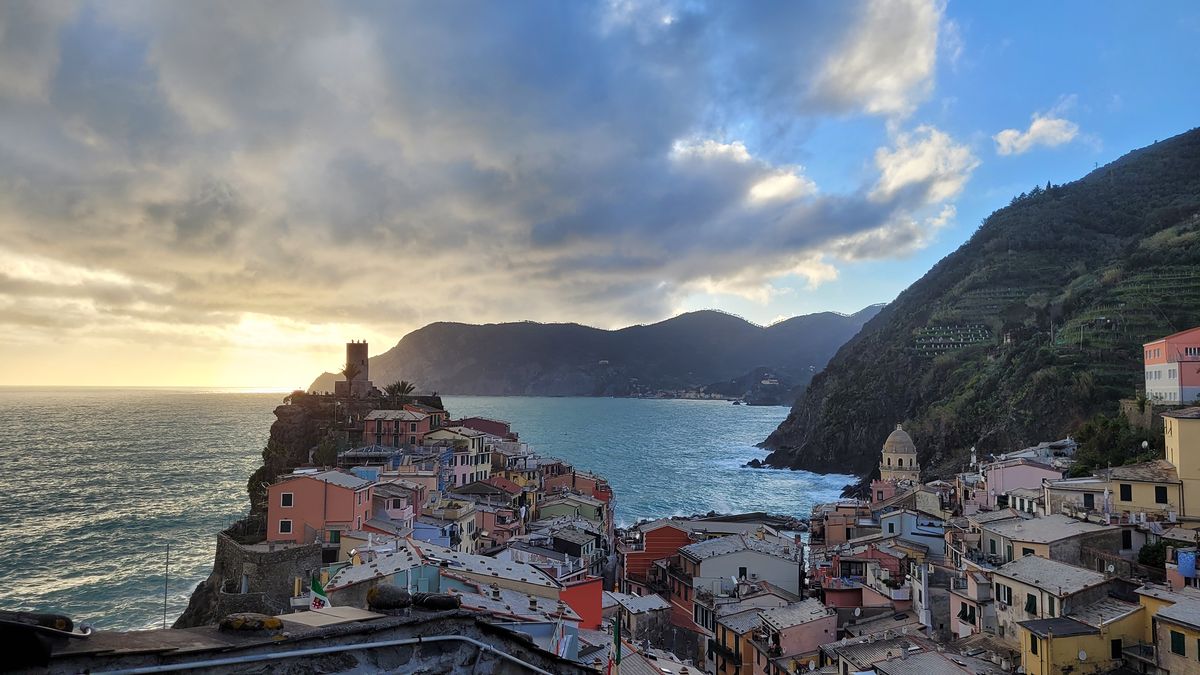
We came over the last rise into Vernazza as the sun was sinking into a bank of cloud, the castle tower dark against the sea and the church’s bell tower catching the last of the light. Down at the harbour, half the people on the slipway had their boots off and their feet in the water. We joined them, then rode the tunnels back in the dark.
Notes
- The coastal paths are ticketed in season; the combined card also covers the local trains between Levanto and La Spezia.
- Check which sections are open before setting out, as closures after landslides are common.
- Start early. By late morning the narrowest stretches turn into a queue.