To the Dunes, and North to Fès
The second half of our Moroccan spring: the long road east to the dunes of Erg Chebbi, a night among them, then north to the medina of Fès.
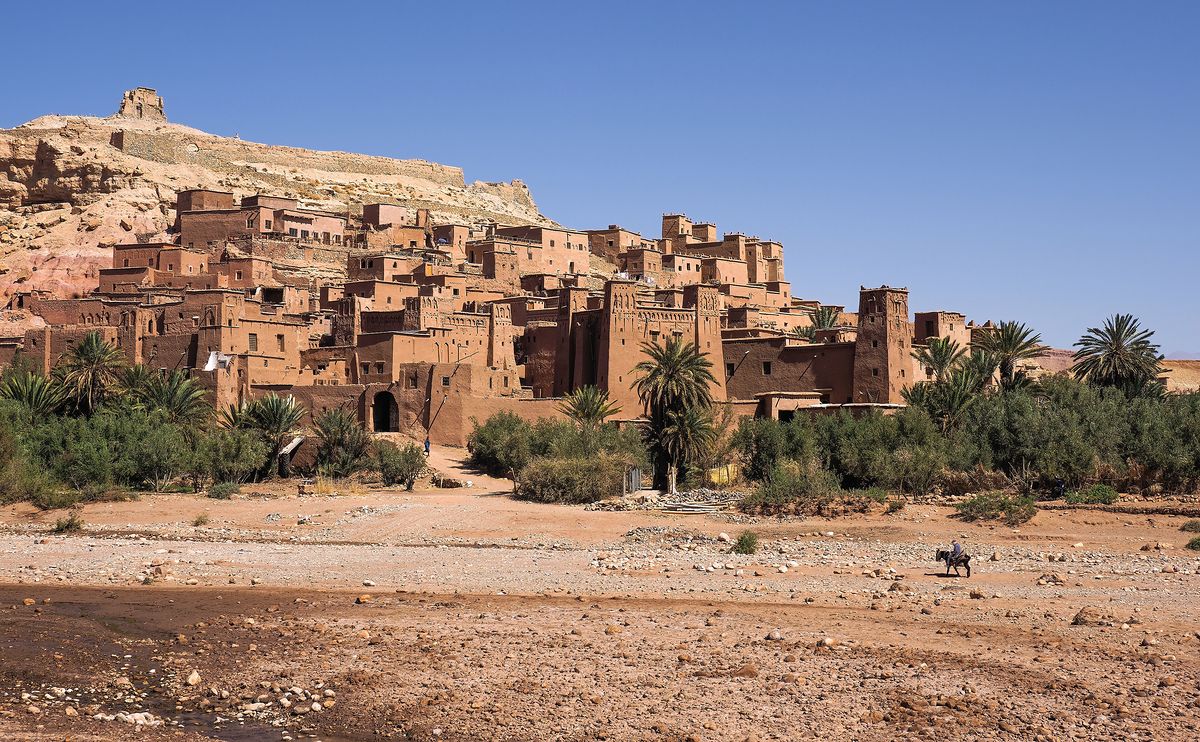
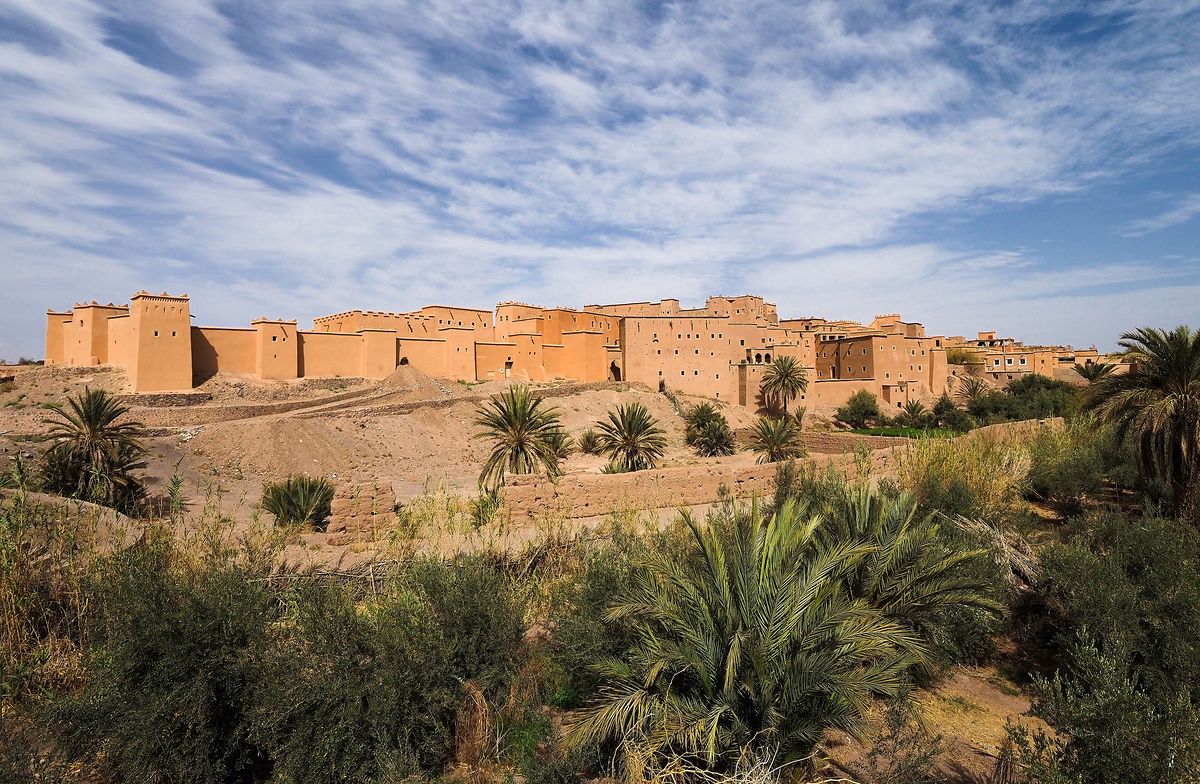
From Ouarzazate we drove east along what the guidebooks call the Road of a Thousand Kasbahs, and for once the guidebooks are not exaggerating by much. The Taourirt kasbah sits right in the town, a sprawl of earthen towers and courtyards behind a fringe of palms, and after that they keep coming: in Skoura, along the Dades valley, above every oasis. A few are restored. Most are slowly melting back into the ground they were made from.
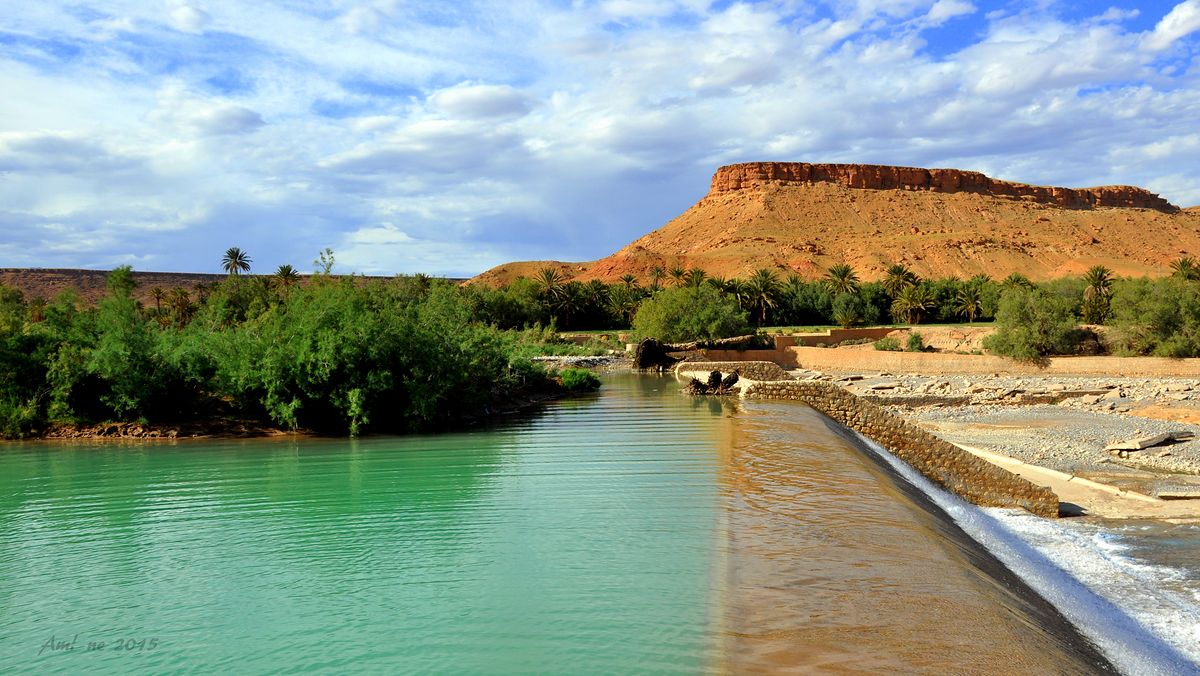
It is a long day of driving, and the landscape is mostly stone. What keeps you going is water. Every so often the road drops into a river valley and there is suddenly a band of green: date palms, alfalfa, small walled gardens, children on bicycles. Near Goulmima we stopped where the Ghris River ran green and shallow over a weir, and Tom put his feet in it with the expression of a man who had found religion.
Erg Chebbi
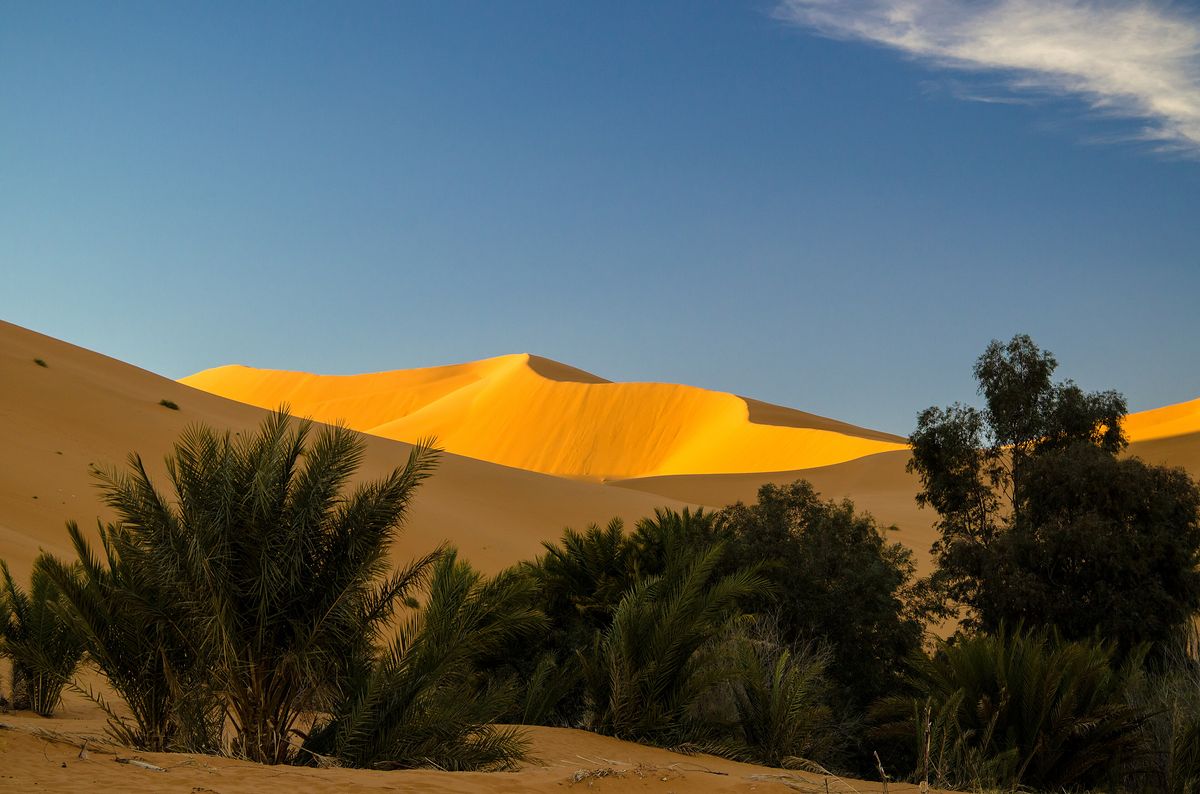
The dunes of Erg Chebbi appear first as an orange smudge on the horizon beyond Merzouga, and then, quite suddenly, as a range of mountains made of sand. We left the car at the edge of the desert and went in by camel, which I can recommend for the view and not much else. Camels are taller than you expect, and they stand up in three separate lurches, each in a different direction.
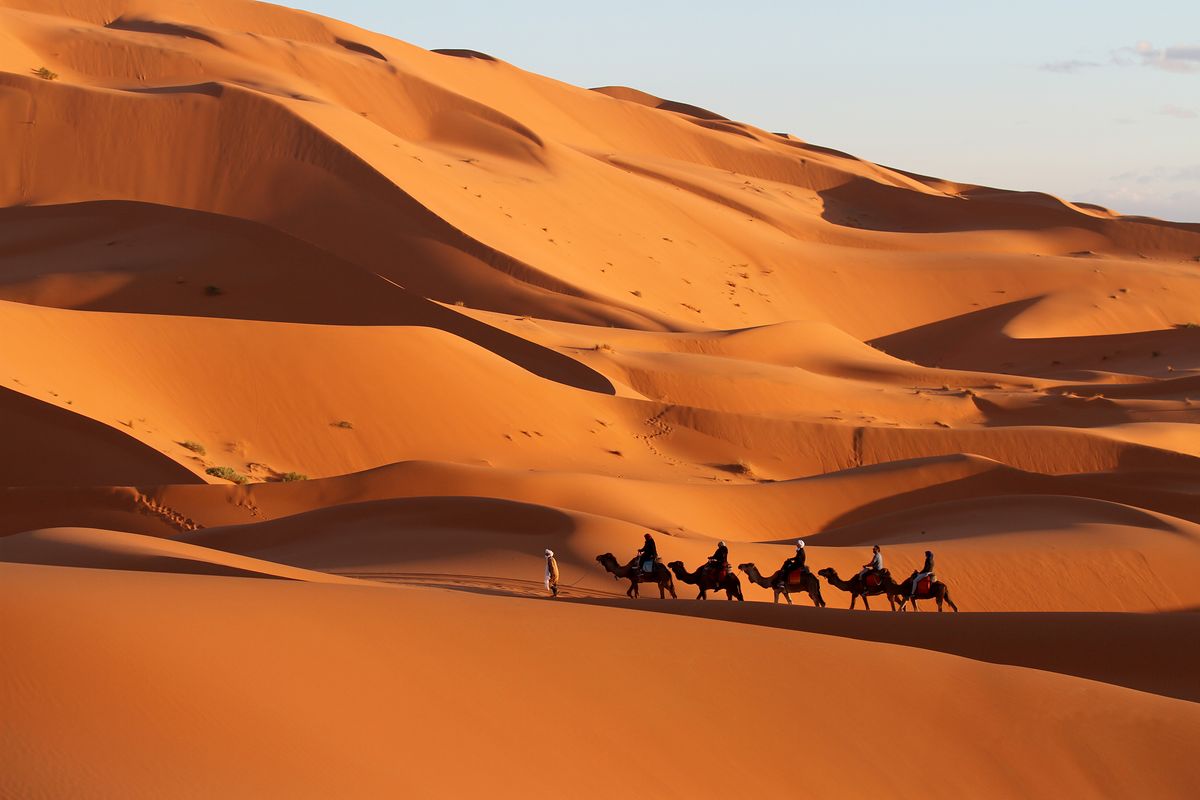
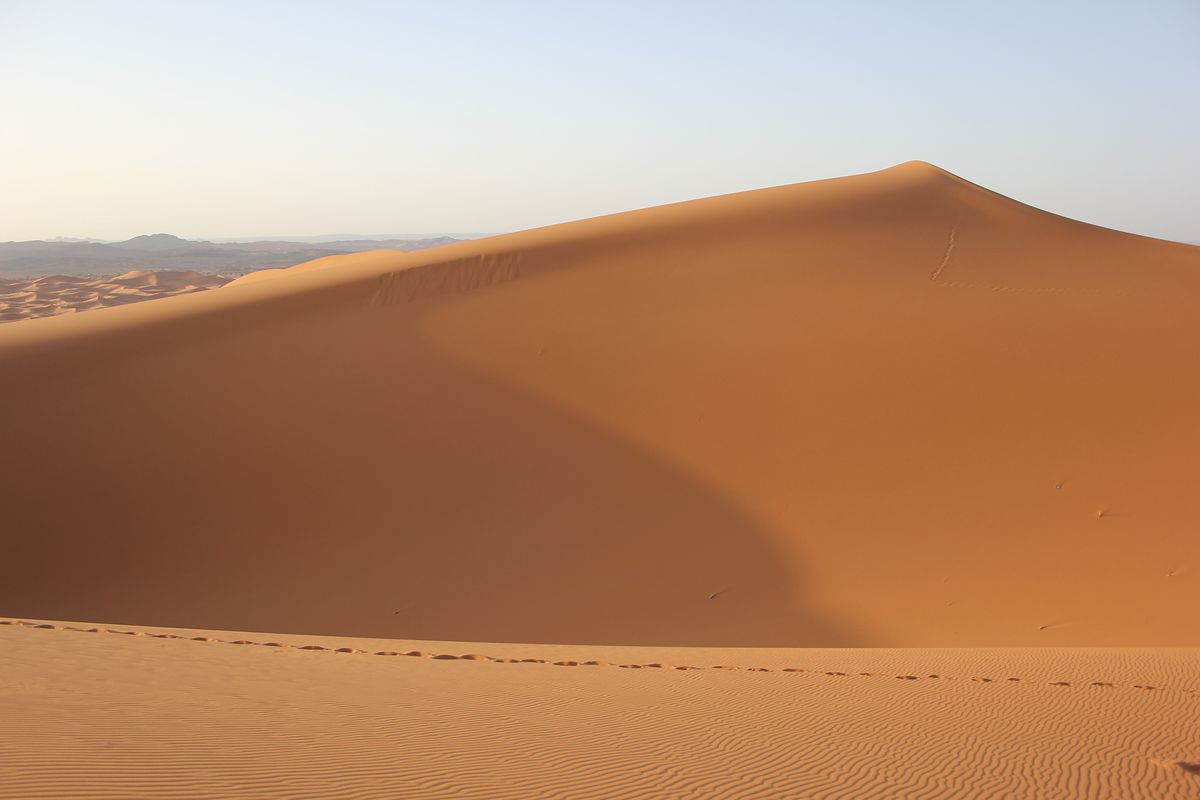
We spent the night at a camp among the dunes. I had expected silence and got, instead, drumming, a tagine and a sky so crowded with stars that Tom went quiet for half an hour, which is something of a record. Before dawn we climbed the nearest high dune, sliding back one step in every two, and watched the sand turn from grey to pink to gold to a flat, hard white.
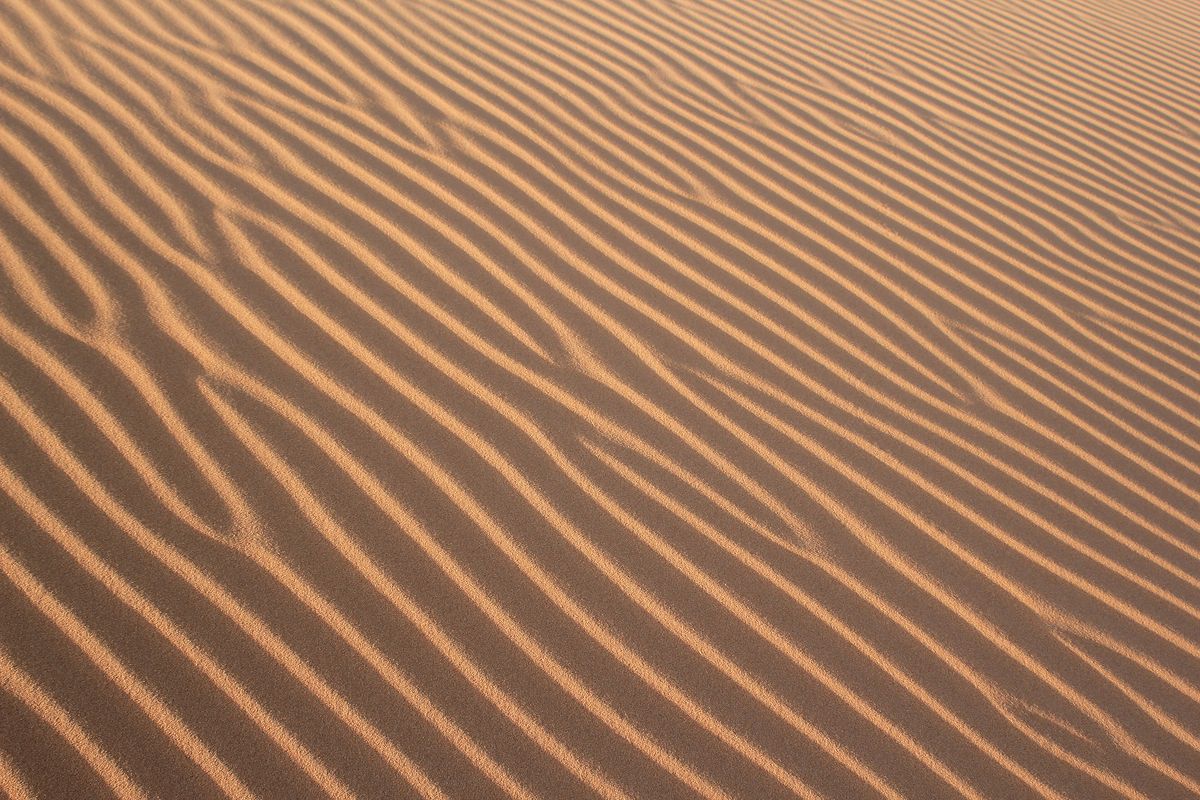
Sand got into everything: camera bags, socks, a sealed packet of biscuits. I was still finding it in Edinburgh a fortnight later.
North to Fès
The drive north takes a full day, up the Ziz valley past Errachidia, over the Middle Atlas and its cedar forests, and down into the softer, greener country around Fès. After the emptiness of the desert, the medina of Fès el-Bali felt like being dropped into a crowd that had been going for twelve centuries without stopping for breath.
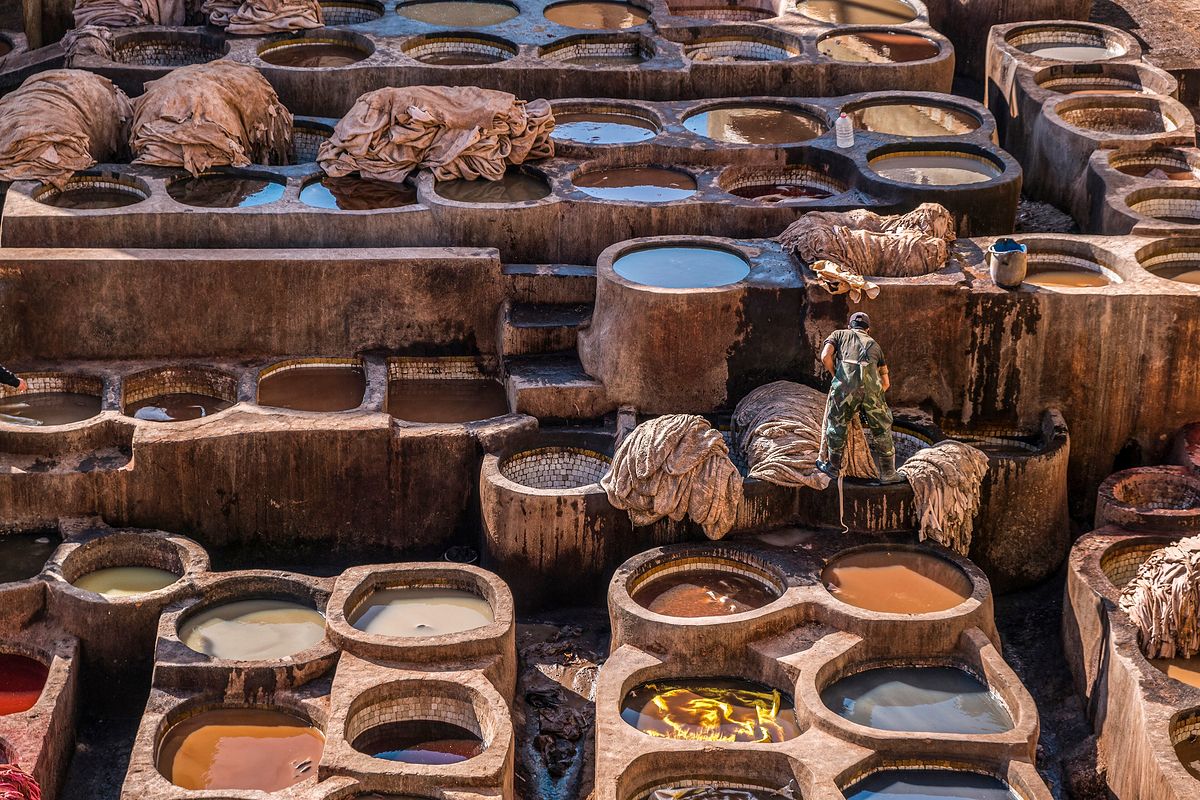
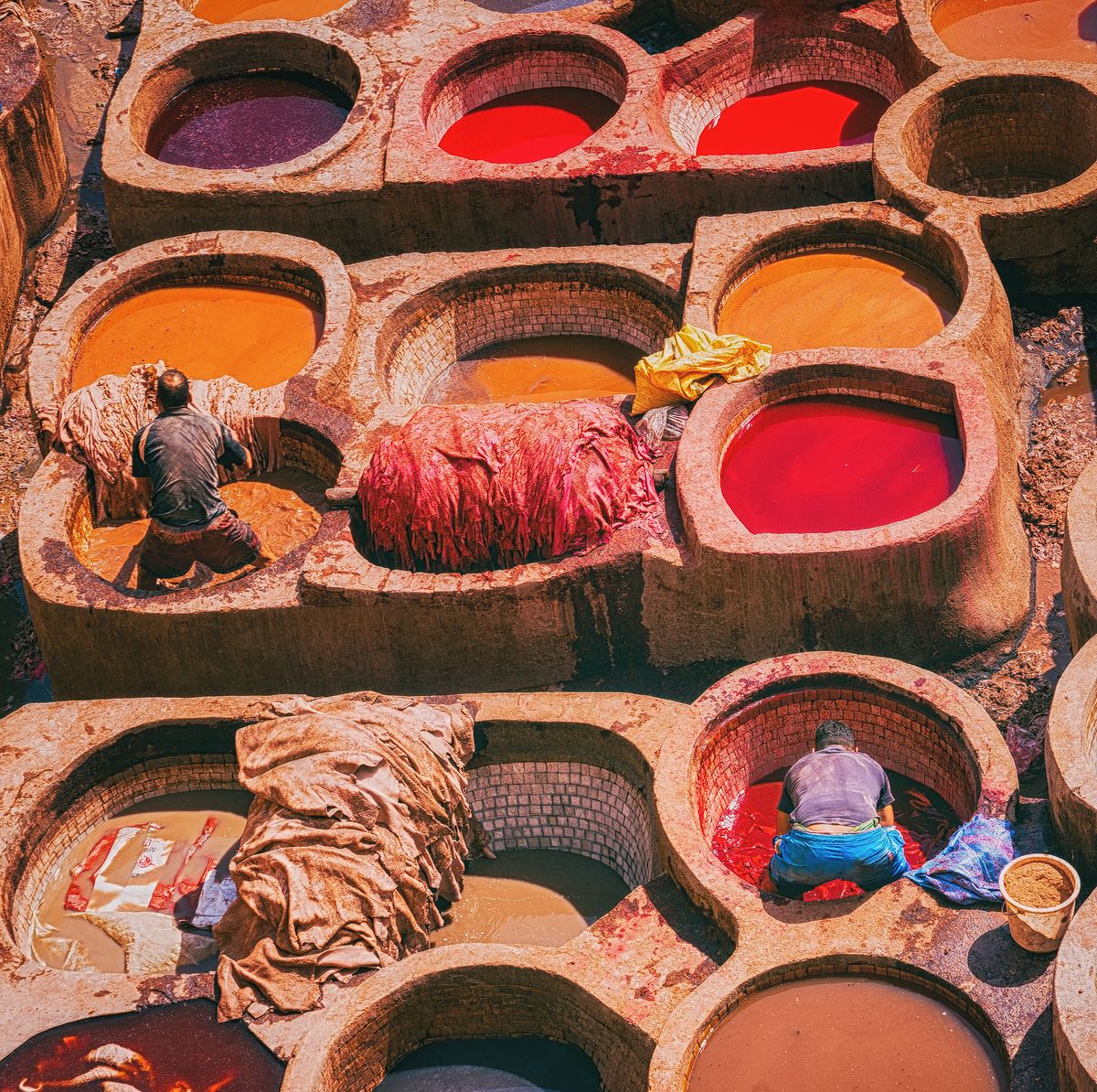
It is denser than Marrakech, steeper, and much less inclined to perform for you. Donkeys still carry goods through lanes too narrow for anything else, and a shout of balak! means step aside, quickly. We found the tanneries the usual way: led up a leather shop’s stairs to its terrace, handed a sprig of mint for the smell, and invited to look down. Below lay a honeycomb of stone vats full of dye and lime, hides drying on the surrounding roofs, and men working thigh-deep in colour.
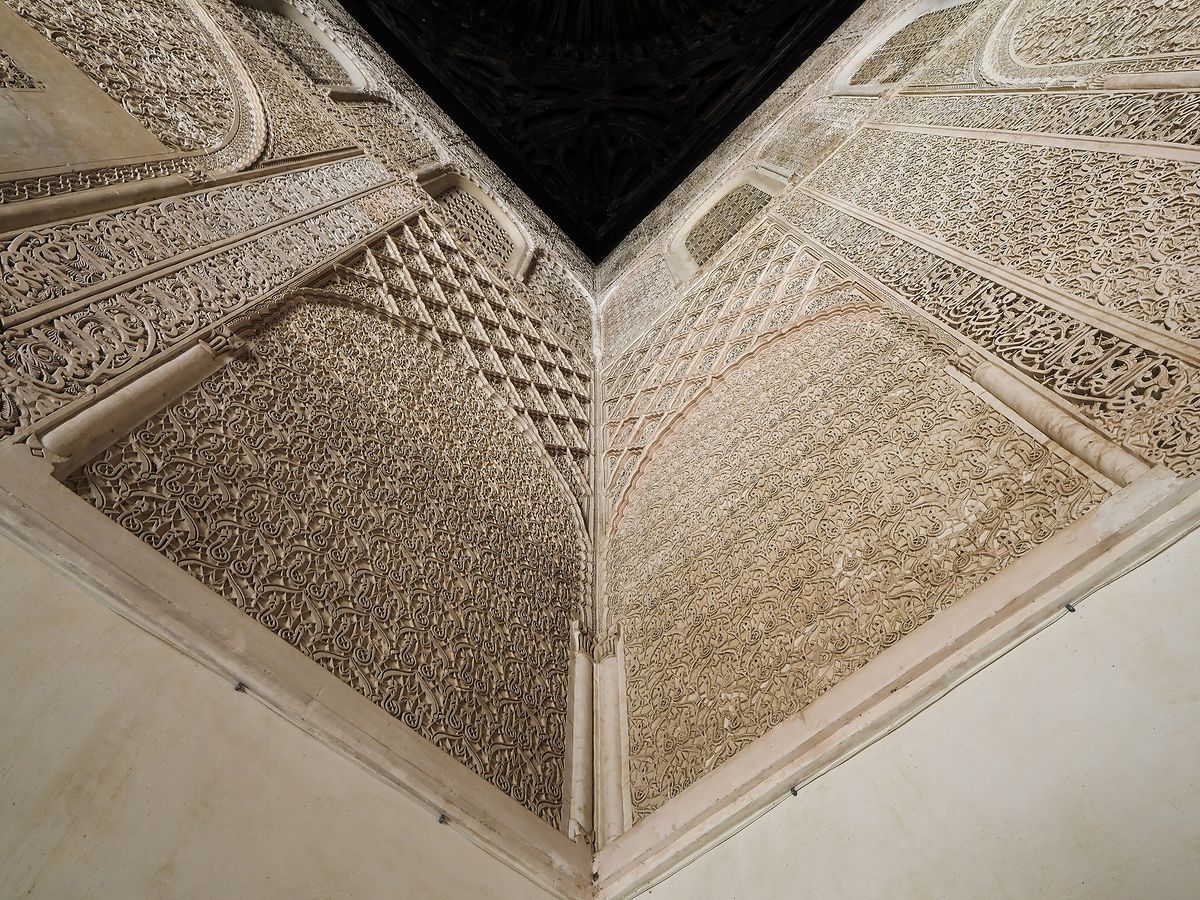
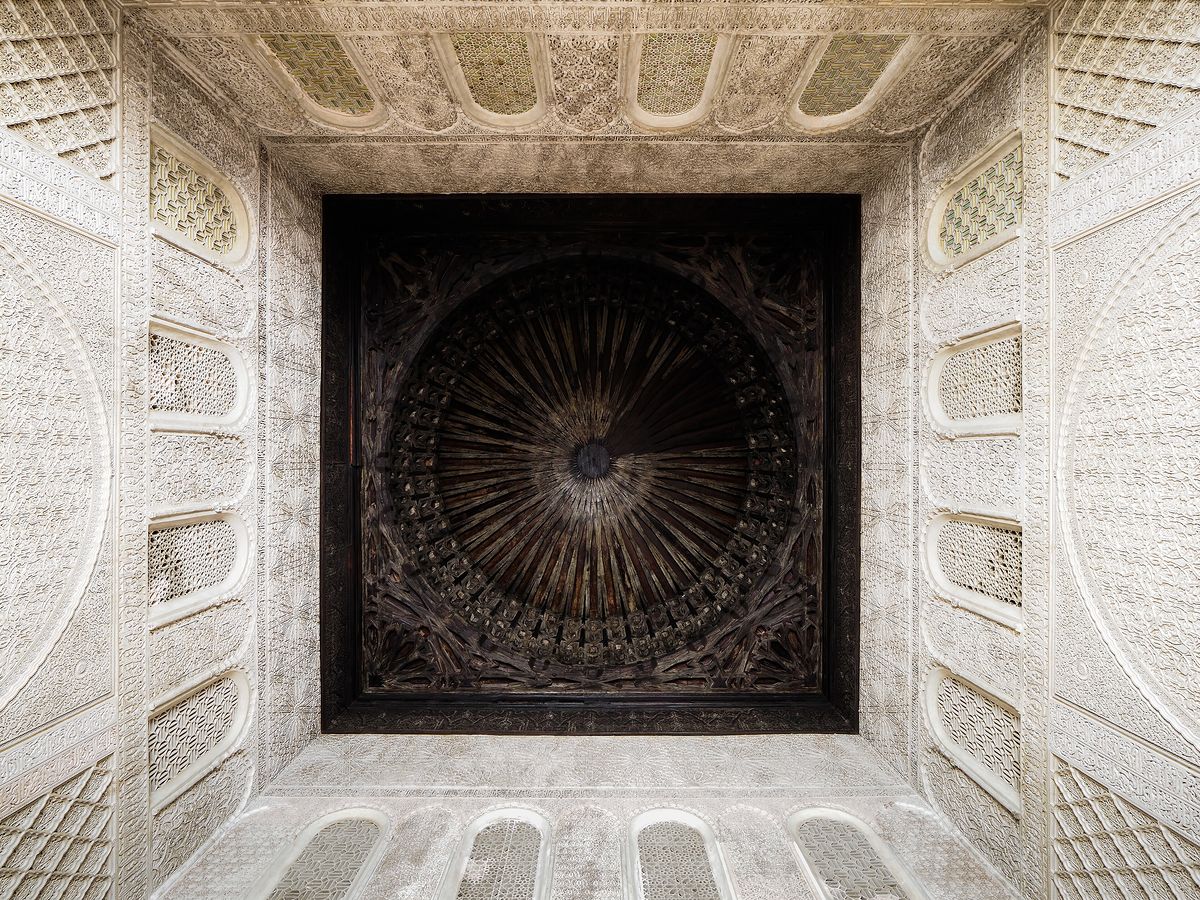
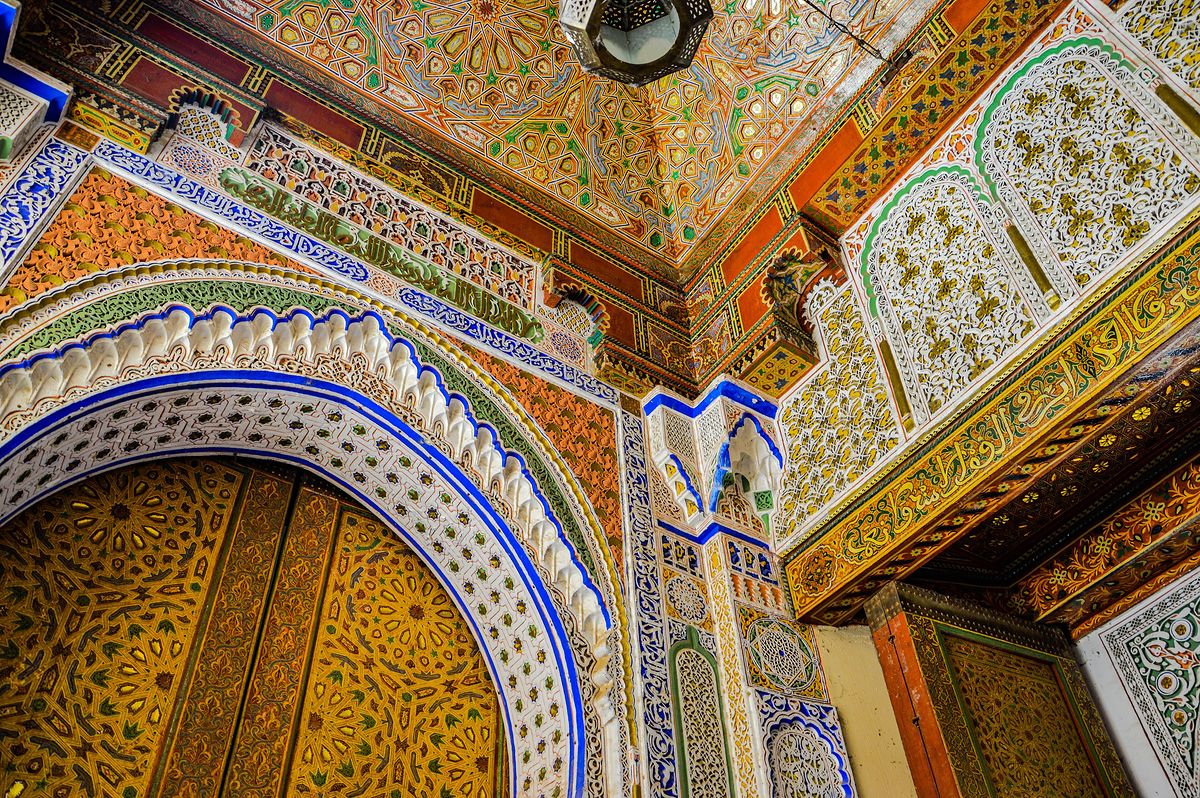
What stayed with me most, though, was the Bou Inania Madrasa, where carved cedar, stucco and tile cover every surface. You can stand in one corner and look up for a long time without finding a single plain inch. Non-Muslims can’t enter the shrine of Moulay Idriss II, but its entrance alone is worth the detour.
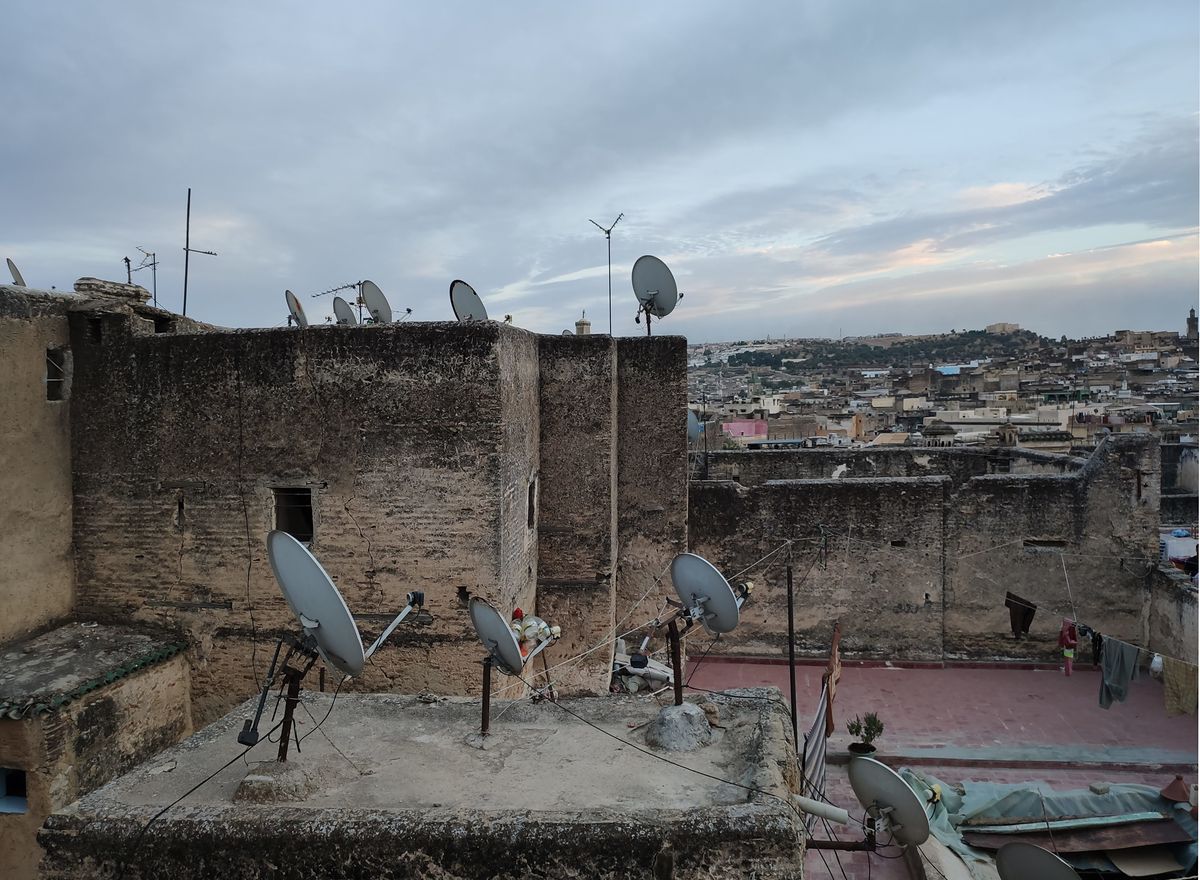
On our last evening we sat on a riad roof as the calls to prayer started up across the city, one mosque after another, until the whole valley was full of them. The satellite dishes turned pink, then grey. Tom said it sounded like the city talking to itself, and for once I let him have the last word.
Notes
- The drive from Ouarzazate to Merzouga is long; break it in the Dades or Todra valleys.
- In the desert, carry a scarf against sand and wind, and a warm layer for the night.
- In Fès, a licensed guide for the first morning saves a great deal of time and temper.